


Machine learning risk prediction model for bloodstream infections related to totally implantable venous access ports in patients with cancer
- PMID: 39148936
- PMCID: PMC11324827
- DOI: 10.1016/j.apjon.2024.100546
Machine learning risk prediction model for bloodstream infections related to totally implantable venous access ports in patients with cancer
Abstract
Objective: This study aimed to develop and validate a machine learning-based risk prediction model for catheter-related bloodstream infection (CRBSI) following implantation of totally implantable venous access ports (TIVAPs) in patients.
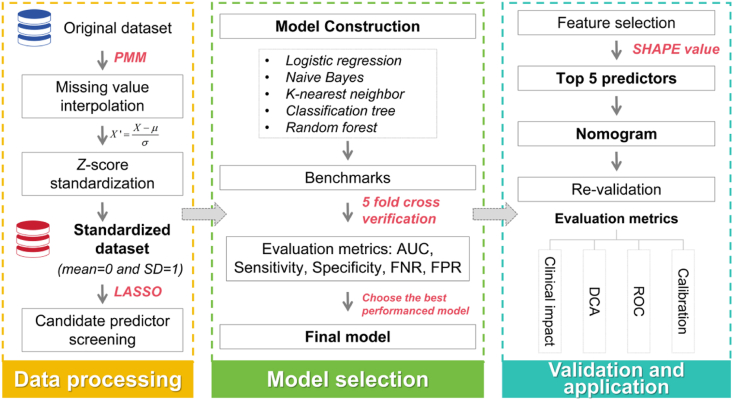
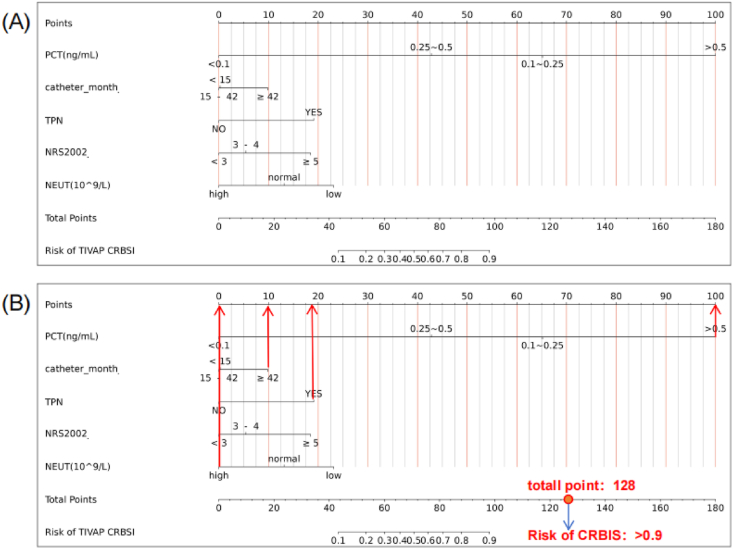
Methods: A retrospective cohort study design was employed, utilizing the R software package mlr3. Various algorithms including logistic regression, naive Bayes, K nearest neighbor, classification tree, and random forest were applied. Addressing class imbalance, benchmarks were used, and model performance was assessed using the area under the curve (AUC). The final model, chosen for its superior performance, was interpreted using variable importance scores. Additionally, a nomogram was developed to calculate individualized risk probabilities, enhancing clinical utility.
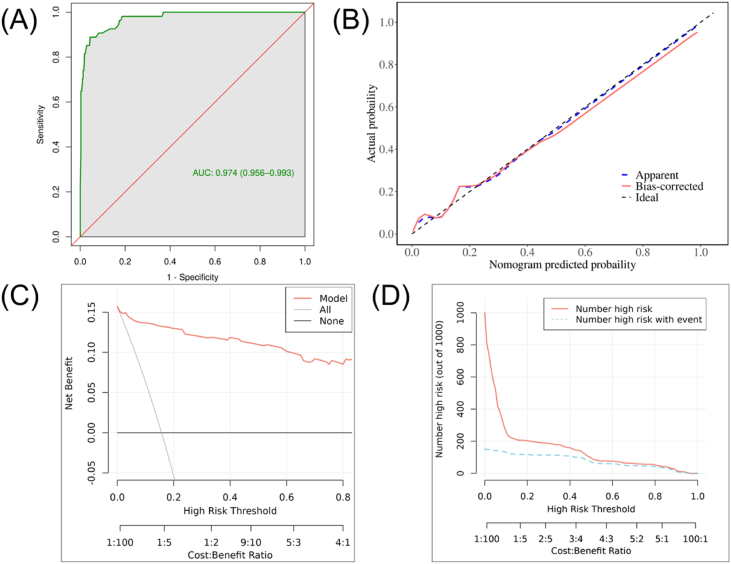
Results: The study involved 755 patients across both development and validation cohorts, with a TIVAP-CRBSI rate of 14.17%. The random forest model demonstrated the highest discrimination ability, achieving a validated AUC of 0.94, which was consistent in the validation cohort.
Conclusions: This study successfully developed a robust predictive model for TIVAP-CRBSI risk post-implantation. Implementation of this model may aid healthcare providers in making informed decisions, thereby potentially improving patient outcomes.
Keywords: Bloodstream infection; Cancer; Machine learning; Prediction model; Risk factor; Totally implantable venous access port.
© 2024 The Author(s).
Conflict of interest statement
The authors declare no conflict of interest.
Figures

References
LinkOut - more resources
Full Text Sources
