


Efficacy of Local Anesthesia for Radial Artery Puncture Pain: A Systematic Review and Network Meta-Analysis
- PMID: 39149654
- PMCID: PMC11326858
- DOI: 10.7759/cureus.64682
Efficacy of Local Anesthesia for Radial Artery Puncture Pain: A Systematic Review and Network Meta-Analysis
Abstract
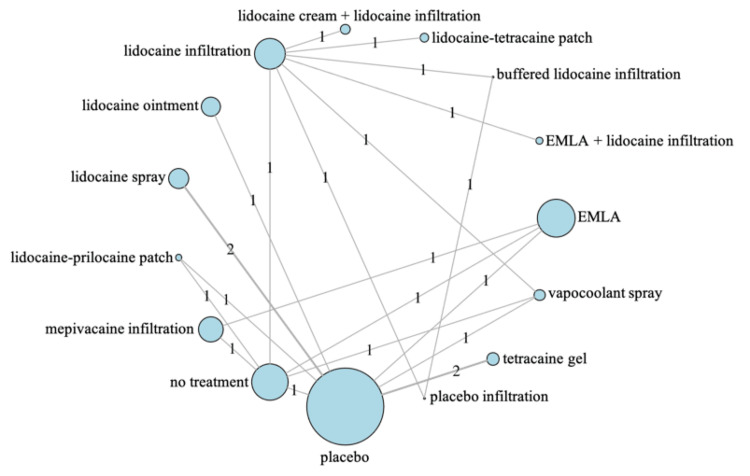
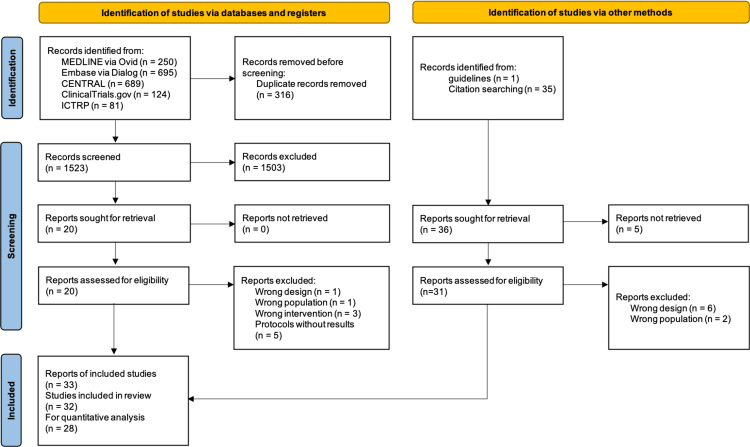
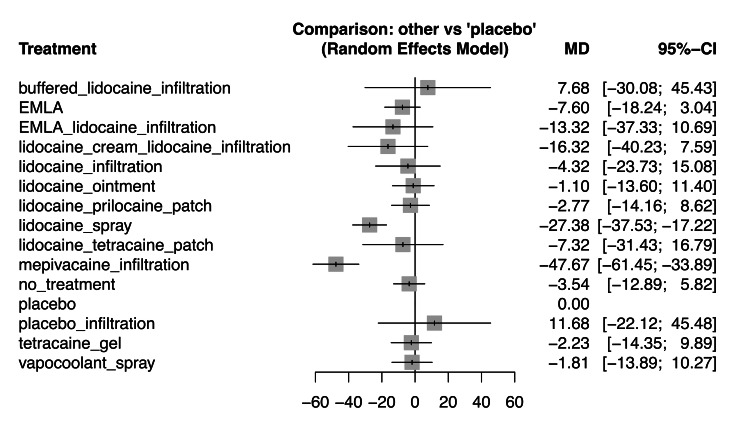
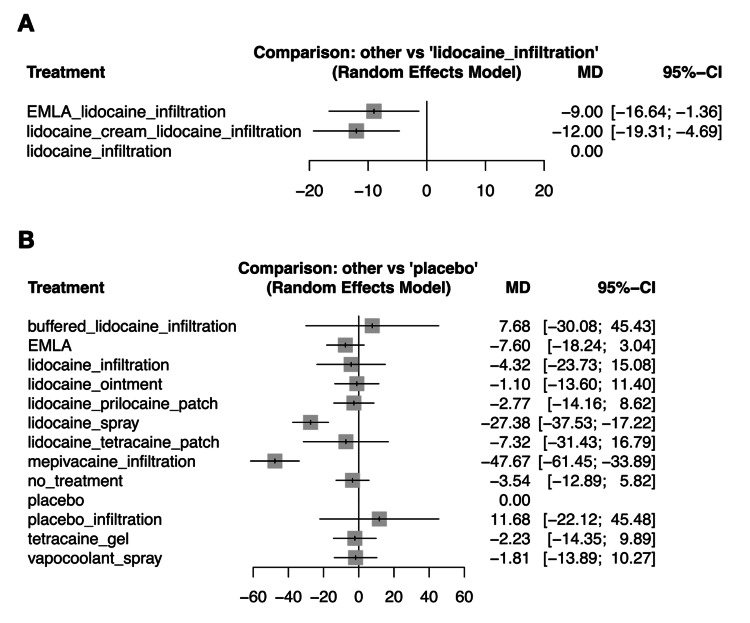
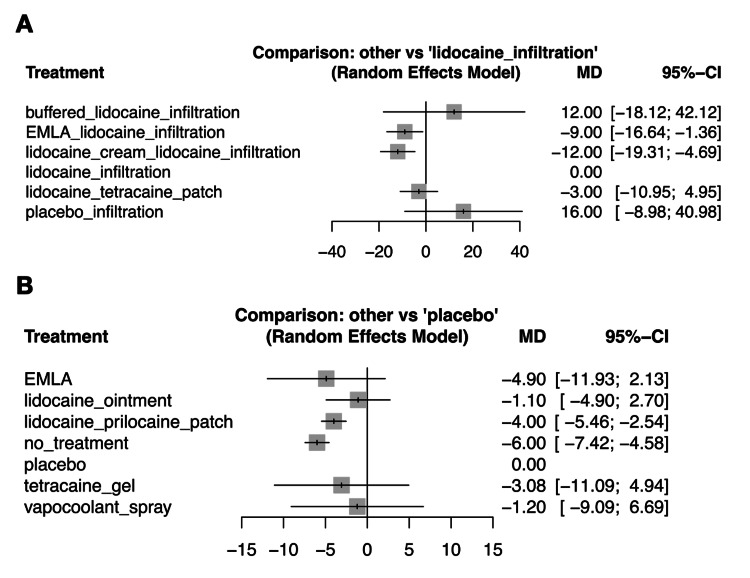
We performed a systematic review and network meta-analysis (NMA) to assist clinicians in determining the optimal patient-specific method of analgesia during radial artery puncture by comparing radial artery puncture procedural pain. We included randomized controlled trials that assessed the prophylactic efficacy of local anesthesia for radial artery puncture-associated pain. We searched the Medical Literature Analysis and Retrieval System Online in January 2023, the Cochrane Central Register of Controlled Trials in January 2023, the Excerpta Medica Database in December 2022, the World Health Organization International Clinical Trials Platform Search Portal in January 2023, and ClinicalTrials.gov in January 2023. We synthesized the pain scores (0-100 scale) using the frequentist random-effects NMA model. We evaluated the confidence in each outcome using the CINeMA tool (https://cinema.ispm.unibe.ch/). We conducted an NMA of 1,619 patients across 14 studies on pain scores during radial artery puncture-related procedures for 12 interventions. Compared with placebo, mepivacaine infiltration and lidocaine spray probably reduce pain (mean difference (MD): -47.67, 95% confidence interval (CI): -61.45 to -33.89, confidence rating (CR): moderate; MD: -27.38, 95% CI: -37.53 to -17.22, CR: moderate). Of the 32 studies included, none reported systemic adverse events, such as anaphylaxis or local anesthetic systemic toxicity, or severe local adverse events. In conclusion, mepivacaine infiltration and lidocaine spray probably reduce the pain associated with radial artery puncture more than other local anesthesia.
Keywords: analgesia; local anesthesia; network meta-analysis; pain management; radial artery puncture; systematic review.
Copyright © 2024, Yasuo et al.
Conflict of interest statement
Conflicts of interest: In compliance with the ICMJE uniform disclosure form, all authors declare the following: Payment/services info: All authors have declared that no financial support was received from any organization for the submitted work. Financial relationships: All authors have declared that they have no financial relationships at present or within the previous three years with any organizations that might have an interest in the submitted work. Other relationships: All authors have declared that there are no other relationships or activities that could appear to have influenced the submitted work.
Figures
References
-
- Interventions to reduce arterial puncture-related pain: a systematic review and meta-analysis. Gonella S, Clari M, Conti A, Simionato L, Tassone C, Berchialla P, Campagna S. Int J Nurs Stud. 2022;126:104131. - PubMed
-
- Effectiveness of lidocaine spray on radial arterial puncture pain: a randomized double-blind placebo controlled trial. Yıldız İU, Yıldırım Ç, Özhasenekler A, Şener A, Gökhan Ş. Am J Emerg Med. 2021;50:724–728. - PubMed
-
- 10% Lidocaine spray as a local anesthetic in blood gas sampling: a randomized, double-blind, placebo-controlled study. Gur A, Tekin E. Am J Emerg Med. 2021;49:89–93. - PubMed
-
- A case study of multiple-treatments meta-analysis demonstrates that covariates should be considered. Salanti G, Marinho V, Higgins JP. J Clin Epidemiol. 2009;62:857–864. - PubMed
Publication types
LinkOut - more resources
Full Text Sources