. 2020 Oct;5(4):6427-6434.
doi: 10.1109/lra.2020.3013900. Epub 2020 Aug 4.

Teleoperation and Contact Detection of a Waterjet-Actuated Soft Continuum Manipulator for Low-Cost Gastroscopy

Affiliations

Teleoperation and Contact Detection of a Waterjet-Actuated Soft Continuum Manipulator for Low-Cost Gastroscopy

Federico Campisano et al. IEEE Robot Autom Lett. 2020 Oct.

Abstract

Gastric cancer is the third leading cause of cancer deaths worldwide, with most new cases occurring in low and middle income countries, where access to screening programs is hindered by the high cost of conventional endoscopy. The waterjet-actuated HydroJet endoscopic platform was developed as a low-cost, disposable alternative for inspection of the gastric cavity in low-resource settings. In this work, we present a teleoperation scheme and contact detection algorithm that work together to enable intuitive teleoperation of the HydroJet within the confined space of the stomach. Using a geometrically accurate stomach model and realistic anatomical inspection targets, we demonstrate that, using these methods, a novice user can complete a gastroscopy in approximately the same amount of time with the HydroJet as with a conventional endoscope.

Keywords: Contact Modeling; Medical Robots and Systems; Telerobotics and Teleoperation.


Figures
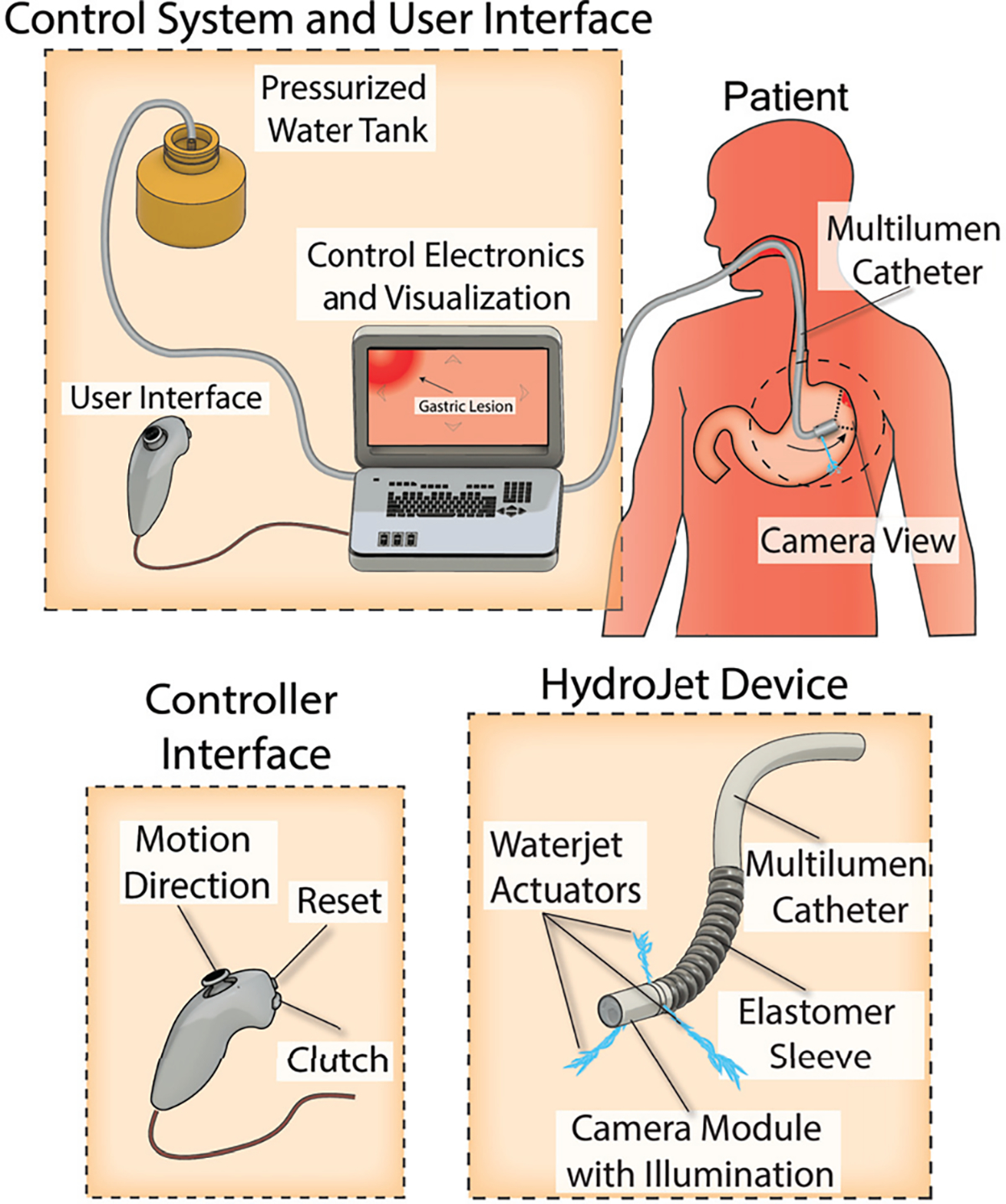
Fig. 1.
Fig. 1.
Schematic representation of UGI screening procedure using the HydroJet Endoscopic Platform. The user controls movement of the camera via the joystick, along with manual insertion of the catheter.
Fig. 2.
Fig. 2.
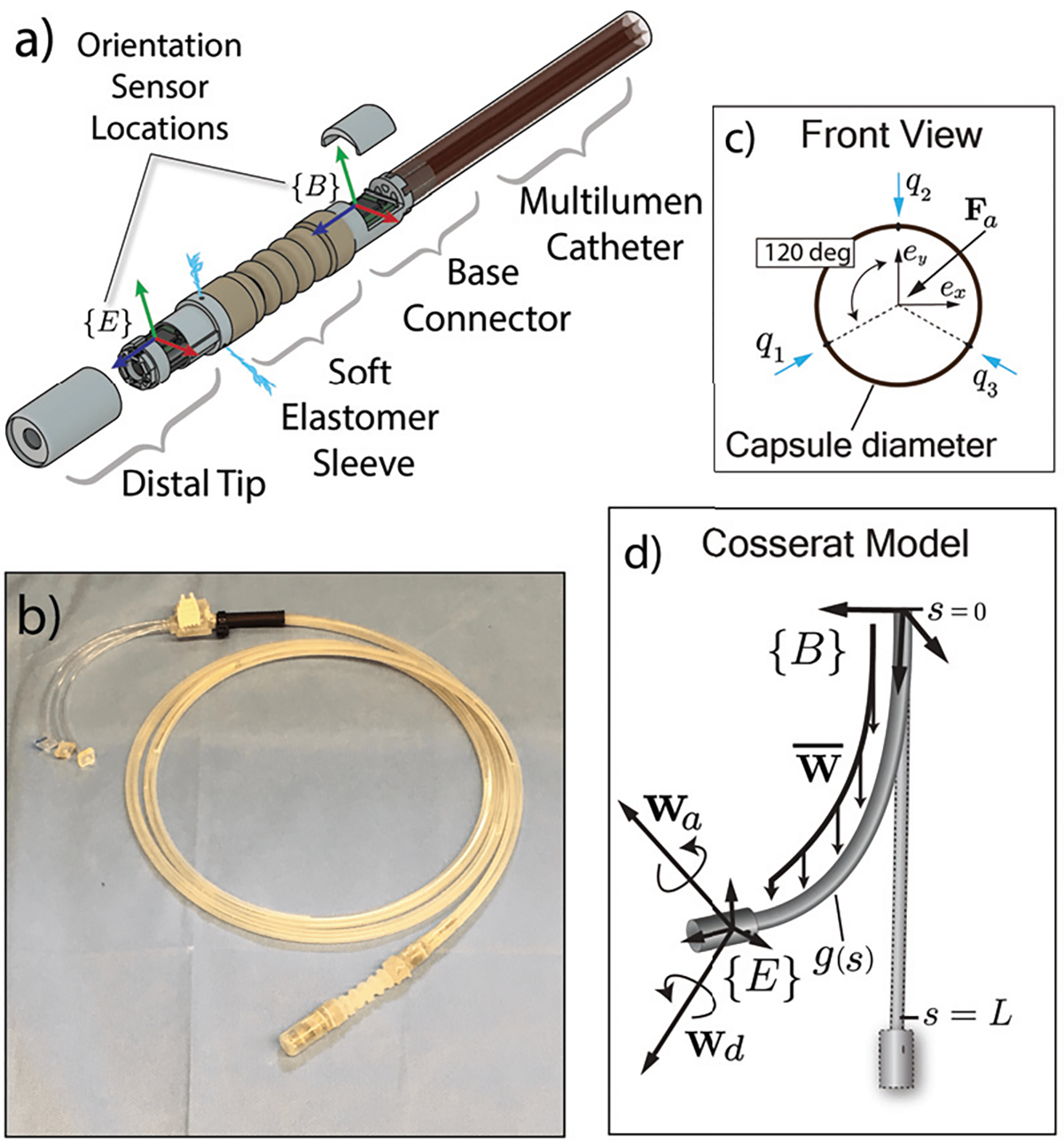
a) Exploded view diagram of the HydroJet device. b) Photo of the prototype used in experiments. c) Head-on view diagram of the capsule tip, showing the direction of the jet locations and coordinate frame definition. d) Kinematic variable definitions used for the Cosserat rod model.
Fig. 3.
Fig. 3.
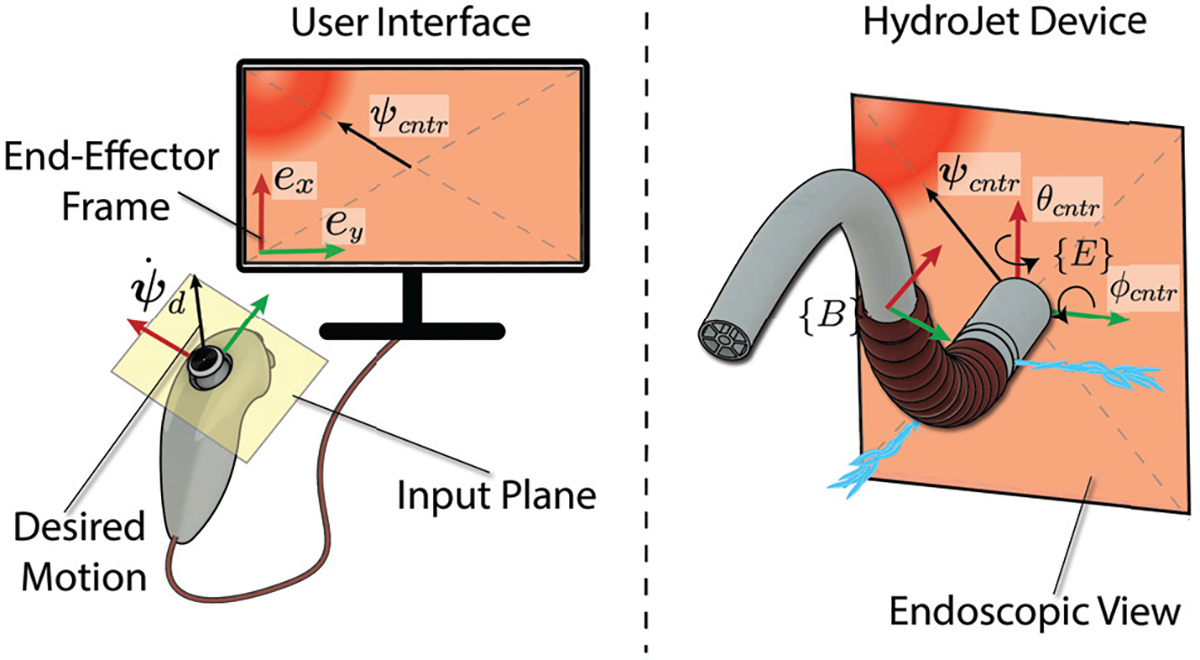
The rotation of the tip frame is commanded by summing the desired tip velocity obtained from the joystick to the orientation error obtained through inertial measurement units.
Fig. 4.
Fig. 4.
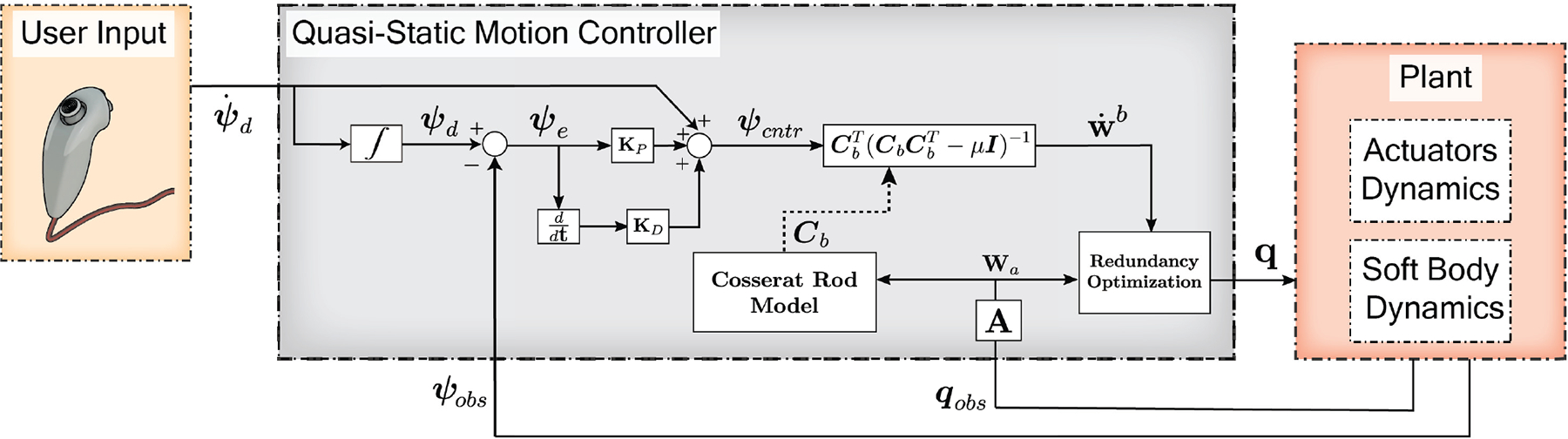
Block diagram representation of the proposed teleoperation scheme.
Fig. 5.
Fig. 5.
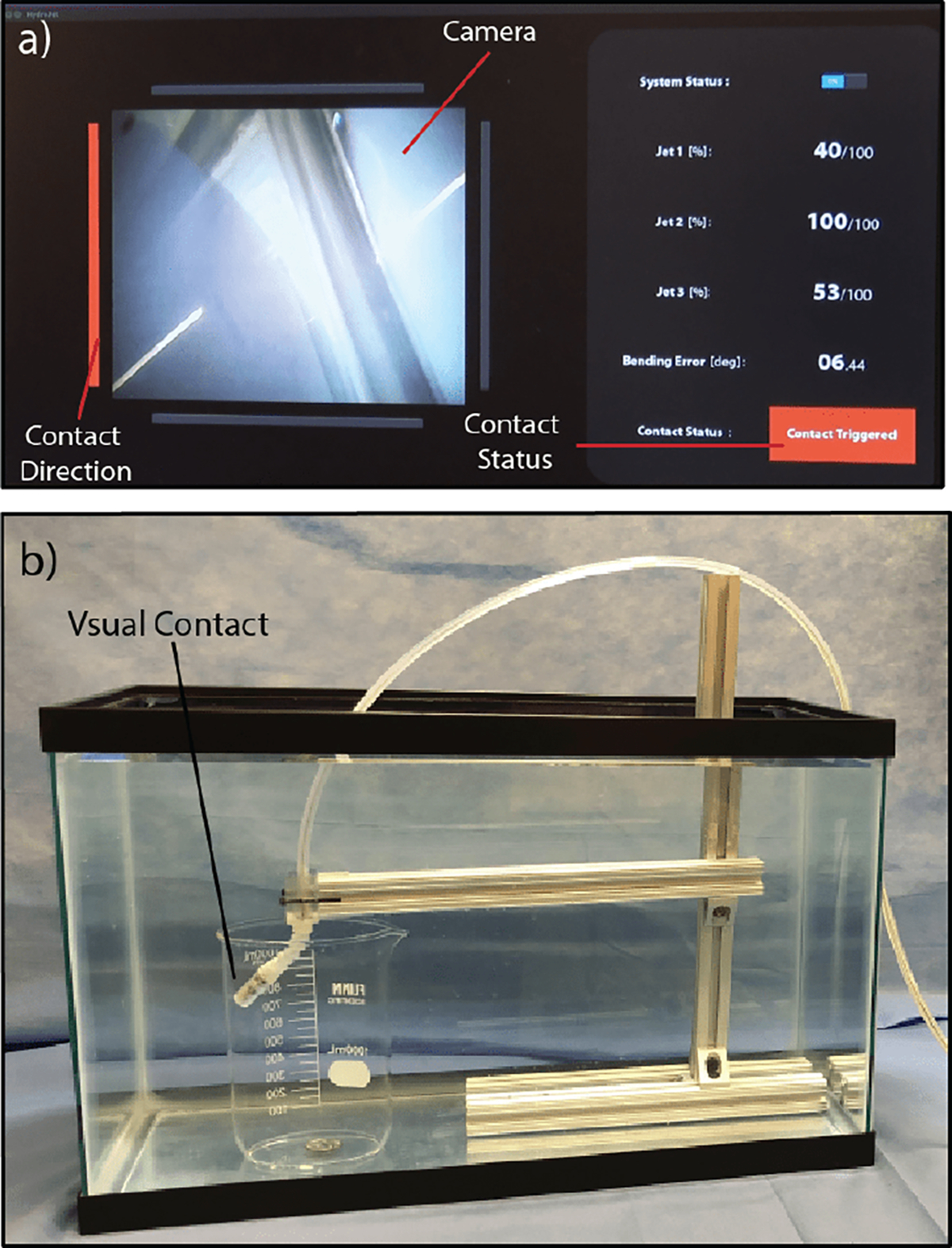
a) User interface communicating left side contact detection via the red bar on the left side of the screen and the red ”Contact Triggered” status. b) Experimental setup for the repeated contact detection trials, including the contact which generated the messages on the GUI in (a).
Fig. 6.
Fig. 6.
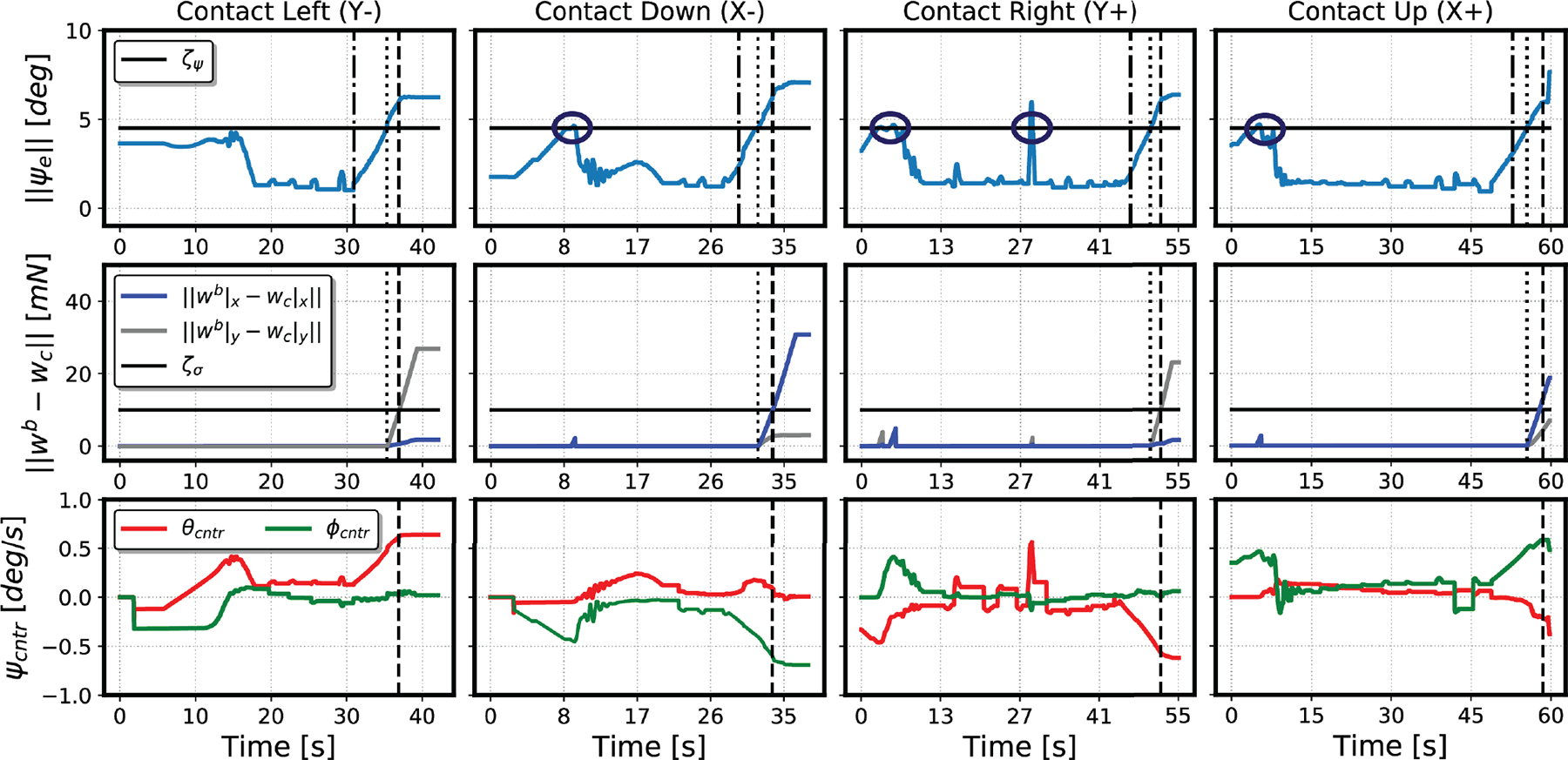
Results of contact detection trials in four directions (left, down, right, up) with respect to the camera frame. The first row shows the kinematic error measurement over time, with the horizontal line representing the threshold for possible contact. The vertical lines represent the time of visual contact, possible contact detected, and contact confirmed by the algorithm (in order from left to right). Circled locations on these plots correspond to times when transient error resulted in the algorithm identifying possible contact temporarily. The second row shows the change in force after the detection of possible contact. In each case, this measure increases in the direction of contact without bringing the error back below the possible contact threshold. The third row shows the commanded motions, which determine the direction of contact along each axis.
Fig. 7.
Fig. 7.
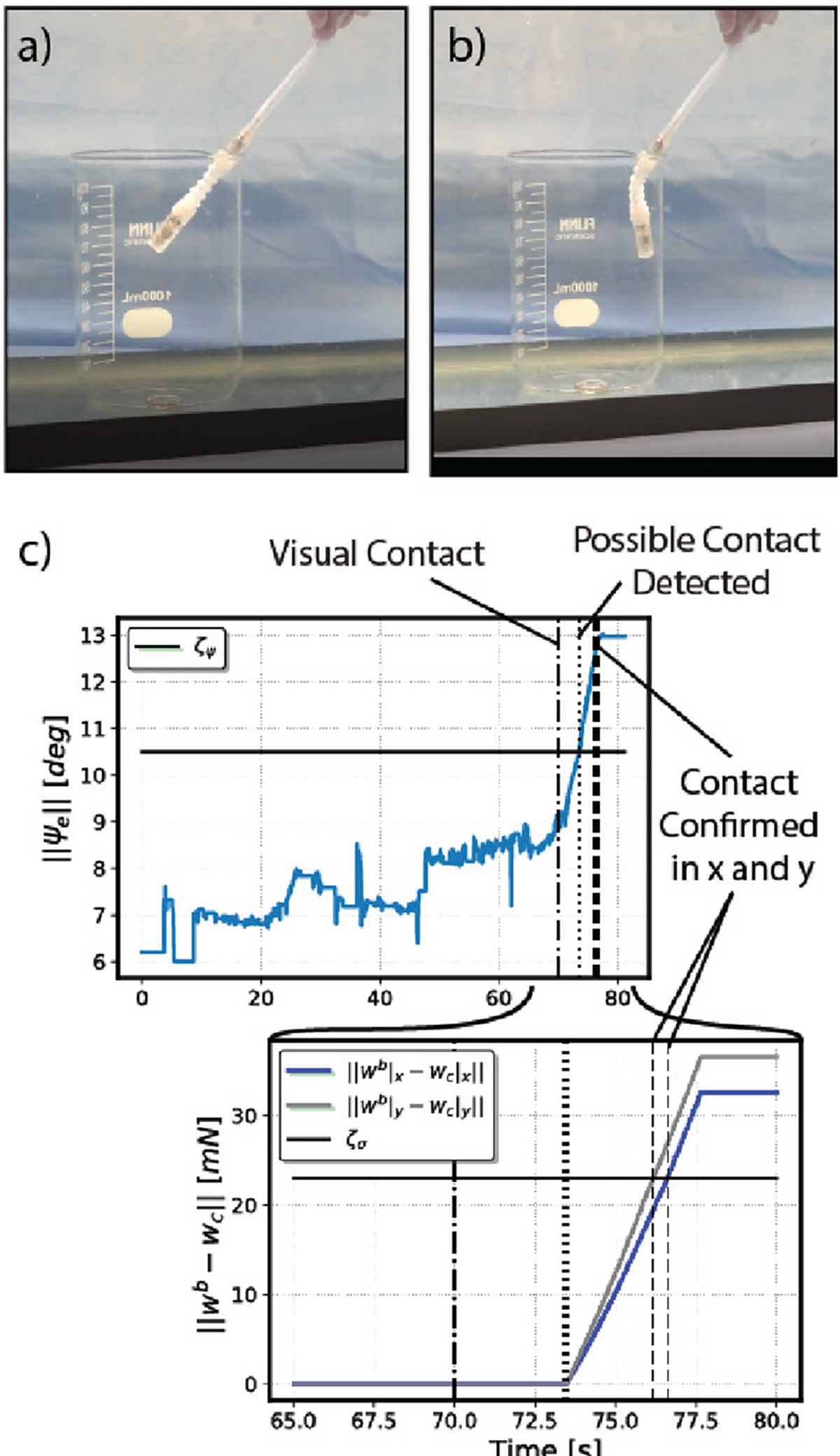
a) Starting configuration with user holding the HydroJet. b) Configuration after visual contact is triggered. c) Experimental plots showing the norm of the orientation error and the difference between the current commanded wrench and the commanded wrench at the onset of possible contact.
Fig. 8.
Fig. 8.
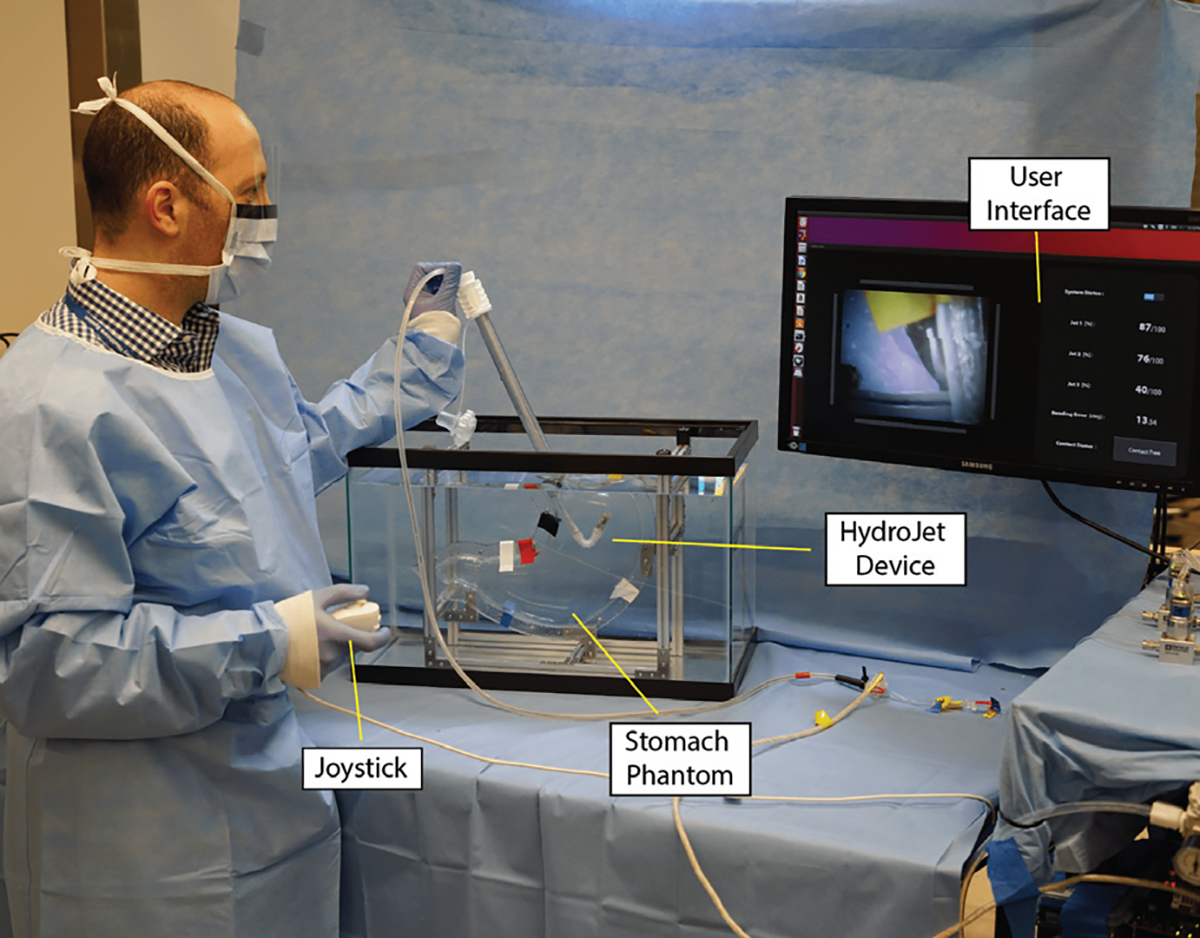
Teleoperation experiment with an expert gastroenterologist using the HJ device. The stomach phantom is shown in the image for illustrative purposes, but was covered during the experiments.
Fig. 9.
Fig. 9.
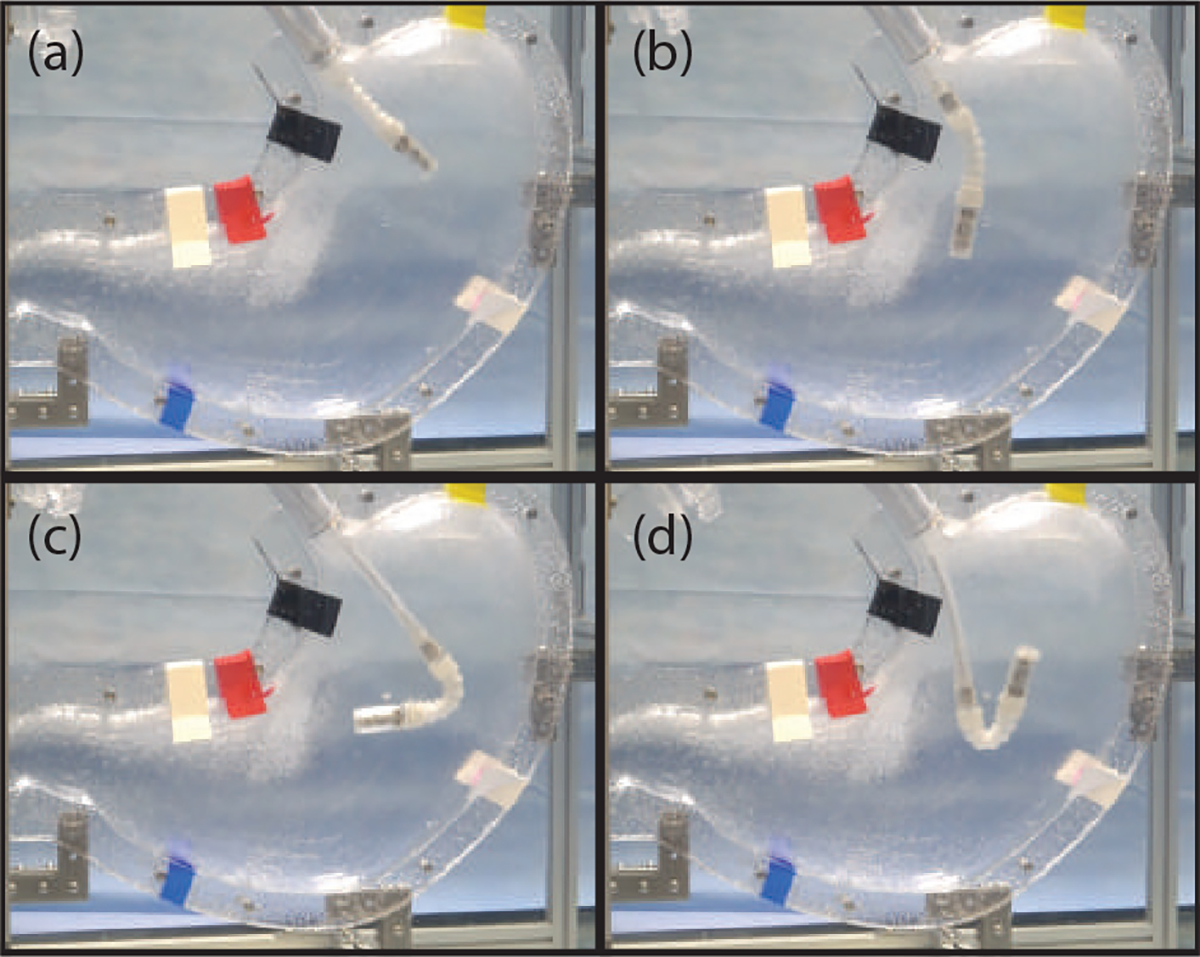
Endoscope configurations when visualizing various markers representing key GI landmarks.

References

    1. Ferlay J, Shin H-R, Bray F, Forman D, Mathers C, and Parkin DM, “Estimates of worldwide burden of cancer in 2008: Globocan 2008,” International journal of cancer, vol. 127, no. 12, pp. 2893–2917, 2010. - PubMed
    1. De Martel C, Ferlay J, Franceschi S, Vignat J, Bray F, Forman D, and Plummer M, “Global burden of cancers attributable to infections in 2008: a review and synthetic analysis,” The lancet oncology, vol. 13, no. 6, pp. 607–615, 2012. - PubMed
    1. Lee K-J, Inoue M, Otani T, Iwasaki M, Sasazuki S, and Tsugane S, “Gastric cancer screening and subsequent risk of gastric cancer: a largescale population-based cohort study, with a 13-year follow-up in japan,” International journal of cancer, vol. 118, no. 9, pp. 2315–2321, 2006. - PubMed
    1. Pasechnikov V, Chukov S, Fedorov E, Kikuste I, and Leja M, “Gastric cancer: prevention, screening and early diagnosis,” World journal of gastroenterology: WJG, vol. 20, no. 38, p. 13842, 2014. - PMC - PubMed
    1. Ranzani T, Gerboni G, Cianchetti M, and Menciassi A, “A bioinspired soft manipulator for minimally invasive surgery,” Bioinspiration & biomimetics, vol. 10, no. 3, p. 035008, 2015. - PubMed

LinkOut - more resources