Epidemiology of metabolic dysfunction-associated steatotic liver disease
- PMID: 39159948
- PMCID: PMC11925440
- DOI: 10.3350/cmh.2024.0431
Epidemiology of metabolic dysfunction-associated steatotic liver disease
Abstract
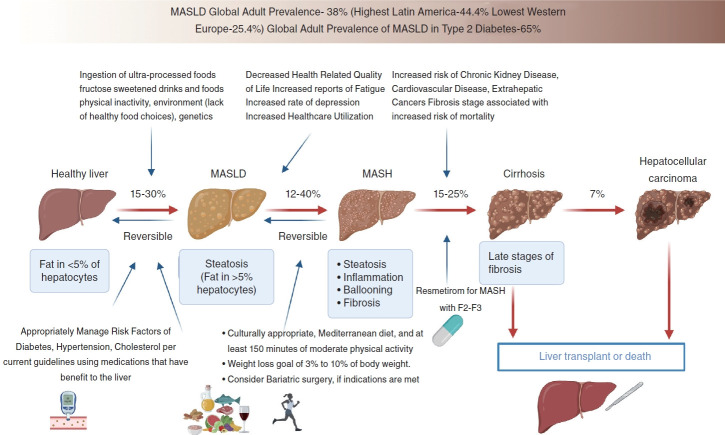
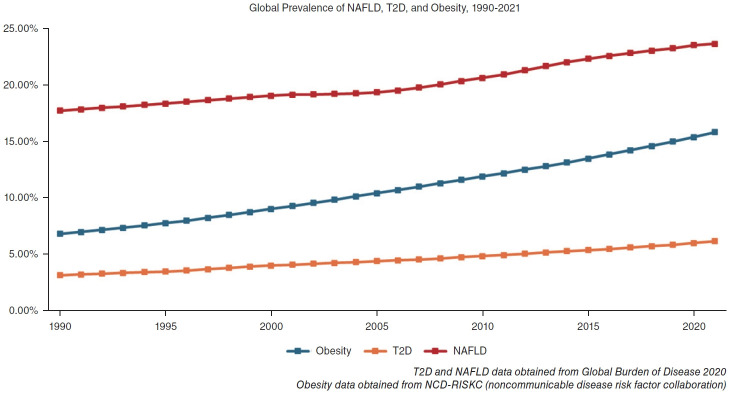
As the rates of obesity and type 2 diabetes (T2D) continue to increase globally, so does the prevalence of metabolic dysfunction-associated steatotic liver disease (MASLD). Currently, 38% of all adults and 7-14% of children and adolescents have MASLD. By 2040, the MASLD prevalence rate for adults is projected to increase to more than 55%. Although MASLD does not always develop into progressive liver disease, it has become the top indication for liver transplant in the United States for women and those with hepatocellular carcinoma (HCC). Nonetheless, the most common cause of mortality among patients with MASLD remains cardiovascular disease. In addition to liver outcomes (cirrhosis and HCC), MASLD is associated with an increased risk of developing de novo T2D, chronic kidney disease, sarcopenia, and extrahepatic cancers. Furthermore, MASLD is associated with decreased health-related quality of life, decreased work productivity, fatigue, increased healthcare resource utilization, and a substantial economic burden. Similar to other metabolic diseases, lifestyle interventions such as a heathy diet and increased physical activity remain the cornerstone of managing these patients. Although several obesity and T2D drugs are available to treat co-morbid disease, resmetirom is the only MASH-targeted medication for patients with stage 2-3 fibrosis that has approved by the Food and Drug Administration for use in the United States. This review discusses MASLD epidemiology and its related risk factors and outcomes and demonstrates that without further global initiatives, MASLD incidence could continue to increase.
Keywords: Insulin resistance; MASLD; Metabolic syndrome; Type 2 diabetes.
Conflict of interest statement
ZM Younossi has received research funding and/or serve as consultant to Intercept, Cymabay, Boehringer Ingelheim, Ipsen, BMS, GSK, NovoNordisk, Siemens, Madridgal, Merck, Akero and Abbott. All other authors have not received any funding.
Figures
References
-
- Addison T. Observations on fatty degeneration of the liver. Guys Hosp Rep. 1836;1:476–485.
-
- Ludwig J, Viggiano TR, McGill DB, Oh BJ. Nonalcoholic steatohepatitis: Mayo Clinic experiences with a hitherto unnamed disease. Mayo Clin Proc. 1980;55:434–438. - PubMed
-
- Batman PA, Scheuer PJ. Diabetic hepatitis preceding the onset of glucose intolerance. Histopathology. 1985;9:237–243. - PubMed
-
- Schaffner F, Thaler H. Nonalcoholic fatty liver disease. Prog Liver Dis. 1986;8:283–298. - PubMed
Publication types
MeSH terms
Grants and funding
LinkOut - more resources
Full Text Sources
Medical
Research Materials