


The current status and future of targeted-immune combination for hepatocellular carcinoma
- PMID: 39161764
- PMCID: PMC11330771
- DOI: 10.3389/fimmu.2024.1418965
The current status and future of targeted-immune combination for hepatocellular carcinoma
Abstract
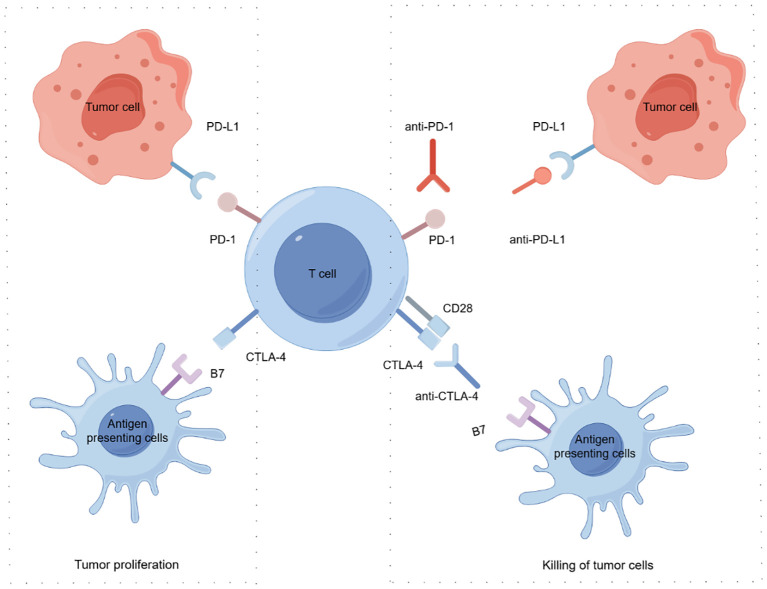
Hepatocellular carcinoma (HCC) is one of the most common cancers and the third leading cause of death worldwide. surgery, transarterial chemoembolization (TACE), systemic therapy, local ablation therapy, radiotherapy, and targeted drug therapy with agents such as sorafenib. However, the tumor microenvironment of liver cancer has a strong immunosuppressive effect. Therefore, new treatments for liver cancer are still necessary. Immune checkpoint molecules, such as programmed death-1 (PD-1), programmed death-ligand 1 (PD-L1), and cytotoxic T lymphocyte antigen-4 (CTLA-4), along with high levels of immunosuppressive cytokines, induce T cell inhibition and are key mechanisms of immune escape in HCC. Recently, immunotherapy based on immune checkpoint inhibitors (ICIs) as monotherapy or in combination with tyrosine kinase inhibitors, anti-angiogenesis drugs, chemotherapy agents, and topical therapies has offered great promise in the treatment of liver cancer. In this review, we discuss the latest advances in ICIs combined with targeted drugs (targeted-immune combination) and other targeted-immune combination regimens for the treatment of patients with advanced HCC (aHCC) or unresectable HCC (uHCC), and provide an outlook on future prospects. The literature reviewed spans the last five years and includes studies identified using keywords such as "hepatocellular carcinoma," "immune checkpoint inhibitors," "targeted therapy," "combination therapy," and "immunotherapy".
Keywords: CTLA-4; HCC; ICIS; anti-PD-1; anti-PD-L1; targeted-immune combination.
Copyright © 2024 Hao, Li, Ye, Wang, Zhong, Zhang, Hu and Huang.
Conflict of interest statement
The authors declare that the research was conducted in the absence of any commercial or financial relationships that could be construed as a potential conflict of interest.
Figures
References
-
- Chen LT, Martinelli E, Cheng AL, Pentheroudakis G, Qin S, Bhattacharyya GS, et al. . Pan-asian adapted esmo clinical practice guidelines for the management of patients with intermediate and advanced/relapsed hepatocellular carcinoma: A tos-esmo initiative endorsed by csco, ismpo, jsmo, ksmo, mos and sso. Ann Oncol. (2020) 31:334–51. doi: 10.1016/j.annonc.2019.12.001 - DOI - PubMed
Publication types
MeSH terms
Substances
LinkOut - more resources
Full Text Sources
Medical
Research Materials
Miscellaneous
