


Investigation of non-communicable diseases prevalence, patterns, and patient outcomes in hospitalized populations: a prospective observational study in three tertiary hospitals
- PMID: 39164738
- PMCID: PMC11337899
- DOI: 10.1186/s41043-024-00599-z
Investigation of non-communicable diseases prevalence, patterns, and patient outcomes in hospitalized populations: a prospective observational study in three tertiary hospitals
Abstract
Background: Non-communicable diseases (NCDs) pose a significant global health challenge, constituting over 80% of mortality and morbidity. This burden is particularly pronounced in low- and middle-income countries (LMICs), including Ethiopia. Despite this, there's limited research on this issue in Africa. This study aims to investigate the prevalence, patterns, and outcomes of NCDs in hospitalized populations across three tertiary hospitals in Ethiopia.
Methods: A hospital-based cohort study (August 2022 - January 2023) included patients aged 14 and older diagnosed with cardiovascular diseases (CVDs), diabetes mellitus (DM), chronic obstructive pulmonary disease (COPD), asthma, or cancer at three Ethiopian hospitals. Data on demographics, socio-economic factors, clinical characteristics, and outcomes were collected through medical records and interviews. Logistic regression identified factors independently associated with in-hospital mortality, with p ≤ 0.05 considered statistically significant.
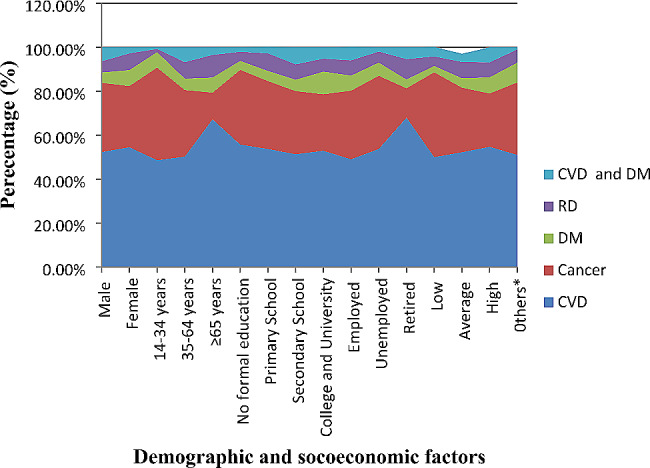
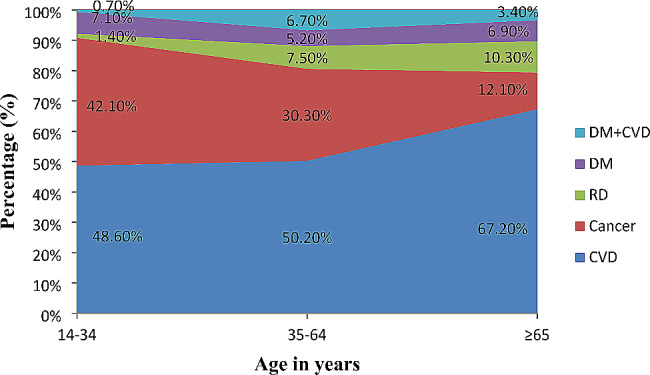
Results: In the study across three tertiary hospitals involving 2,237 patients, we uncovered the impact of NCDs. About 23.4% of patients struggled with NCDs, with cardiovascular diseases (53.3%), cancer (29.6%), diabetes (6.1%), and respiratory diseases (6.5%) being the most prevalent. Notably, among those affected, women comprised a slight majority (55.1%), with the average patient age being 47.2 years. Unfortunately, 15.3% of patients with NCDs faced in-hospital mortality. Our analysis revealed predictors of mortality, including cancer diagnosis (adjusted odds ratio [AOR]:1.6, 95% CI: 1.2-1.8, p = 0.01), medication adherence ( AOR: 0.36, 95% CI: 0.21-0.64, p < 0.001), concurrent infections (AOR: 0.36, 95% CI: 0.16-0.86, p < 0.001), chronic kidney diseases (CKD) (AOR: 0.35, 95% CI: 0.14-0.85, p = 0.02), and complications during hospitalization (AOR: 6.36, 95% CI: 3.45-11.71, p < 0.001).
Conclusion: Our study reveals a substantial prevalence of NCDs among hospitalized patients, affecting approximately one in four individuals, primarily with CVDs and cancer. Alarmingly, a significant proportion of these patients did not survive their hospitalization, emphasizing the urgent need for targeted interventions to enhance outcomes in this population.
Keywords: Clinical outcomes; Hospital admissions; Non-communicable diseases; Socio-economic disparities.
© 2024. The Author(s).
Conflict of interest statement
The authors declare no competing interests.
Figures


References
-
- Bennett JE, Stevens GA, Mathers CD, Bonita R, Rehm J, Kruk ME et al. NCD Countdown 2030: worldwide trends in non-communicable disease mortality and progress towards Sustainable Development Goal target 3.4. The Lancet (2018) 22;(392):1072–88. - PubMed
Publication types
MeSH terms
Grants and funding
LinkOut - more resources
Full Text Sources
