


PTEN in kidney diseases: a potential therapeutic target in preventing AKI-to-CKD transition
- PMID: 39165377
- PMCID: PMC11333338
- DOI: 10.3389/fmed.2024.1428995
PTEN in kidney diseases: a potential therapeutic target in preventing AKI-to-CKD transition
Abstract
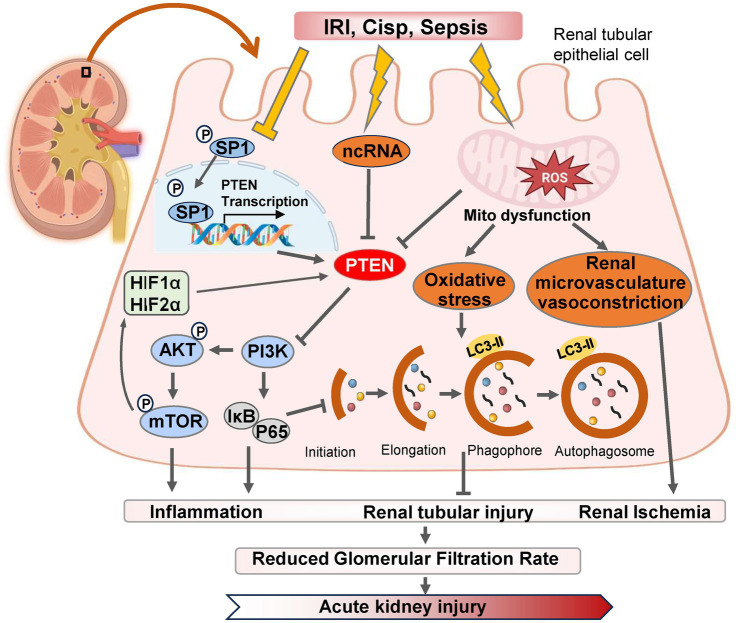
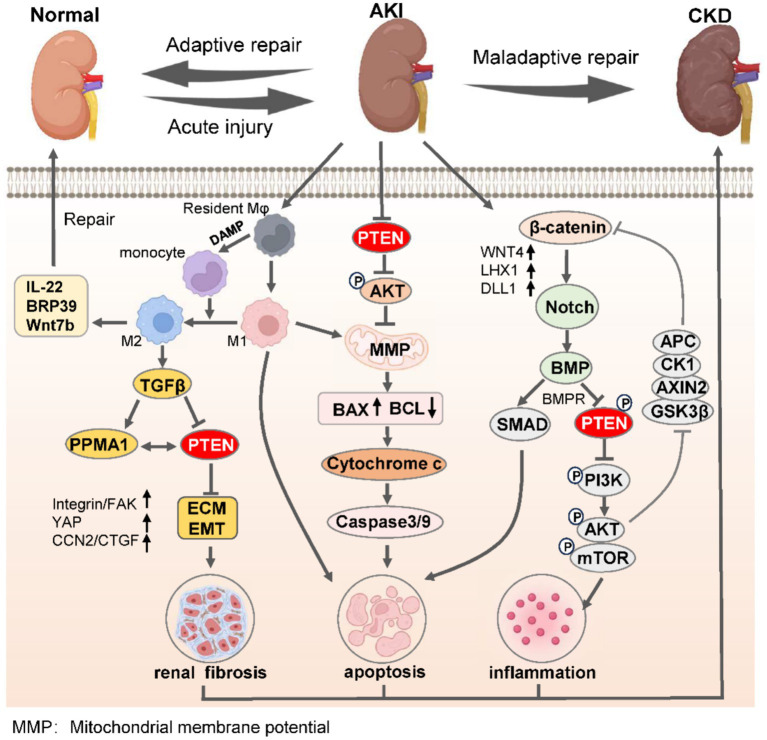
Renal fibrosis, a critical factor in the development of chronic kidney disease (CKD), is predominantly initiated by acute kidney injury (AKI) and subsequent maladaptive repair resulting from pharmacological or pathological stimuli. Phosphatase and tensin homolog (PTEN), also known as phosphatase and tensin-associated phosphatase, plays a pivotal role in regulating the physiological behavior of renal tubular epithelial cells, glomeruli, and renal interstitial cells, thereby preserving the homeostasis of renal structure and function. It significantly impacts cell proliferation, apoptosis, fibrosis, and mitochondrial energy metabolism during AKI-to-CKD transition. Despite gradual elucidation of PTEN's involvement in various kidney injuries, its specific role in AKI and maladaptive repair after injury remains unclear. This review endeavors to delineate the multifaceted role of PTEN in renal pathology during AKI and CKD progression along with its underlying mechanisms, emphasizing its influence on oxidative stress, autophagy, non-coding RNA-mediated recruitment and activation of immune cells as well as renal fibrosis. Furthermore, we summarize prospective therapeutic targeting strategies for AKI and CKD-treatment related diseases through modulation of PTEN.
Keywords: AKI; AKI-to-CKD; CKD; PTEN; kidney.
Copyright © 2024 Cao, Li, Peng, Li, Yang, Hu, Zhang and Wang.
Conflict of interest statement
The authors declare that the research was conducted in the absence of any commercial or financial relationships that could be construed as a potential conflict of interest.
Figures
References
Publication types
LinkOut - more resources
Full Text Sources
Research Materials
