


Single domain antibody: Development and application in biotechnology and biopharma
- PMID: 39166870
- PMCID: PMC11659936
- DOI: 10.1111/imr.13381
Single domain antibody: Development and application in biotechnology and biopharma
Abstract
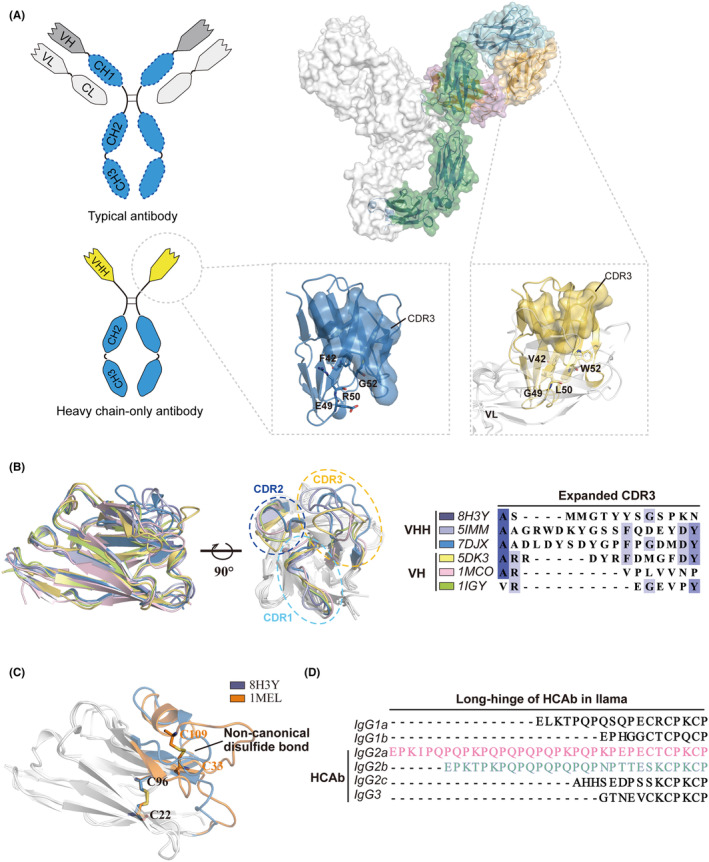
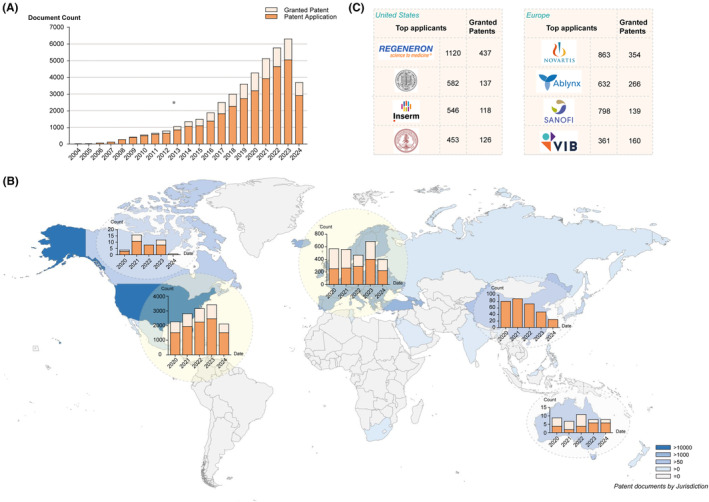
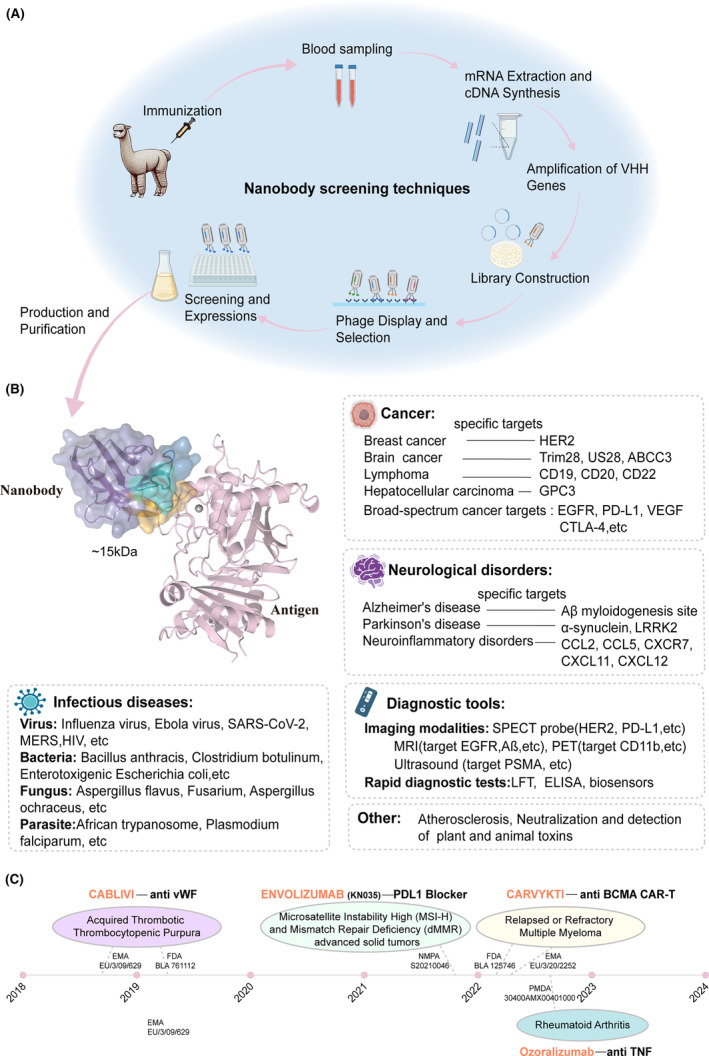
Heavy-chain antibodies (HCAbs) are a unique type of antibodies devoid of light chains, and comprised of two heavy chains-only that recognize their cognate antigen by virtue of a single variable domain also referred to as VHH, single domain antibody (sdAb), or nanobody (Nb). These functional HCAbs, serendipitous discovered about three decades ago, are exclusively found in camelids, comprising dromedaries, camels, llamas, and vicugnas. Nanobodies have become an essential tool in biomedical research and medicine, both in diagnostics and therapeutics due to their beneficial properties: small size, high stability, strong antigen-binding affinity, low immunogenicity, low production cost, and straightforward engineering into more potent affinity reagents. The occurrence of HCAbs in camelids remains intriguing. It is believed to be an evolutionary adaptation, equipping camelids with a robust adaptive immune defense suitable to respond to the pressure from a pathogenic invasion necessitating a more profound antigen recognition and neutralization. This evolutionary innovation led to a simplified HCAb structure, possibly supported by genetic mutations and drift, allowing adaptive mutation and diversification in the heavy chain variable gene and constant gene regions. Beyond understanding their origins, the application of nanobodies has significantly advanced over the past 30 years. Alongside expanding laboratory research, there has been a rapid increase in patent application for nanobodies. The introduction of commercial nanobody drugs such as Cablivi, Nanozora, Envafolimab, and Carvykti has boosted confidence among in their potential. This review explores the evolutionary history of HCAbs, their ontogeny, and applications in biotechnology and pharmaceuticals, focusing on approved and ongoing medical research pipelines.
Keywords: VHH; biotechnological tools; diagnosis; heavy chain antibodies; nanobody; single‐domain antibody; therapeutics.
© 2024 The Author(s). Immunological Reviews published by John Wiley & Sons Ltd.
Conflict of interest statement
The authors declare that the research was conducted in the absence of any commercial or financial relationships that could be construed as a potential conflict of interest.
Figures
References
-
- Agnew D. Chapter 7 ‐ Camelidae. In: Terio KA, McAloose D, Leger JS, eds. Pathology of Wildlife and Zoo Animals. Academic Press; 2018:185‐205.
-
- Hamers‐Casterman C, Atarhouch T, Muyldermans S, et al. Naturally occurring antibodies devoid of light chains. Nature. 1993;363(6428):446‐448. - PubMed
-
- Blanc MR, Anouassi A, Ahmed Abed M, et al. A one‐step exclusion‐binding procedure for the purification of functional heavy‐chain and mammalian‐type gamma‐globulins from camelid sera. Biotechnol Appl Biochem. 2009;54(4):207‐212. - PubMed
Publication types
MeSH terms
Substances
Grants and funding
LinkOut - more resources
Full Text Sources
Miscellaneous
