


Peritoneal infection after colorectal cancer surgery induces substantial alterations in postoperative protein levels: an exploratory study
- PMID: 39167197
- PMCID: PMC11339184
- DOI: 10.1007/s00423-024-03451-4
Peritoneal infection after colorectal cancer surgery induces substantial alterations in postoperative protein levels: an exploratory study
Abstract
Purpose: Peritoneal infection, due to anastomotic leakage, after resection for colorectal cancer have been shown to associate with increased cancer recurrence and mortality, as well as cardiovascsular morbidity. Alterations in circulating protein levels could help shed light on the underlying mechanisms, prompting this exploratory study of 64 patients operated for colorectal cancer with anastomosis.
Methods: Thirty-two cases who suffered a postoperative peritoneal infection were matched with 32 controls who had a complication-free postoperative stay. Proteins in serum samples at their first postoperative visit and at one year after surgery were analysed using proximity extension assays and enzyme-linked immunosorbent assays. Multivariate projection methods, adjusted for multiple testing, were used to compare levels between groups, and enrichment and network analyses were performed.
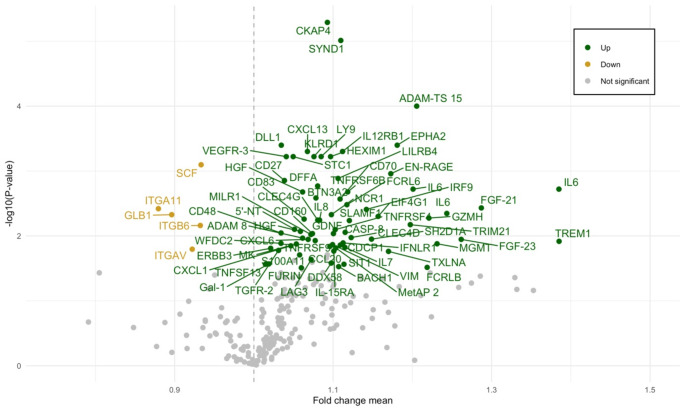
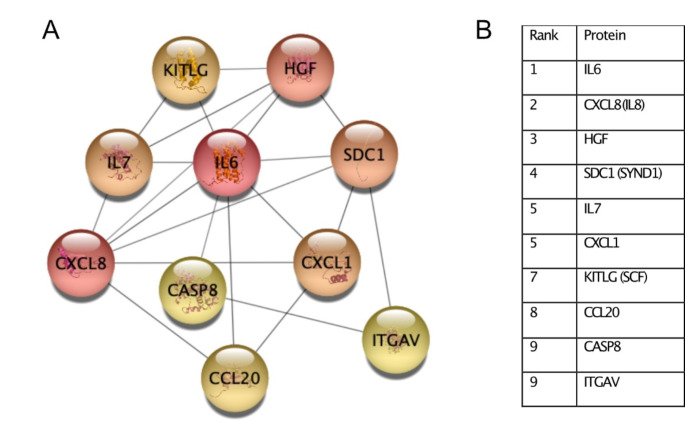
Results: Seventy-seven proteins, out of 270 tested, were differentially expressed at a median sampling time of 41 days postoperatively. These proteins were all normalised one year after surgery. Many of the differentially expressed top hub proteins have known involvement in cancer progression, survival, invasiveness and metastasis. Over-represented pathways were related to cardiomyopathy, cell-adhesion, extracellular matrix, phosphatidylinositol-3-kinase/Akt (PI3K-Akt) and transforming growth factor beta (TGF-β) signaling.
Conclusion: These affected proteins and pathways could provide clues as to why patients with peritoneal infection might suffer increased cancer recurrence, mortality and cardiovascular morbidity.
Keywords: Anastomotic leakage; Colorectal cancer; Inflammation; Pathways; Proteomics; Recurrence; Survival.
© 2024. The Author(s).
Conflict of interest statement
The authors declare that there is no conflict of interest.
The authors declare no competing interests.
Figures
References
-
- Kube R et al (2010) Anastomotic leakage after colon cancer surgery: a predictor of significant morbidity and hospital mortality, and diminished tumour-free survival. Eur J Surg Oncol 36(2):120–124 - PubMed
-
- Lu ZR et al (2016) Anastomotic leaks after restorative resections for rectal Cancer Compromise Cancer outcomes and Survival. Dis Colon Rectum 59(3):236–244 - PubMed
-
- Alonso S et al (2014) Postoperative intra-abdominal infection and colorectal cancer recurrence: a prospective matched cohort study of inflammatory and angiogenic responses as mechanisms involved in this association. Eur J Surg Oncol (EJSO), 41 - PubMed
MeSH terms
LinkOut - more resources
Full Text Sources
Medical
