


The Estrogen Receptor-Related Orphan Receptors Regulate Autophagy through TFEB
- PMID: 39168657
- PMCID: PMC11413914
- DOI: 10.1124/molpharm.124.000889
The Estrogen Receptor-Related Orphan Receptors Regulate Autophagy through TFEB
Abstract
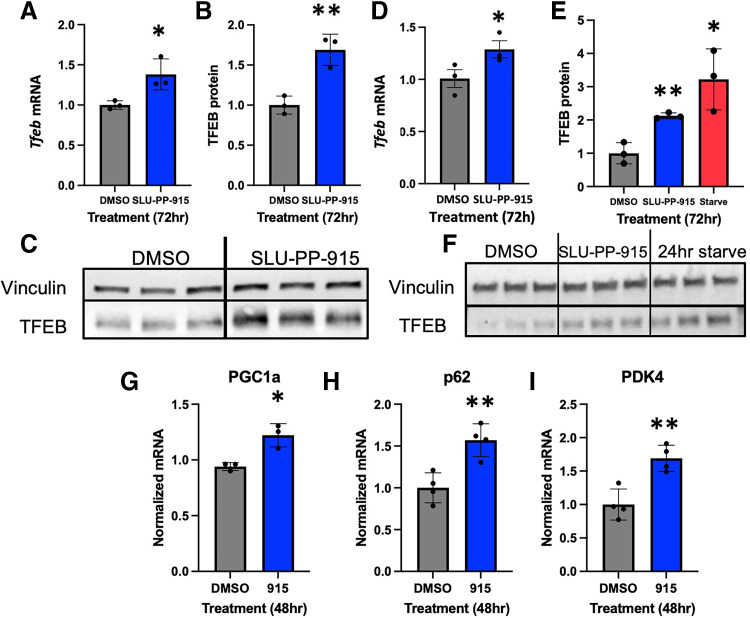
Autophagy is an essential self-degradative and recycling mechanism that maintains cellular homeostasis. Estrogen receptor-related orphan receptors (ERRs) are fundamental in regulating cardiac metabolism and function. Previously, we showed that ERR agonists improve cardiac function in models of heart failure and induce autophagy. Here, we characterized a mechanism by which ERRs induce the autophagy pathway in cardiomyocytes. Transcription factor EB (TFEB) is a master regulator of the autophagy-lysosome pathway and has been shown to be crucial regulator of genes that control autophagy. We discovered that TFEB is a direct ERR target gene whose expression is induced by ERR agonists. Activation of ERR results in increased TFEB expression in both neonatal rat ventricular myocytes and C2C12 myoblasts. An ERR-dependent increase in TFEB expression results in increased expression of an array of TFEB target genes, which are critical for the stimulation of autophagy. Pharmacologically targeting ERR is a promising potential method for the treatment of many diseases where stimulation of autophagy may be therapeutic, including heart failure. SIGNIFICANCE STATEMENT: Estrogen receptor-related receptor agonists function as exercise mimetics and also display efficacy in animal models of metabolic disease, obesity, and heart failure.
Copyright © 2024 by The American Society for Pharmacology and Experimental Therapeutics.
Figures


References
-
- Abdellatif M, Sedej S, Carmona-Gutierrez D, Madeo F, Kroemer G (2018) Autophagy in Cardiovascular Aging. Circ Res 123:803–824. - PubMed
MeSH terms
Substances
Grants and funding
LinkOut - more resources
Full Text Sources
Molecular Biology Databases