


Canine on the Couch: The New Canary in the Coal Mine for Environmental Health Research
- PMID: 39170948
- PMCID: PMC11334179
- DOI: 10.1021/envhealth.4c00029
Canine on the Couch: The New Canary in the Coal Mine for Environmental Health Research
Abstract
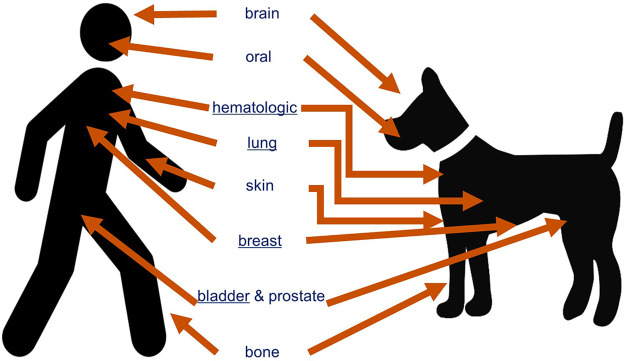
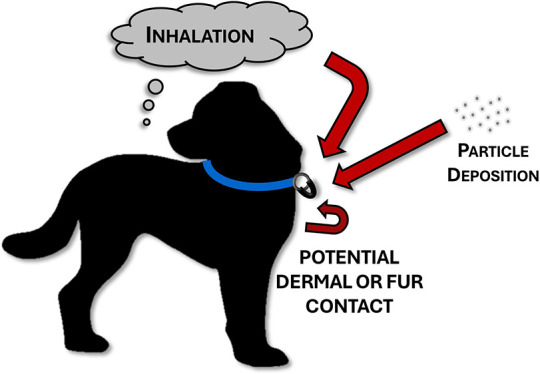
Human health is intimately connected and tied to the health of our environment and ecosystem, with only a very small fraction of the risk for chronic diseases explained by genetics alone. Companion animals are prone to disease types that are shared with people, including cancers and endocrine disorders, reinforcing the thought that environmental factors contribute to the risks for chronic diseases. These factors include air and water pollution and the built environment. As such, there is increasing interest in pursuing research with companion animals, and specifically dogs, as sentinel species to inform comparative health assessments and identify risk factors for disease. Of the canine diseases for which environmental exposure research has been published, cancers have received the most attention. This review summarizes two main aspects of this comparative approach: (1) cancers that occur in dogs and which are similar to humans and (2) research investigating environmental exposures and health outcomes in dogs. The goal of this review is to highlight the diverse conditions in which pet dogs may provide unique perspectives and advantages to examine relationships between environmental exposures and health outcomes, with an emphasis on chemical pollution and cancer. Furthermore, this review seeks to raise awareness and stimulate discussion around the best practices for the use of companion animals as environmental health sentinels.
© 2024 The Authors. Co-published by Research Center for Eco-Environmental Sciences, Chinese Academy of Sciences, and American Chemical Society.
Conflict of interest statement
The authors declare no competing financial interest.
Figures
References
Publication types
LinkOut - more resources
Full Text Sources
Research Materials