


A systematic review of health state utility values for older people with acute myeloid leukaemia
- PMID: 39172308
- PMCID: PMC11541279
- DOI: 10.1007/s11136-024-03734-9
A systematic review of health state utility values for older people with acute myeloid leukaemia
Abstract
Purpose: Older people with acute myeloid leukaemia (AML) have a poor prognosis, reduced health-related quality of life (HRQoL) and require substantial healthcare resources. The objectives of this systematic review were to determine what health state utility values (HSUVs) are reported in the literature that can be used in economic evaluations of interventions for older people with AML, identify research gaps, and discuss directions for future research.
Methods: The following databases were searched for studies published from inception until Feb 2023: PubMed, EMBASE, CINAHL, PsycINFO, Cochrane, and EconLit. Studies were included if they reported on HSUVs of people with AML >60 years, or HRQoL data that could be mapped to HSUVs using currently published algorithms.
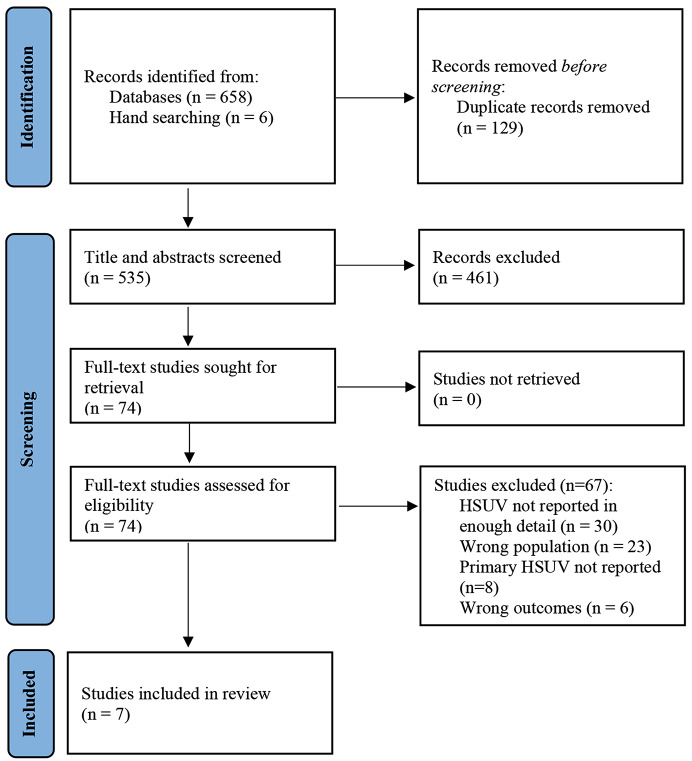
Results: Of 532 studies identified, 7 met inclusion (4 full studies and 3 conference abstracts). Twenty-eight potentially eligible studies were excluded as they did not report HRQoL measures in sufficient detail to be mapped to utility values. Included studies reported on health states of newly diagnosed disease (n=4 studies), intensive therapy (n=1 study), controlled remission (n=3 studies), and relapsed or refractory disease (n=2 studies). No studies reported on low intensity therapy or supportive care health states. Utility values were largely reported via the EuroQol and ranged from 0.535 (intensive therapy) to 0.834 (controlled remission).
Conclusion: There are gaps in knowledge on HSUVs for older people with AML, particularly for certain treatment-related health states. Future articles should publish comprehensive HRQoL outcomes to enable use in economic evaluation.
Keywords: Quality of life; Acute myeloid leukaemia; Health state utility value; Older person.
© 2024. The Author(s).
Conflict of interest statement
Elise Button, Nikki McCaffrey, Hannah Carter, and Nicole Gavin declare they have no financial interests. Thomas LeBlanc has the following declarations: (i) currently, or has recently been a consultant for/received honoraria from AbbVie, Agilix, Agios/Servier, Astellas, AstraZeneca, Beigene, BlueNote, BMS/Celgene, CareVive, Flatiron, Genentech, GSK, Lilly, Meter Health, Novartis, and Pfizer; (ii) served on recent advisory boards for AbbVie, Agios, and BMS; ii) has received honoraria from AbbVie, Agios, Astellas, BMS/Celgene, and Incyte for recent speaking engagements; iv) has equity interest in Dosentrx; v) and has received recent research funding from the AbbVie, American Cancer Society, AstraZeneca, BMS, Deverra Therapeutics, Duke University, Jazz Pharmaceuticals, the Leukemia and Lymphoma Society, the National Institute of Nursing Research/ National Institutes of Health, and Seattle Genetics.
References
-
- Leaukaemia Foundation. (2020). Acute myeloid leukaemia [cited 2022 5th Feb]; https://www.leukaemia.org.au/blood-cancer-information/types-of-blood-can....
-
- Siegel, R. L., Miller, K. D., & Jemal, A. (2019). Cancer statistics, CA, 2019. CA: A Cancer Journal for Clinicians, 69(1), 7–34. - PubMed
-
- Fitzmaurice, C., et al. (2018). Global, regional, and national cancer incidence, mortality, years of life lost, years lived with disability, and disability-adjusted life-years for 29 cancer groups, 1990 to 2016: A systematic analysis for the global burden of disease study. JAMA Oncology, 4(11), 1553–1568. - PMC - PubMed
Publication types
MeSH terms
LinkOut - more resources
Full Text Sources
Medical
Miscellaneous
