Review
. 2024 Aug 23;9(1):211.
doi: 10.1038/s41392-024-01911-3.

Recent advances in Alzheimer's disease: Mechanisms, clinical trials and new drug development strategies

Affiliations
Review

Recent advances in Alzheimer's disease: Mechanisms, clinical trials and new drug development strategies

Jifa Zhang et al. Signal Transduct Target Ther. .

Abstract

Alzheimer's disease (AD) stands as the predominant form of dementia, presenting significant and escalating global challenges. Its etiology is intricate and diverse, stemming from a combination of factors such as aging, genetics, and environment. Our current understanding of AD pathologies involves various hypotheses, such as the cholinergic, amyloid, tau protein, inflammatory, oxidative stress, metal ion, glutamate excitotoxicity, microbiota-gut-brain axis, and abnormal autophagy. Nonetheless, unraveling the interplay among these pathological aspects and pinpointing the primary initiators of AD require further elucidation and validation. In the past decades, most clinical drugs have been discontinued due to limited effectiveness or adverse effects. Presently, available drugs primarily offer symptomatic relief and often accompanied by undesirable side effects. However, recent approvals of aducanumab (1) and lecanemab (2) by the Food and Drug Administration (FDA) present the potential in disrease-modifying effects. Nevertheless, the long-term efficacy and safety of these drugs need further validation. Consequently, the quest for safer and more effective AD drugs persists as a formidable and pressing task. This review discusses the current understanding of AD pathogenesis, advances in diagnostic biomarkers, the latest updates of clinical trials, and emerging technologies for AD drug development. We highlight recent progress in the discovery of selective inhibitors, dual-target inhibitors, allosteric modulators, covalent inhibitors, proteolysis-targeting chimeras (PROTACs), and protein-protein interaction (PPI) modulators. Our goal is to provide insights into the prospective development and clinical application of novel AD drugs.


Conflict of interest statement

The authors declare no competing interests.

Figures
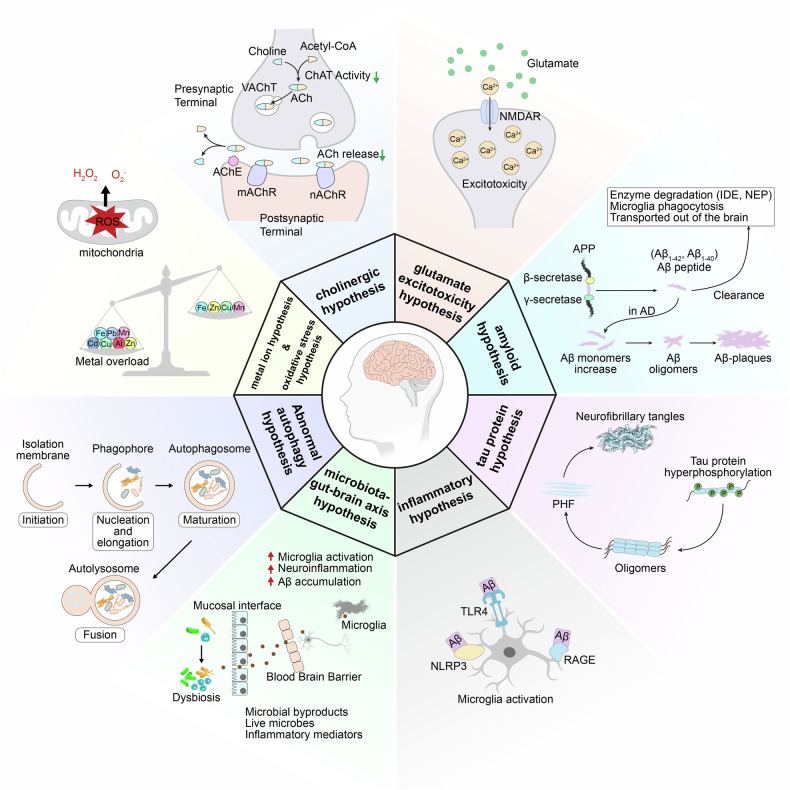
Fig. 1
Fig. 1
Diagram for the pathogenesis of AD, including the cholinergic hypothesis,, the glutamatergic hypothesis, the amyloid hypothesis,, the tau protein hypothesis,, the inflammatory hypothesis,, the microbiota-gut-brain axis hypothesis,, the oxidative stress hypothesis, the metal ion hypothesis,, and the abnormal autophagy hypothesis
Fig. 2
Fig. 2
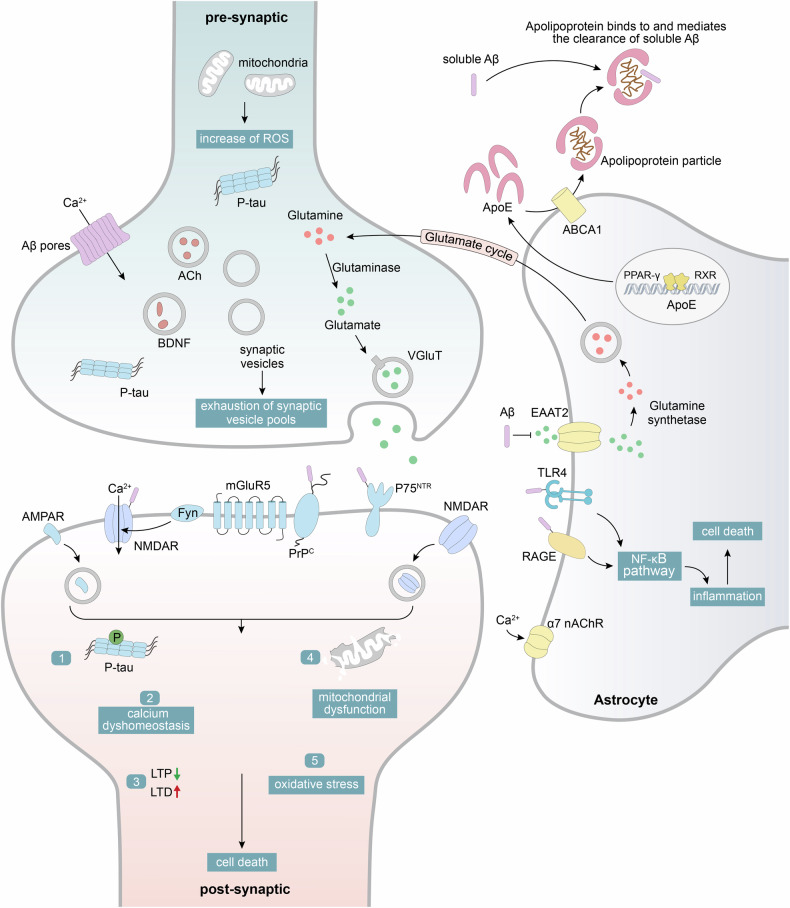
Schematic illustration depicting the possible molecular downstream pathways of Aβ on neuronal synapses and astrocytes. (1) Aβ is capable of interacting with cell membranes and binding to a variety of synaptic receptors such as PrPC, NMDA receptors, P75NTR, and mGluR5, which leads to a cascade of events including calcium dyshomeostasis, inhibition of long-term potentiation (LTP), tau hyperphosphorylation, mitochondrial dysfunction, and oxidative stress, ultimately resulting in neuronal death.,, (2) Aβ blocks the reuptake of glutamate by excitatory amino acid transporter (EAAT) receptors, causing glutamate accumulation intersynaptically and neuronal hyperactivity. (3) Aβ and some pro-inflammatory cytokines (such as TNFα, IL-1α, and C1q) may induce the A1 phenotype of astrocytes. This transformation may involve altering astrocyte functions and modulating their interactions with other cells (such as neurons and microglia), thereby participating in processes such as Aβ deposition, neuroinflammation, synaptic loss, and neuronal death. (4) APOE, primarily released from astrocytes, associates with lipoproteins to form APOE-associated lipoprotein particles, which can bind to soluble Aβ and mediate its clearance
Fig. 3
Fig. 3
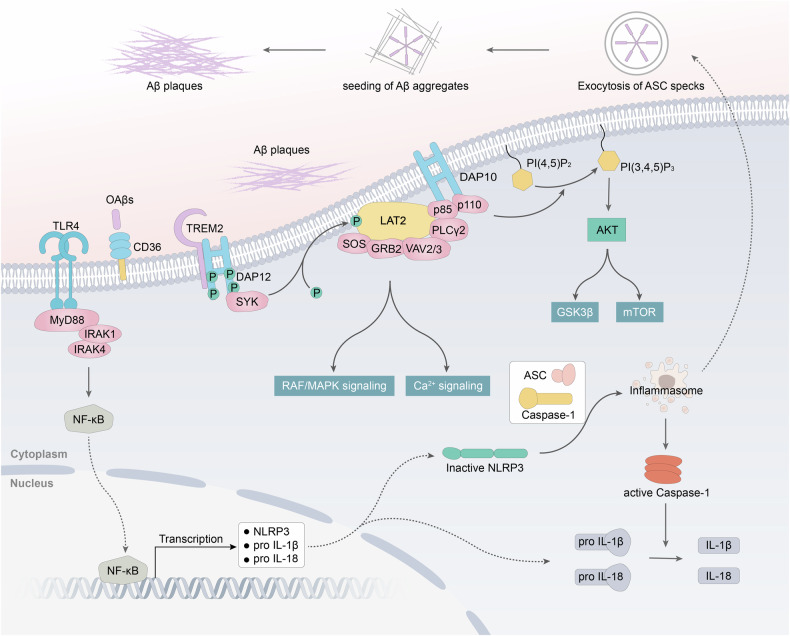
Schematic illustration depicting potential molecular downstream pathways of Aβ on microglia. Microglia has numerous pattern recognition receptors that can bind to Aβ, initiating an inflammatory cascade. This process promotes the assembly and activation of NLRP3, leading to the release of pro-inflammatory cytokines, which further exacerbate the aggregation of Aβ. In addition, the diagram also encompasses the downstream signaling pathways of TREM2., Some variants associated with AD, such as the TREM2 variant R47H, may potentially diminish the binding or internalization of TREM2 with ligands such as APOE-Aβ complexes, APOE, phospholipids, and Aβ. This reduction may consequently impair the activation of microglial cells, thereby compromising their ability to clear amyloid plaques.,– It is worth noting that there remain many uncertainties and controversies regarding the in vivo ligands and signaling pathways of TREM2, as well as the relationship between TREM2 variants and AD. Future in vivo experiments are needed to elucidate these aspects
Fig. 4
Fig. 4
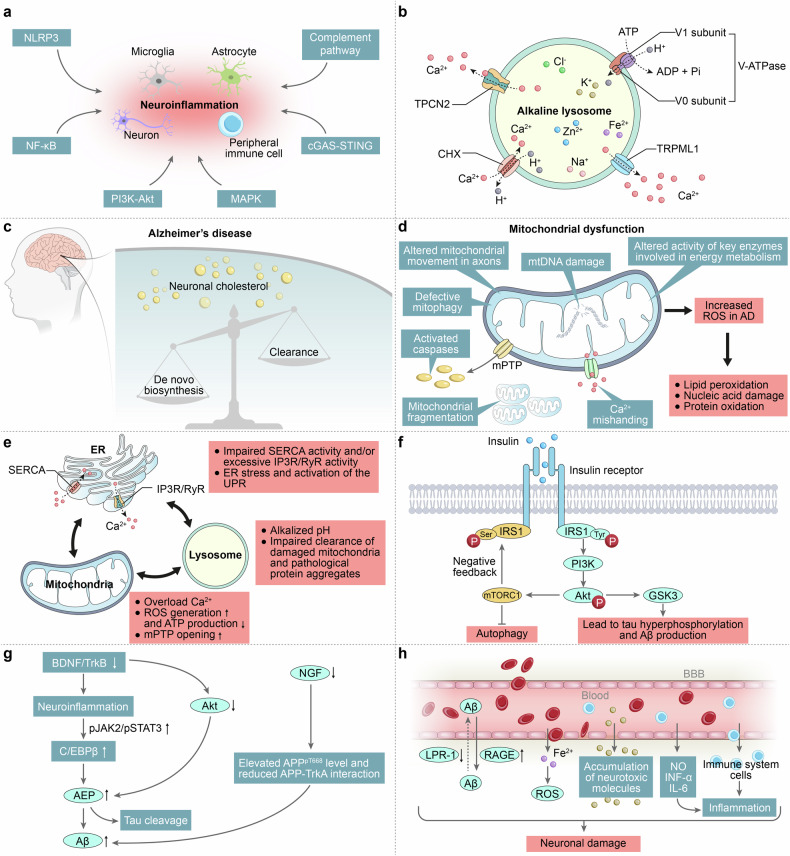
Signaling pathways linked to AD pathogenesis. a Neuroinflammatory signaling. It involves interactions among various cell types, which influence neuroinflammation by activating multiple pathways. This leads to the production of inflammatory mediators and neuronal damage, accelerating the pathological progression of AD. b Lysosomal dysfunction. It may be related to impairments in V-ATPase-mediated lysosomal acidification and/or dysregulation of lysosomal calcium homeostasis. However, the specific mechanisms require further investigation to be definitively determined. c Aberrant cholesterol metabolism. d Mitochondrial dysfunction. Mitochondria in AD are damaged in various ways, including impairments in oxidative phosphorylation, calcium homeostasis, mtDNA, mitochondrial fusion and fission, axonal transport, and mitophagy. These dysfunctions lead to impaired energy production and increased oxidative stress. e Calcium signaling in AD. Under physiological conditions, calcium ions follow a strict concentration gradient. In AD, the elevated cytosolic calcium concentration and calcium-responsive signaling cascades adversely affect protein folding in the ER, energy production in mitochondria, and lysosomal acidity. g Insulin signaling in AD. f Dysregulated neurotrophic signaling pathway. h BBB dysfunction. The disruption of the integrity and alterations in the transport functions of BBB lead to the abnormal entry and exit of certain substances into and out of brain tissue, resulting in neuronal damage and further exacerbating the pathological progression of AD
Fig. 5
Fig. 5
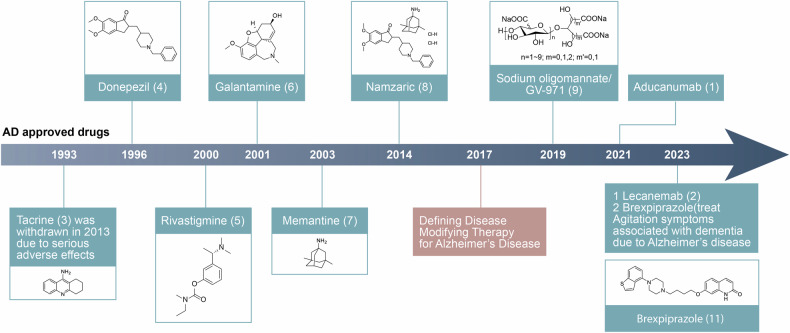
Approved drugs for AD by FDA/China. Notably, the definition of disease-modifying therapies, capable of producing enduring and impactful changes in the clinical progression of AD, was first proposed in 2017. (The numbers 1, 2,…… 8, 9 in the figure represent the drug identifiers defined by the authors)
Fig. 6
Fig. 6
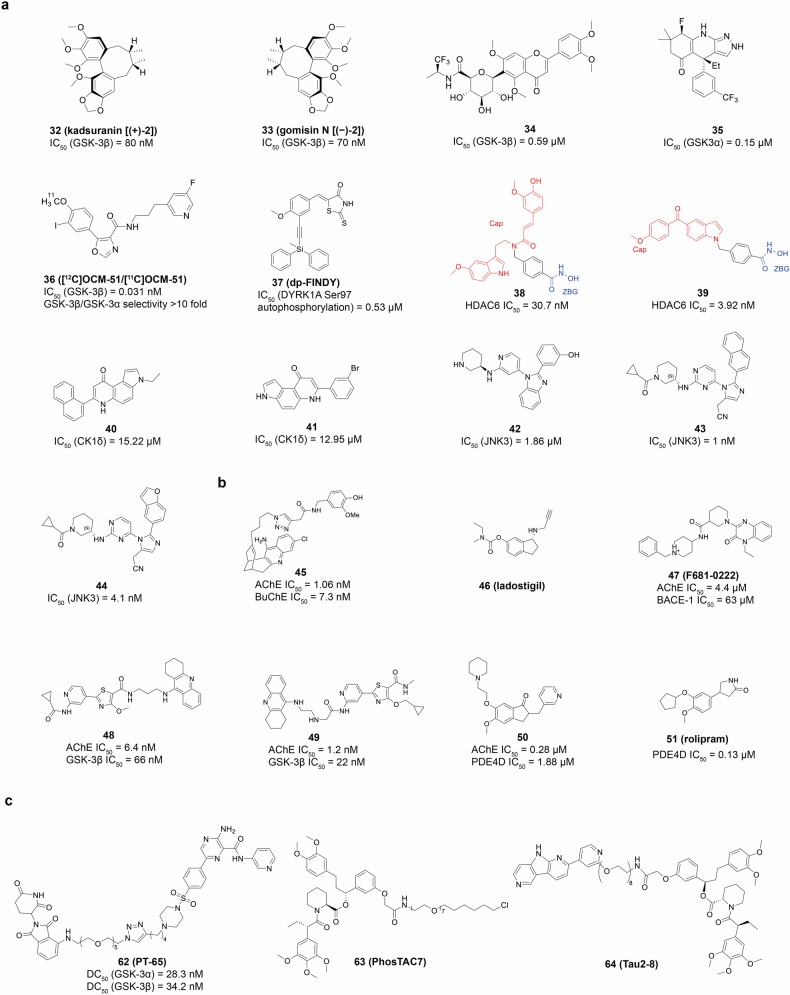
a Chemical structures of selective inhibitors 32-44. b Dual-target inhibitors 45-50. c GSK-3 degrader 62, as well as PhosTACs 63 and 64. (The numbers 32, 33,…… 51, 62, 63, 64 in the figure represent the compound identifiers defined by the authors)
Fig. 7
Fig. 7
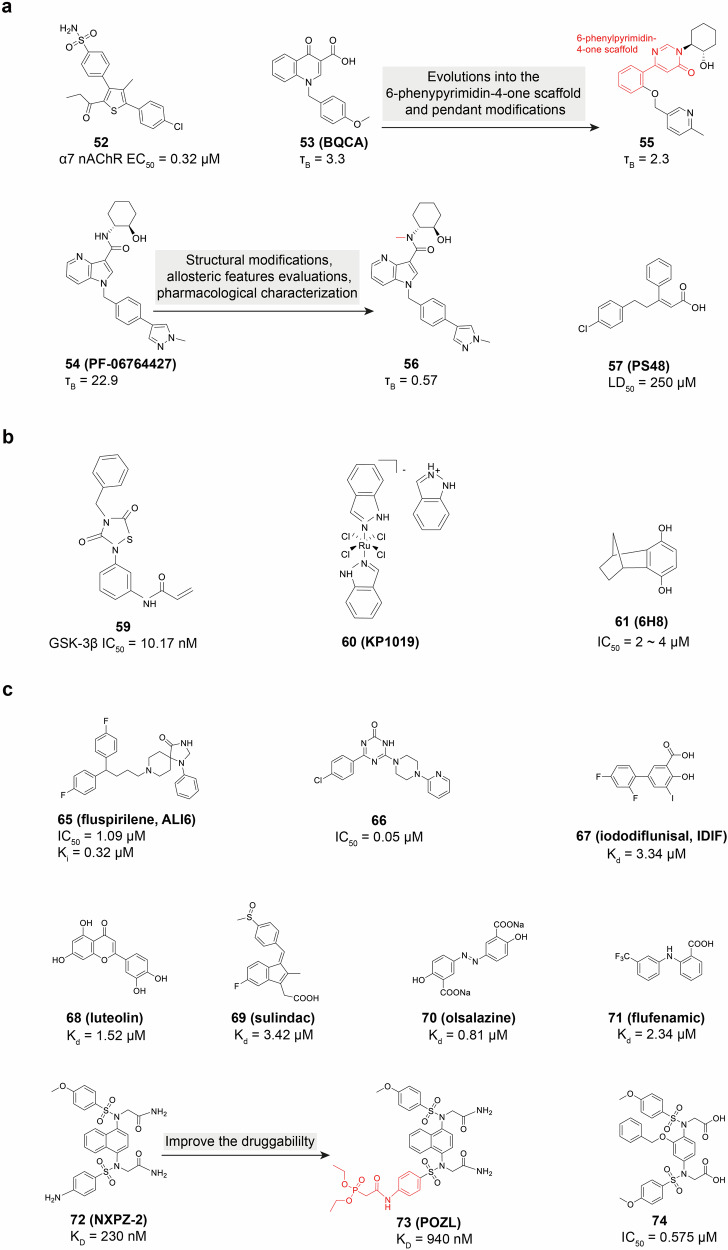
a Chemical structures and modification schemes of allosteric modulators 52-57. b covalent inhibitors 59-61. c Compounds 65-74 target the PPI network. (The numbers 52, 53,…… 57, 59, 60, 61, 65,…… 74 in the figure represent the compound identifiers defined by the authors)

References

    1. WHO. A blueprint for dementia research. Geneva: World Health Organization (2022).
    1. Knopman, D. S. et al. Alzheimer disease. Nat. Rev. Dis. Prim.7, 33 (2021). 10.1038/s41572-021-00269-y - DOI - PMC - PubMed
    1. Querfurth, H. W. & LaFerla, F. M. Alzheimer’s disease. N. Engl. J. Med.362, 329–344 (2010). 10.1056/NEJMra0909142 - DOI - PubMed
    1. 2023 Alzheimer’s disease facts and figures. Alzheimers Dement. 19, 1598–1695 (2023). - PubMed
    1. Abdelnour, C. et al. Perspectives and challenges in patient stratification in Alzheimer’s disease. Alzheimers Res. Ther.14, 112 (2022). 10.1186/s13195-022-01055-y - DOI - PMC - PubMed

Publication types

MeSH terms