


Stochastic lattice-based porous implant design for improving the stress transfer in unicompartmental knee arthroplasty
- PMID: 39175032
- PMCID: PMC11340161
- DOI: 10.1186/s13018-024-05006-1
Stochastic lattice-based porous implant design for improving the stress transfer in unicompartmental knee arthroplasty
Abstract
Background: Unicompartmental knee arthroplasty (UKA) has been proved to be a successful treatment for osteoarthritis patients. However, the stress shielding caused by mismatch in mechanical properties between human bones and artificial implants remains as a challenging issue. This study aimed to properly design a bionic porous tibial implant and evaluate its biomechanical effect in reconstructing stress transfer pathway after UKA surgery.
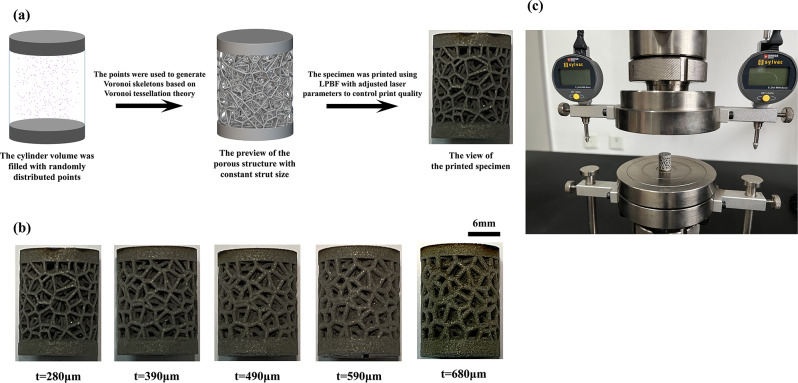
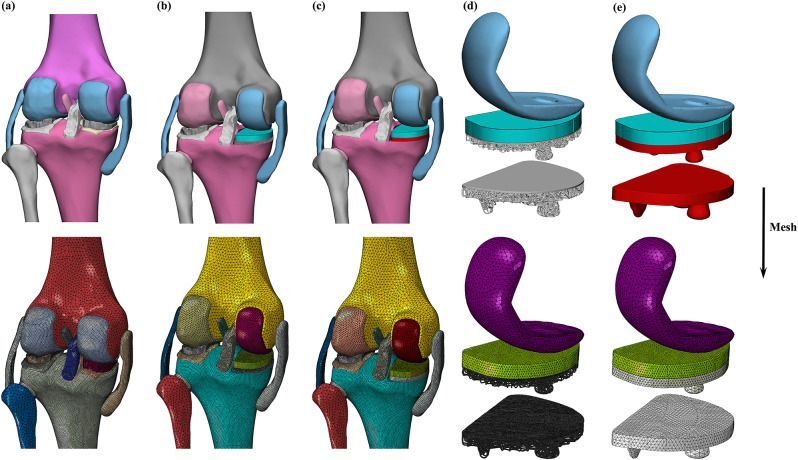
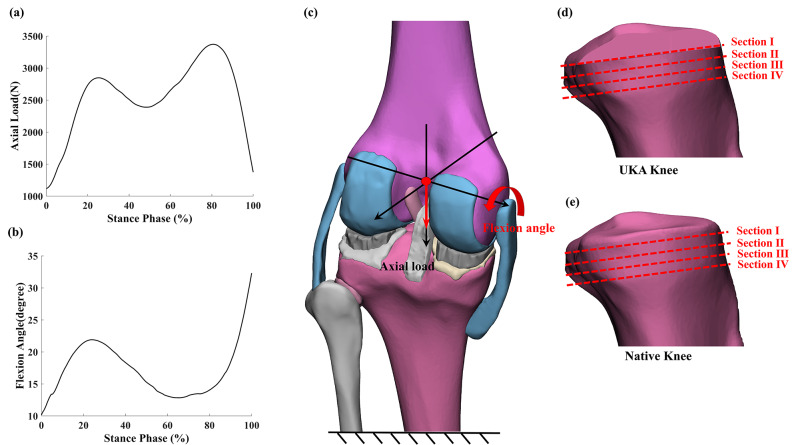
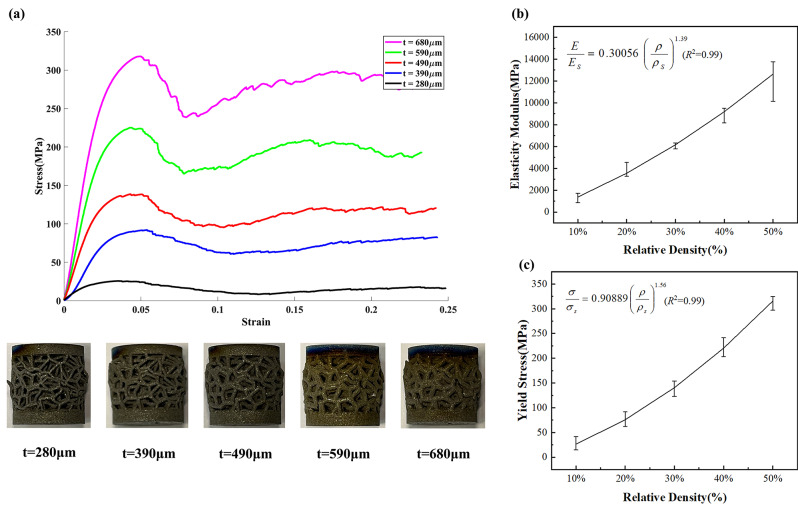
Methods: Voronoi structures with different strut sizes and porosities were designed and manufactured with Ti6Al4V through additive manufacturing and subjected to quasi-static compression tests. The Gibson-Ashby model was used to relate mechanical properties with design parameters. Subsequently, finite element models were developed for porous UKA, conventional UKA, and native knee to evaluate the biomechanical effect of tibial implant with designed structures during the stance phase.
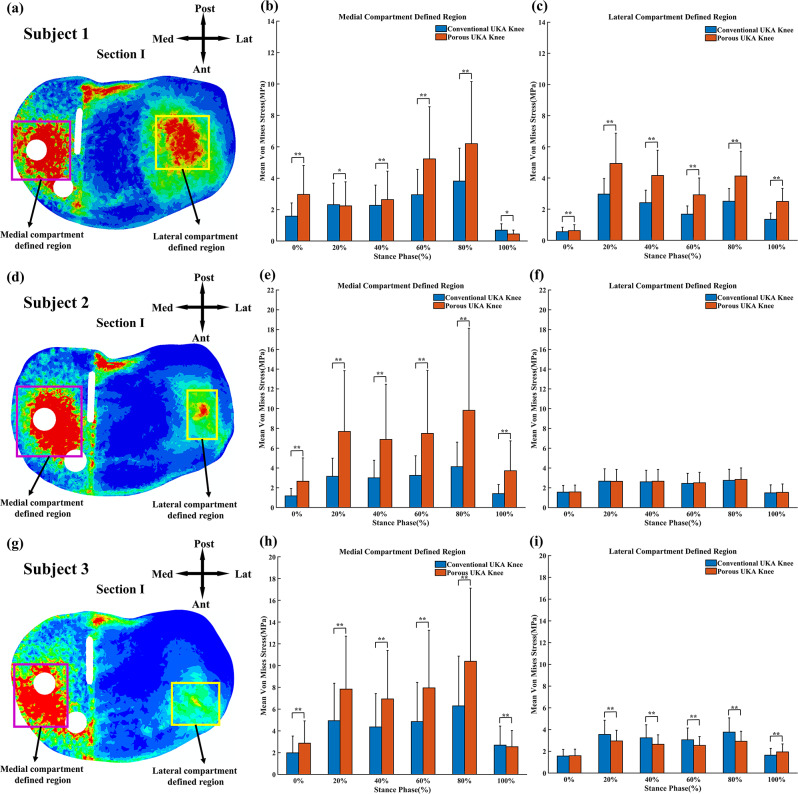
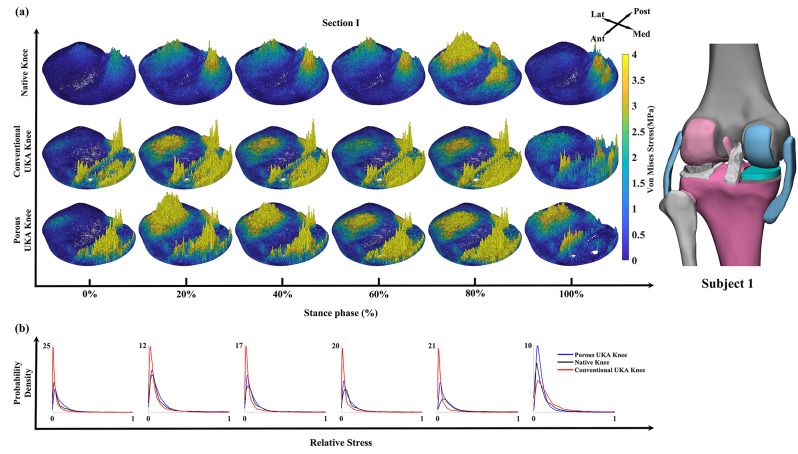
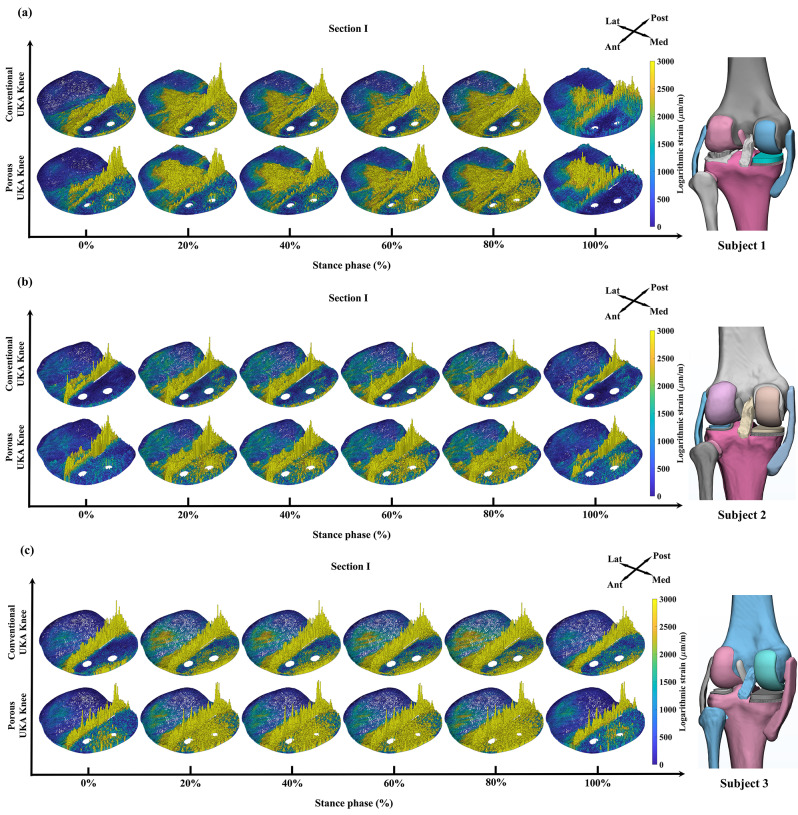
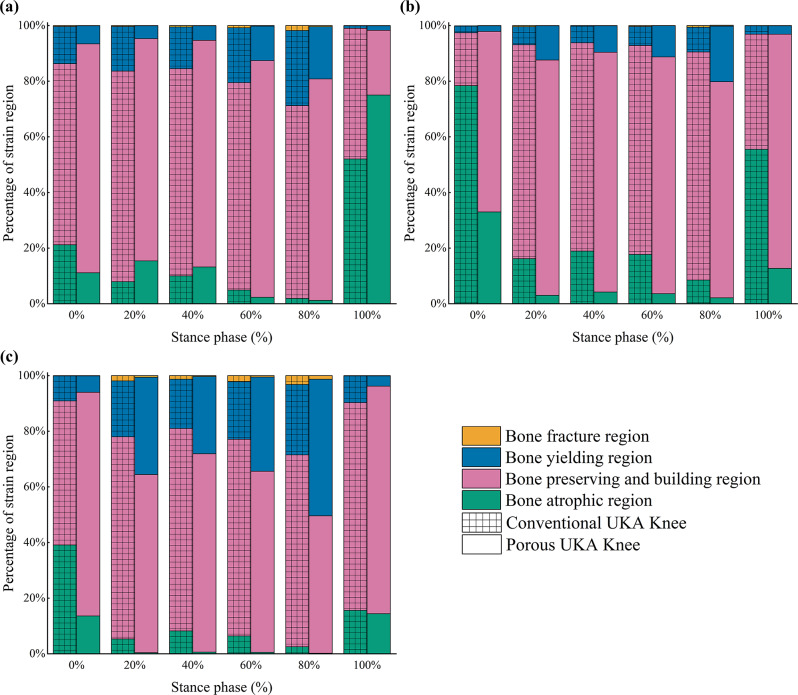
Results: The internal stress distribution on the tibia plateau in the medial compartment of the porous UKA knee was found to closely resemble that of the native knee. Furthermore, the mean stress values in the medial regions of the tibial plateau of the porous UKA knee were at least 44.7% higher than that of the conventional UKA knee for all subjects during the most loading conditions. The strain shielding reduction effect of the porous UKA knee model was significant under the implant and near the load contact sites. For subject 1 to 3, the average percentages of nodes in bone preserving and building region (strain values range from 400 to 3000 μm/m) of the porous UKA knee model, ranging from 68.7 to 80.5%, were higher than that of the conventional UKA knee model, ranging from 61.6 to 68.6%.
Conclusions: The comparison results indicated that the tibial implant with designed Voronoi structure offered better biomechanical functionality on the tibial plateau after UKA. Additionally, the model and associated analysis provide a well-defined design process and dependable selection criteria for design parameters of UKA implants with Voronoi structures.
Keywords: Additive manufacturing; Bone stress transfer pathway; Finite element analysis; Porous implants; Unicompartmental knee arthroplasty.
© 2024. The Author(s).
Conflict of interest statement
The authors declare no competing interests.
Figures
References
-
- Sangaletti R, Andriollo L, Montagna A, Are L, Benazzo F, Rossi SMP. Lateral UKA can be a safe solution in a young patients’ population: a 10-year follow-up report. Arch Orthop Trauma Surg. 2024. - PubMed
MeSH terms
Substances
Grants and funding
- 2020YFB1711500/the National Key Research and Development Program of China
- ZYYC21004/the 1•3•5 project for disciplines of excellence, West China Hospital, Sichuan University
- ZYGX2022YGRH007/Medico-Engineering Cooperation Funds from University of Electronic Science and Technology by the Fundamental Research Funds for the Central Universities
- 2023YFB4606700/National Key Research and Development Program
- ZYAI24038/1•3•5 project for disciplines of excellence, West China Hospital, Sichuan University
LinkOut - more resources
Full Text Sources
Medical
