


Prefrontal cortex molecular clock modulates development of depression-like phenotype and rapid antidepressant response in mice
- PMID: 39179578
- PMCID: PMC11344080
- DOI: 10.1038/s41467-024-51716-9
Prefrontal cortex molecular clock modulates development of depression-like phenotype and rapid antidepressant response in mice
Abstract
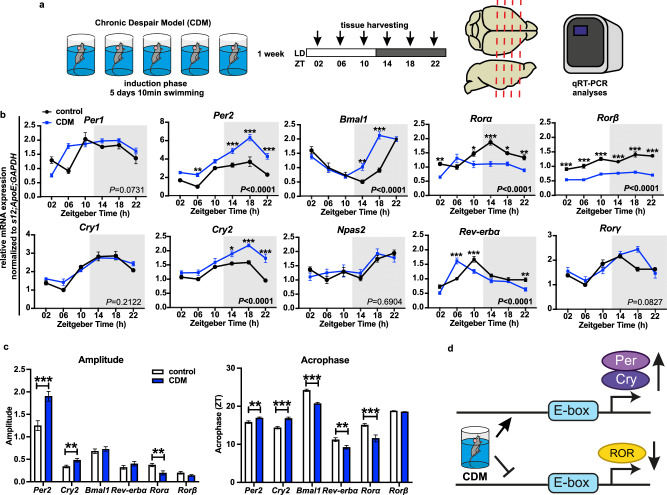
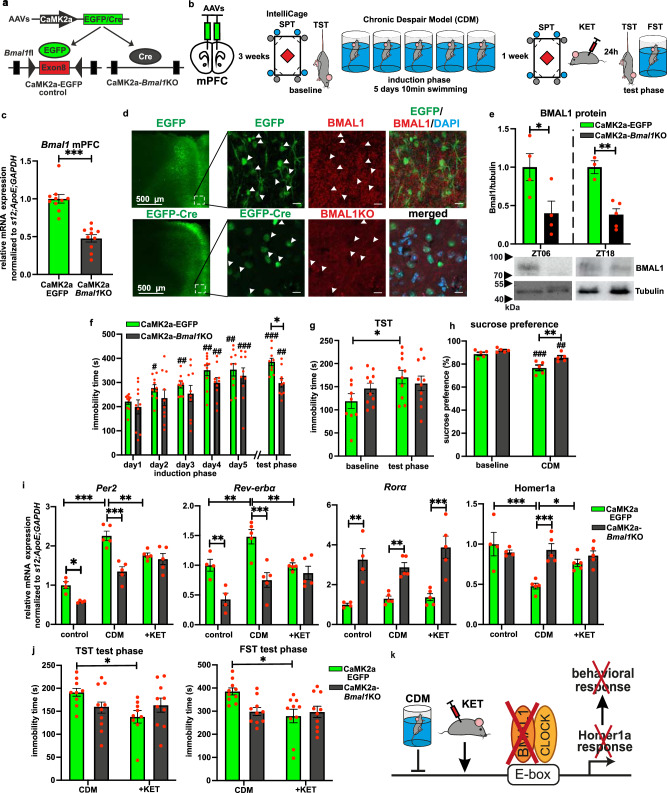
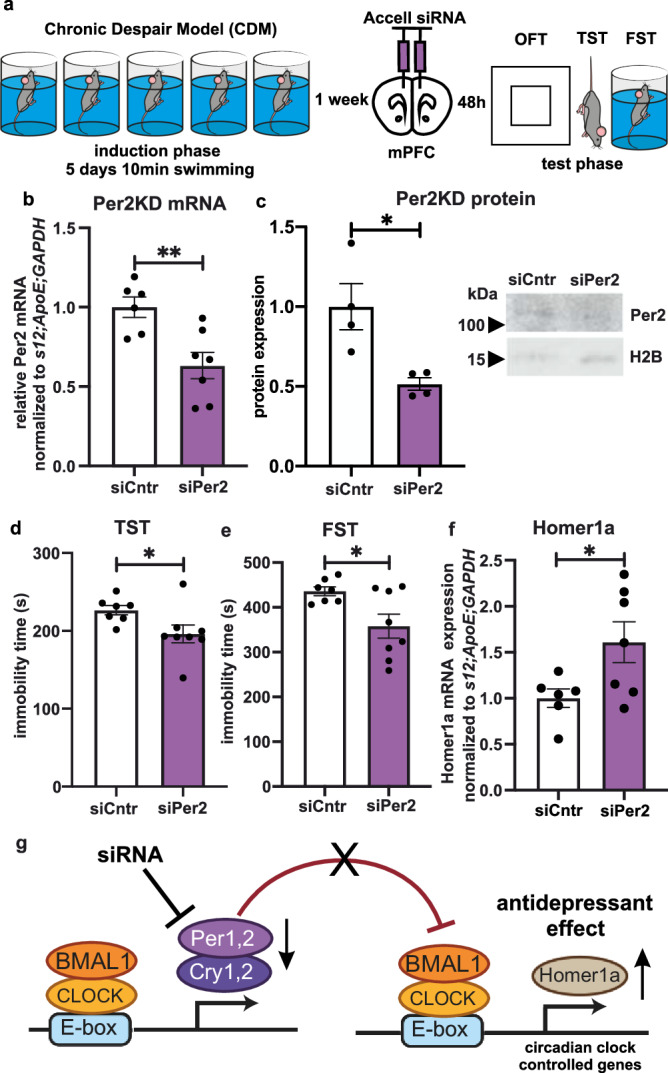
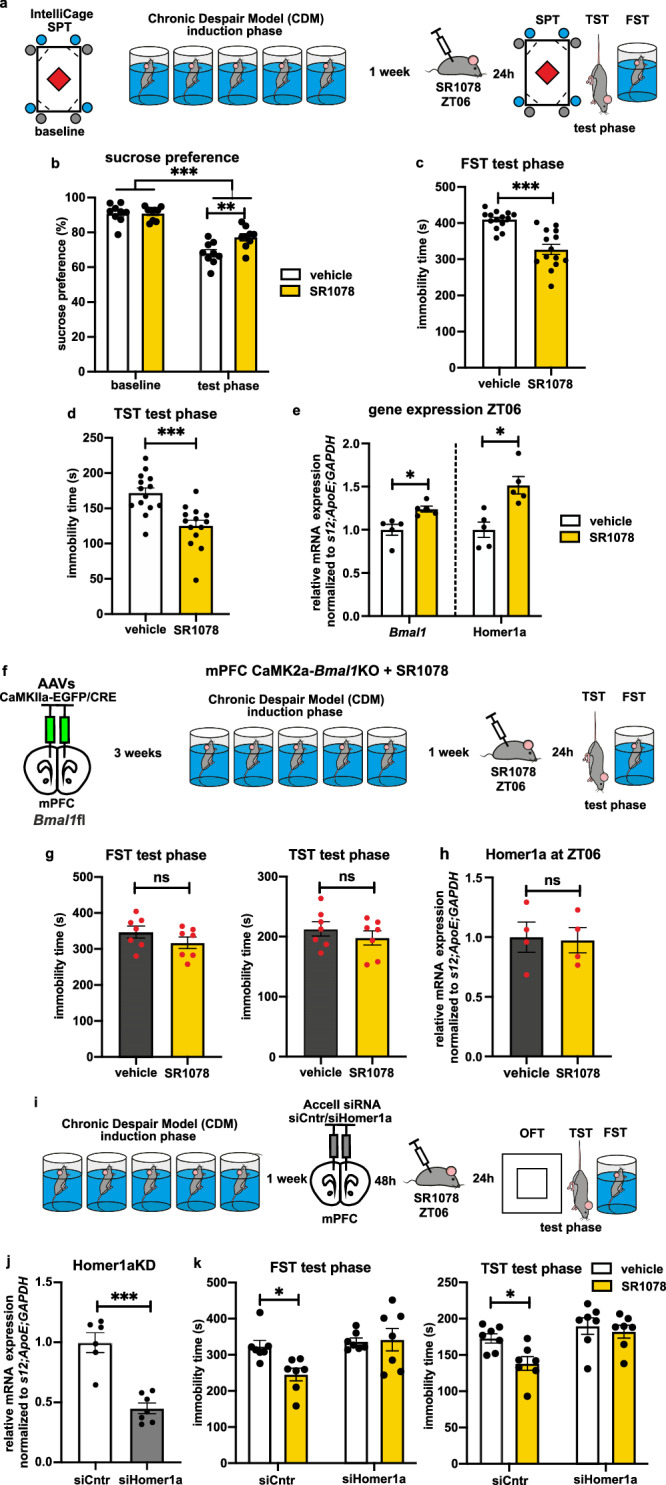
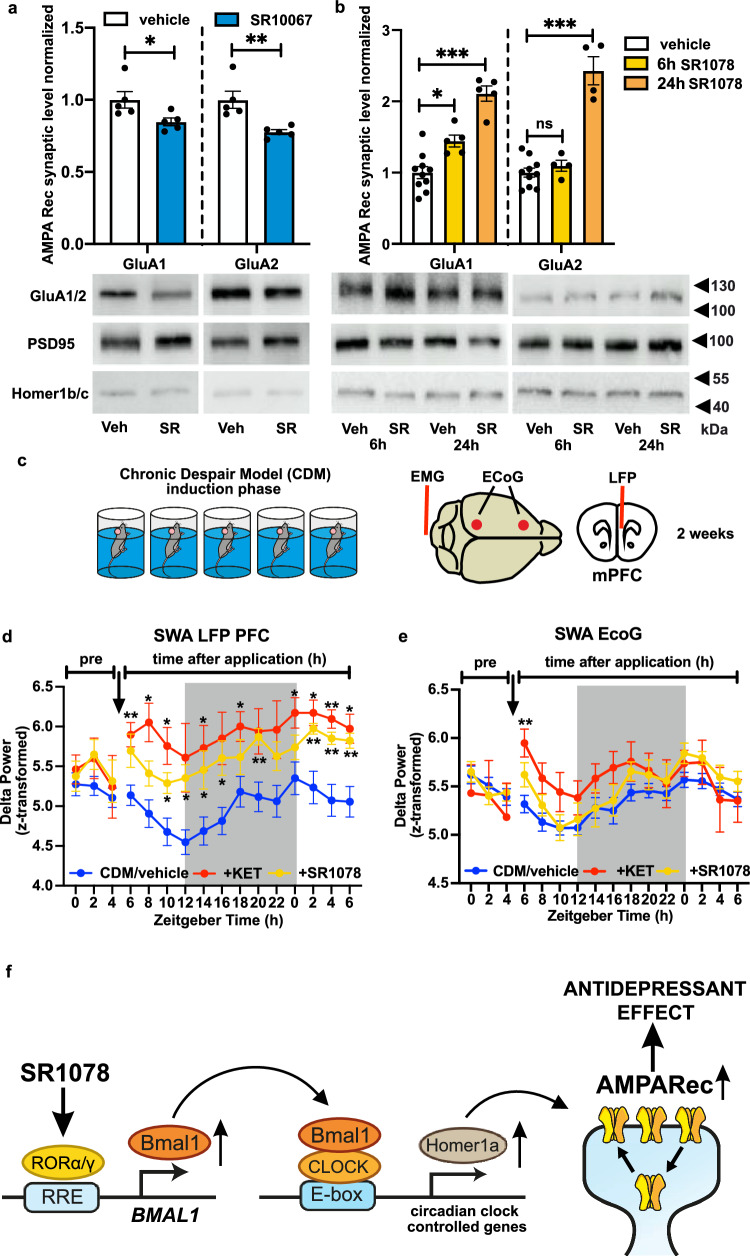
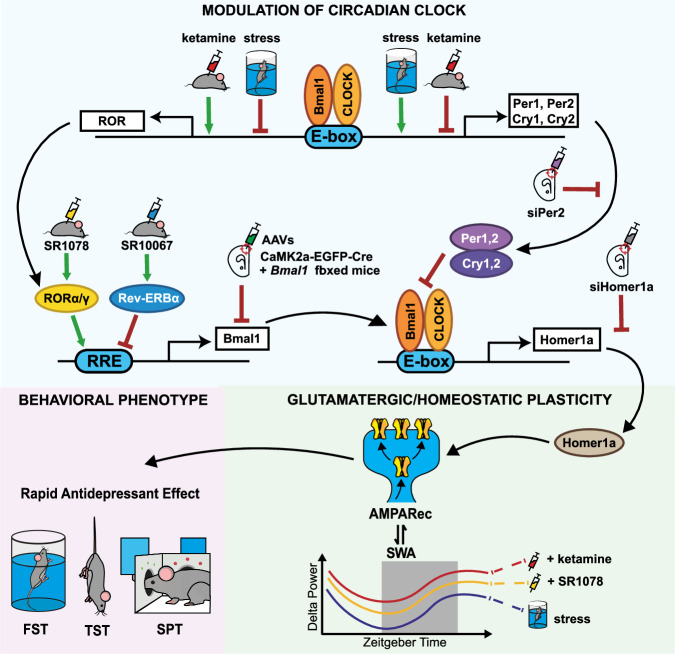
Depression is associated with dysregulated circadian rhythms, but the role of intrinsic clocks in mood-controlling brain regions remains poorly understood. We found increased circadian negative loop and decreased positive clock regulators expression in the medial prefrontal cortex (mPFC) of a mouse model of depression, and a subsequent clock countermodulation by the rapid antidepressant ketamine. Selective Bmal1KO in CaMK2a excitatory neurons revealed that the functional mPFC clock is an essential factor for the development of a depression-like phenotype and ketamine effects. Per2 silencing in mPFC produced antidepressant-like effects, while REV-ERB agonism enhanced the depression-like phenotype and suppressed ketamine action. Pharmacological potentiation of clock positive modulator ROR elicited antidepressant-like effects, upregulating plasticity protein Homer1a, synaptic AMPA receptors expression and plasticity-related slow wave activity specifically in the mPFC. Our data demonstrate a critical role for mPFC molecular clock in regulating depression-like behavior and the therapeutic potential of clock pharmacological manipulations influencing glutamatergic-dependent plasticity.
© 2024. The Author(s).
Conflict of interest statement
T.S. is an honoraria consulting and advisory board member of Primetime Life Sciences, LLC. C.N. received lecture fees and advisory board honoraria from Janssen-Cilag. The remaining authors declare no competing interests.
Figures


References
-
- World Health Organization. World Mental Health Report (World Health Organization, 2022).
MeSH terms
Substances
Grants and funding
LinkOut - more resources
Full Text Sources
Medical
Molecular Biology Databases
