


Mixed effects models but not t-tests or linear regression detect progression of apathy in Parkinson's disease over seven years in a cohort: a comparative analysis
- PMID: 39182059
- PMCID: PMC11344430
- DOI: 10.1186/s12874-024-02301-7
Mixed effects models but not t-tests or linear regression detect progression of apathy in Parkinson's disease over seven years in a cohort: a comparative analysis
Abstract
Introduction: While there is an interest in defining longitudinal change in people with chronic illness like Parkinson's disease (PD), statistical analysis of longitudinal data is not straightforward for clinical researchers. Here, we aim to demonstrate how the choice of statistical method may influence research outcomes, (e.g., progression in apathy), specifically the size of longitudinal effect estimates, in a cohort.
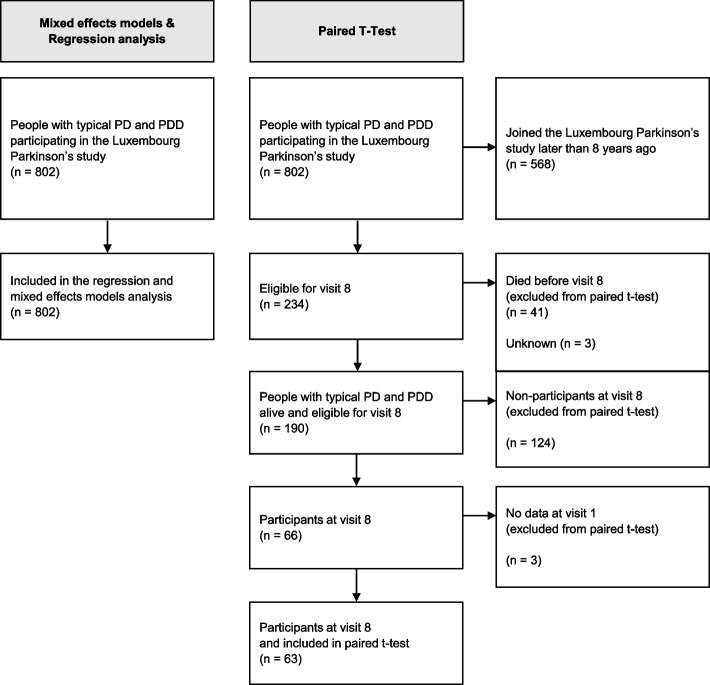
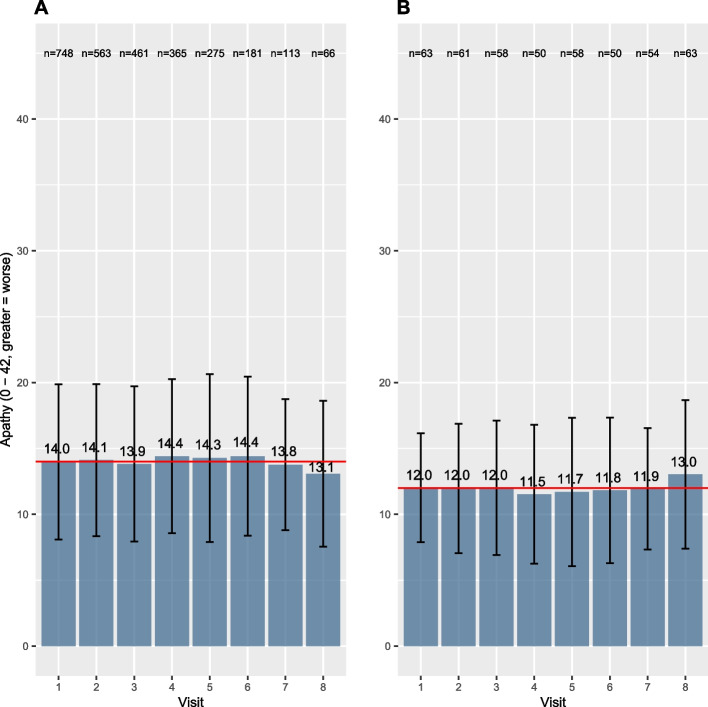
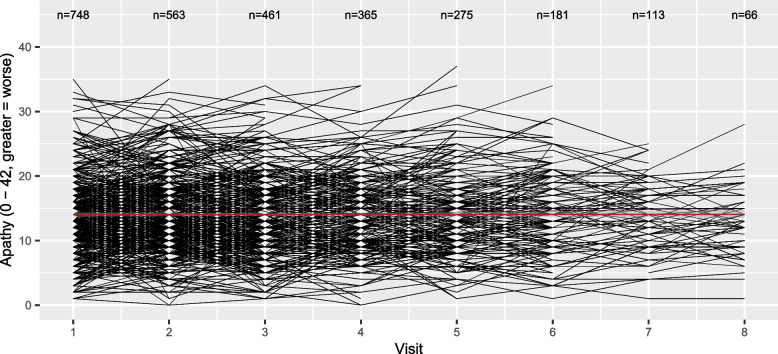
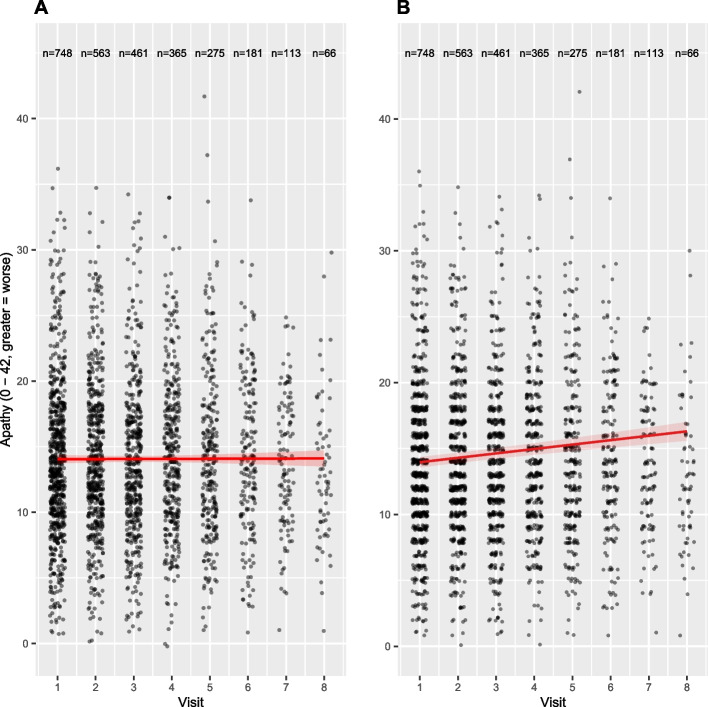
Methods: In this retrospective longitudinal analysis of 802 people with typical Parkinson's disease in the Luxembourg Parkinson's study, we compared the mean apathy scores at visit 1 and visit 8 by means of the paired two-sided t-test. Additionally, we analysed the relationship between the visit numbers and the apathy score using linear regression and longitudinal two-level mixed effects models.
Results: Mixed effects models were the only method able to detect progression of apathy over time. While the effects estimated for the group comparison and the linear regression were smaller with high p-values (+ 1.016/ 7 years, p = 0.107, -0.056/ 7 years, p = 0.897, respectively), effect estimates for the mixed effects models were positive with a very small p-value, indicating a significant increase in apathy symptoms by + 2.345/ 7 years (p < 0.001).
Conclusion: The inappropriate use of paired t-tests and linear regression to analyse longitudinal data can lead to underpowered analyses and an underestimation of longitudinal change. While mixed effects models are not without limitations and need to be altered to model the time sequence between the exposure and the outcome, they are worth considering for longitudinal data analyses. In case this is not possible, limitations of the analytical approach need to be discussed and taken into account in the interpretation.
Keywords: Cohort studies; Disease progression; Epidemiology; Lost to follow-up; Parkinson; Statistical model.
© 2024. The Author(s).
Conflict of interest statement
The authors declare no competing interests.
Figures
References
-
- Twisk JWR. Applied Longitudinal Data Analysis for Epidemiology. A Practical Guide: Cambridge University Press; 2013.
Publication types
MeSH terms
Grants and funding
LinkOut - more resources
Full Text Sources
Medical
