


Transcriptomic analysis reveals distinct effects of cigarette smoke on murine airspace and bone-marrow derived macrophages
- PMID: 39182076
- PMCID: PMC11344945
- DOI: 10.1186/s12931-024-02939-3
Transcriptomic analysis reveals distinct effects of cigarette smoke on murine airspace and bone-marrow derived macrophages
Abstract
Background: Chronic obstructive pulmonary disease (COPD) is an inflammatory airway disease characterized by emphysema and chronic bronchitis and a leading cause of mortality worldwide. COPD is commonly associated with several comorbid diseases which contribute to exacerbated patient outcomes. Cigarette smoke (CS) is the most prominent risk factor for COPD development and progression and is known to be detrimental to numerous effector functions of lung resident immune cells, including phagocytosis and cytokine production. However, how CS mediates the various pathologies distant from the lung in COPD, and whether CS has a similar biological effect on systemic immune cells remains unknown.
Methods: C57BL/6 mice were exposed to 8 weeks of CS as an experimental model of COPD. Bone marrow cells were isolated from both CS-exposed and room air (RA) control mice and differentiated to bone marrow-derived macrophages (BMDMs). Airspace macrophages (AMs) were isolated from the same CS-exposed and RA mice and bulk RNA-Seq performed. The functional role of differentially expressed genes was assessed through gene ontology analyses. Ingenuity Pathway Analysis was used to determine the activation states of canonical pathways and upstream regulators enriched in differentially expressed genes in both cell types, and to compare the differences between the two cell types.
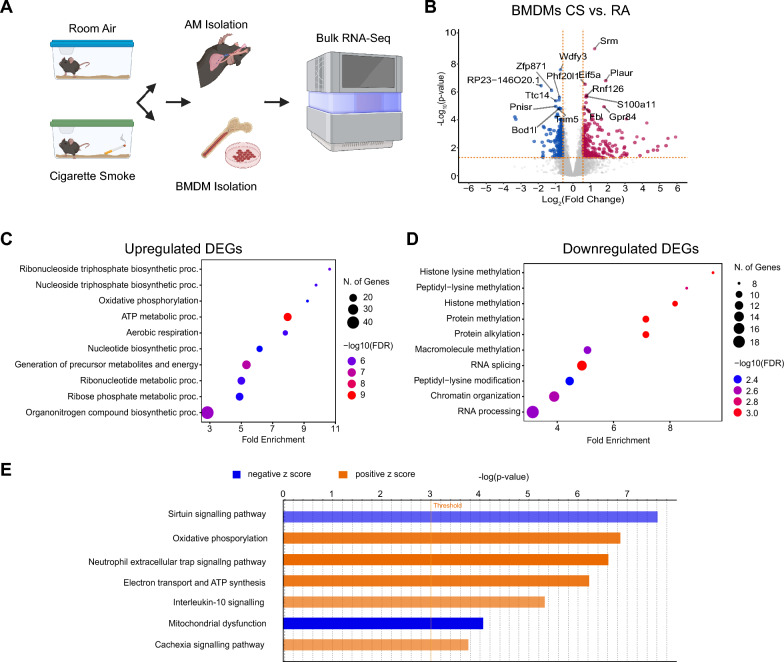
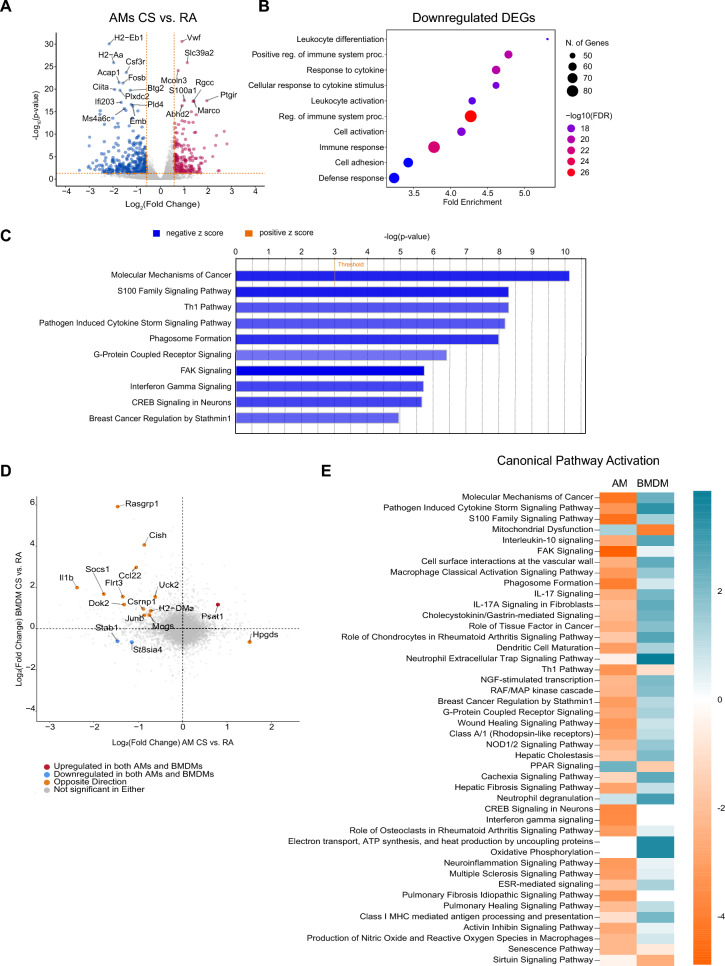
Results: CS induced transcriptomic changes in BMDMs, including an upregulation of genes in sirtuin signalling and oxidative phosphorylation pathways and a downregulation of genes involved in histone and lysine methylation. In contrast, CS induced decreased expression of genes involved in pathogen response, phagosome formation, and immune cell trafficking in AMs. Little overlap was observed in differentially expressed protein-coding genes in BMDMs compared to AMs and their associated pathways, highlighting the distinct effects of CS on immune cells in different compartments.
Conclusions: CS exposure can induce transcriptomic remodelling in BMDMs which is distinct to that of AMs. Our study highlights the ability of CS exposure to affect immune cell populations distal to the lung and warrants further investigation into the functional effects of these changes and the ensuing role in driving multimorbid disease.
Keywords: COPD; Cigarette smoke; Macrophage; Transcriptome.
© 2024. The Author(s).
Conflict of interest statement
The authors declare no competing interests.
Figures
References
Publication types
MeSH terms
Substances
Grants and funding
LinkOut - more resources
Full Text Sources
Molecular Biology Databases
