


Global burden of breast cancer and attributable risk factors in 204 countries and territories, from 1990 to 2021: results from the Global Burden of Disease Study 2021
- PMID: 39183342
- PMCID: PMC11346191
- DOI: 10.1186/s40364-024-00631-8
Global burden of breast cancer and attributable risk factors in 204 countries and territories, from 1990 to 2021: results from the Global Burden of Disease Study 2021
Erratum in
-
Correction: Global burden of breast cancer and attributable risk factors in 204 countries and territories, from 1990 to 2021: results from the global burden of Disease Study 2021.Biomark Res. 2025 Jan 11;13(1):9. doi: 10.1186/s40364-025-00729-7. Biomark Res. 2025. PMID: 39799379 Free PMC article. No abstract available.
Abstract
Background and objective: Breast cancer is a leading cause of morbidity and mortality among women worldwide. This study aimed to assess the global burden of breast cancer and identify attributable risk factors across 204 countries and territories from 1990 to 2021.
Methods: Using data from the Global Burden of Disease Study 2021, we analyzed the incidence, mortality, disability-adjusted life years (DALYs), and risk factors associated with breast cancer. We obtained and analyzed the age-standardized incidence rate (ASIR), age-standardized death rate (ASDR), and age-standardized DALYs rate from 1990 to 2021. We assessed geographical variations and the impact of the Socio-demographic Index (SDI) using regression analysis and stratification by SDI quintiles. Additionally, we estimated the risk factors attributable to breast cancer deaths and DALYs using the comparative risk assessment framework of the GBD study.
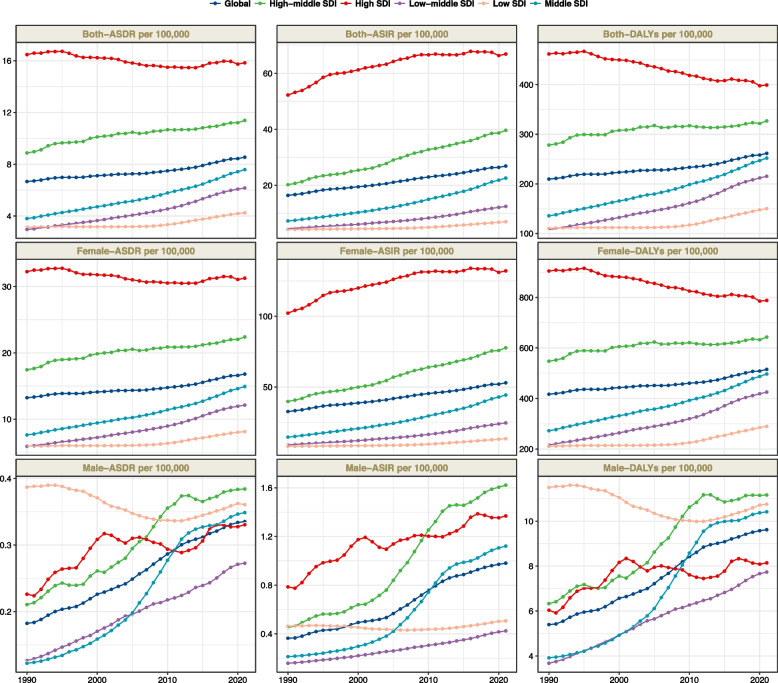
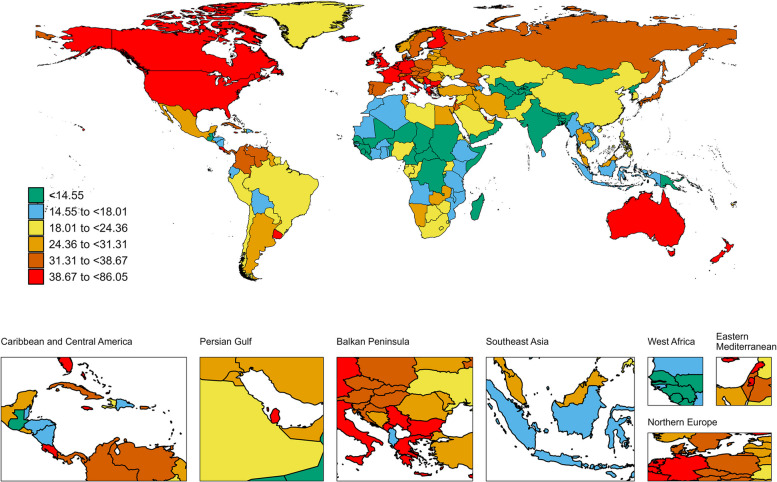
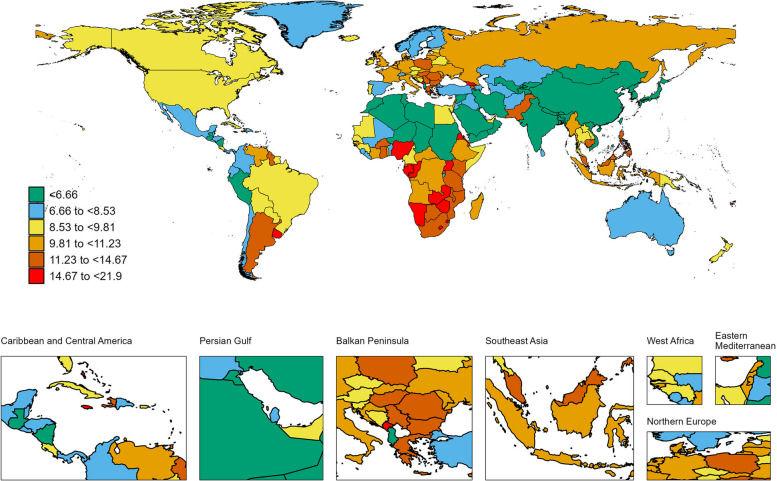
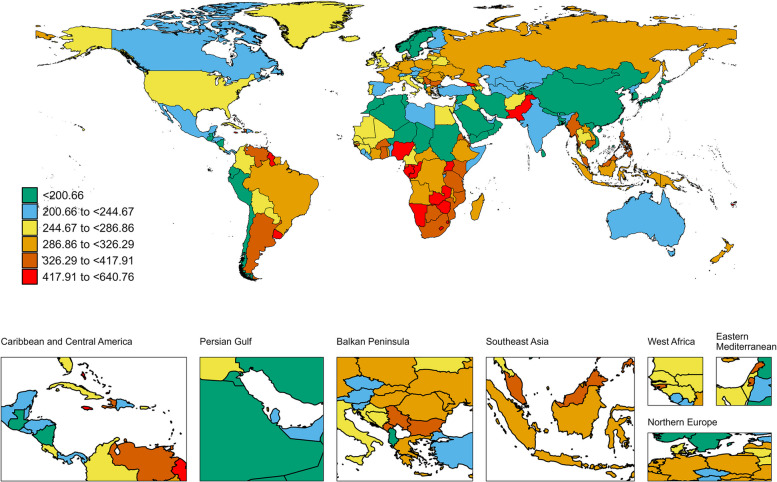
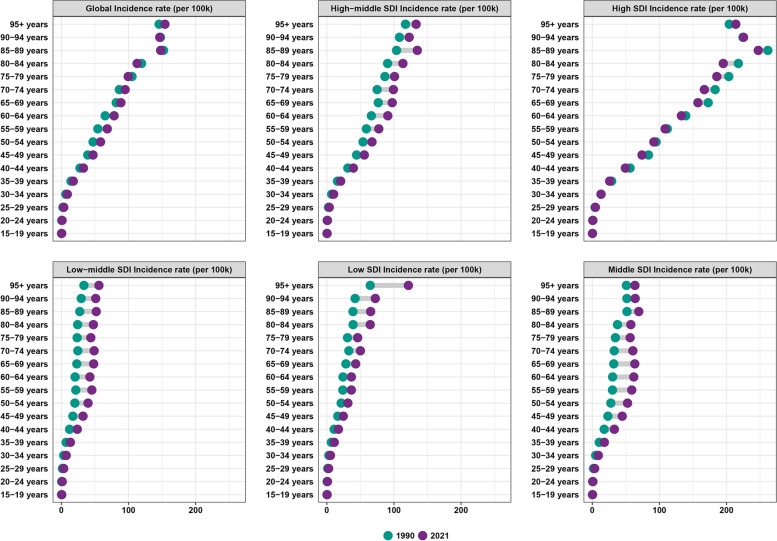
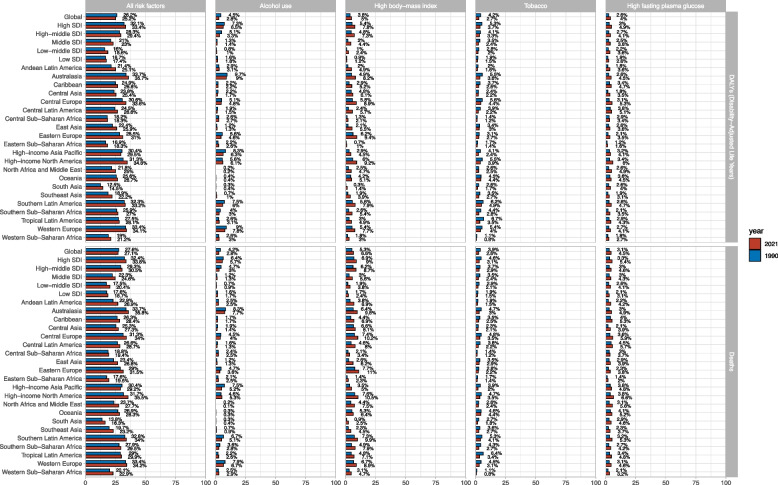
Results: Globally, breast cancer incident cases increased from 875,657 in 1990 to 2,121,564 in 2021. The ASIR rose from 16.42 to 26.88 per 100,000 (95% CI: 1.54-1.60). High SDI regions showed the highest ASIR (66.89 per 100,000 in 2021), while Low SDI regions had the lowest (6.99 per 100,000 in 2021). The global ASDR decreased from 10.42 to 8.54 per 100,000, and the age-standardized DALYs rate decreased from 313.36 to 261.5 per 100,000 between 1990 and 2021. However, these improvements were not uniform across SDI regions. Risk factors included high body-mass index, alcohol use, tobacco, and high fasting plasma glucose, with variations across SDI regions.
Conclusion: The global burden of breast cancer has increased significantly from 1990 to 2021, with disparities observed across SDI regions. While high SDI areas show improvements in mortality and DALYs, lower SDI regions face increasing burdens. Targeted interventions addressing modifiable risk factors and improving healthcare access in less developed regions are crucial for reducing the global impact of breast cancer.
Keywords: Breast cancer; Disability-adjusted life years; Global burden of disease; Incidence.
© 2024. The Author(s).
Conflict of interest statement
The authors declare no competing interests.
Figures
References
LinkOut - more resources
Full Text Sources
