[Preprint]. 2024 Aug 16:2024.08.15.607428.
doi: 10.1101/2024.08.15.607428.

Imaging high-frequency voltage dynamics in multiple neuron classes of behaving mammals

Affiliations

Imaging high-frequency voltage dynamics in multiple neuron classes of behaving mammals

Simon Haziza et al. bioRxiv. .

Update in

Abstract

Fluorescent genetically encoded voltage indicators report transmembrane potentials of targeted cell-types. However, voltage-imaging instrumentation has lacked the sensitivity to track spontaneous or evoked high-frequency voltage oscillations in neural populations. Here we describe two complementary TEMPO voltage-sensing technologies that capture neural oscillations up to ~100 Hz. Fiber-optic TEMPO achieves ~10-fold greater sensitivity than prior photometry systems, allows hour-long recordings, and monitors two neuron-classes per fiber-optic probe in freely moving mice. With it, we uncovered cross-frequency-coupled theta- and gamma-range oscillations and characterized excitatory-inhibitory neural dynamics during hippocampal ripples and visual cortical processing. The TEMPO mesoscope images voltage activity in two cell-classes across a ~8-mm-wide field-of-view in head-fixed animals. In awake mice, it revealed sensory-evoked excitatory-inhibitory neural interactions and traveling gamma and 3-7 Hz waves in the visual cortex, and previously unreported propagation directions for hippocampal theta and beta waves. These technologies have widespread applications probing diverse oscillations and neuron-type interactions in healthy and diseased brains.


Conflict of interest statement

DECLARATION OF INTERESTS M.J.S. is a co-author of a U.S. patent covering technologies in this paper.

Figures

Figure 1:
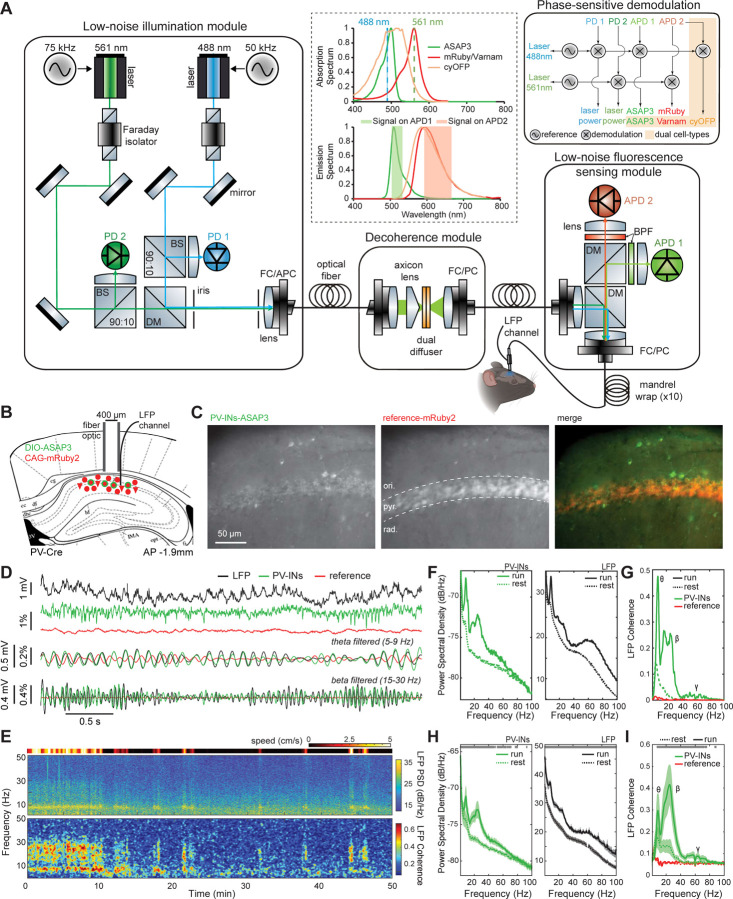
Figure 1:. uSMAART fiber photometry captures population-level voltage dynamics, at frequencies up to 100 Hz, of genetically targeted neuron-types in freely behaving mice.
(A) Schematic of the 4 modules in uSMAART. Within a low-noise illumination module (left box), the emissions of blue and green lasers are modulated at distinct frequencies (50 and 75 kHz, respectively) and jointly coupled into an optical fiber via an angled physical contact fiber connector (FC/APC). A portion of the light from each laser is split from the main pathway using a 90:10 beam splitter (BS) and monitored with a photodiode (PD). To achieve immunity to fiber motion artifacts, the illumination passes through a free-space, dual-stage optical diffuser within a decoherence module (middle box) and is then coupled back into optical fiber via a physical contact fiber connector (FC/PC). A low-noise fluorescence sensing module (lower right box) achieves high-efficiency, low-noise fluorescence detection using a pair of avalanche photodiodes (APDs) and a combination of dichroic mirrors (DMs) and bandpass filters (BPFs) that minimizes crosstalk between fluorescence channels. To attenuate noise from spatial mode-hopping, the fiber conveying light to and from the brain is wrapped ten times around a mandrel. Local field potential (LFP) signals are measured in the brain near the tip of the optical fiber. Electronics for phase-sensitive frequency demodulation (upper right box) isolate signals conveying the illumination and fluorescence emission powers. In the dual cell-type voltage-sensing configuration (orange shading), cyOFP emissions are captured on APD2 but demodulated at 50 kHz owing to their excitation by the 488-nm laser. Inset (dashed box): Absorption and emission fluorescence spectra for single and dual cell-type voltage-sensing configurations, for which an mRuby and cyOFP, respectively, are the reference fluors. (B) To track the aggregate transmembrane voltage activity of CA1 hippocampal parvalbumin-positive (PV) neurons (C–I), we virally expressed the ASAP3 voltage-indicator in PV-Cre mice, along with a reference fluor, mRuby2. As schematized in a coronal brain section, we implanted an optical fiber (400-μm diameter core) and an LFP electrode just atop CA1, to capture optical and electrical signals, respectively. AP: antero-posterior coordinate of the section relative to bregma. (C) Coronal hippocampal section from a PV-Cre mouse, imaged by fluorescence microscopy, showing expression of green fluorescent ASAP3 in PV interneurons (PV-INs; left), strong expression of red-fluorescent mRuby2 in the stratum pyramidale (pyr.) layer of CA1 and weaker expression in stratum oriens (ori.) and stratum radiatum (rad.) (middle), and the overlap of the two expression patterns (right). Scale bar: 50 µm. (D) Example traces showing concurrently acquired, LFP (black trace) and fluorescence signals from ASAP3 (green trace) and mRuby2 (red trace) in a freely behaving PV-Cre mouse, as well as overlaid, bandpass-filtered versions of the three traces in the theta (5–9 Hz) and beta (15–30 Hz) frequency ranges, revealing a strong concordance between the optical and electrical recordings. (The LFP is an extracellular measurement and thus is anti-correlated with the optical measurement of transmembrane voltage. Owing to the negative voltage-sensitivity of the indicators used, scale bars for all fluorescence indicator traces elsewhere in the paper are shown with negative units so that upward-sloped traces convey membrane depolarization. Whereas, here the scale bars for ASAP3 signals have positive units, for the sake of showing the phase alignment between oscillations in the LFP and ASAP3 recordings). (E) Color plots of locomotor speed (top), a time-dependent spectrogram of the LFP (middle), and the frequency-dependent coherence between the LFP and ASAP3 signals (bottom) across a 50-min continuous recording from the same mouse as in (D). Note the bouts of high theta- and beta-band coherence specifically when the mouse is running. (F) Power spectral density plots for the LFP (right) and ASAP3 fluorescence signals (left) determined from joint, continuous 50-min recordings from the same mouse as in (D), computed separately for periods when the mouse was running (solid curve) or resting (dashed curve). LFP and ASAP3 signals exhibit substantial power in the theta (5–9 Hz) and beta (15–30 Hz) frequency ranges during running bouts but not during rest. (G) Plots of the frequency-dependent coherence between LFP signals and either the ASAP3 fluorescence trace (green curves), or the mRuby2 trace (red curves), for time periods when the mouse of (D) was running (solid curves) or resting (dashed curves). Note the theta, beta and gamma activity specific to periods of locomotion. (H) Same as (F) but averaged across n=6 mice. Red dots near the top of the plots in H and I mark frequencies at which the y-axis values during running bouts differed significantly from those during resting periods (signed-rank tests; p<0.05; n=6 mice). (I) Same as (G) but averaged across n=6 mice. Coherence in the theta, beta and gamma frequency bands significantly increased during locomotion.
Figure 2:
Figure 2:. uSMAART captures cell-type specific cross-frequency coupling in anesthetized and freely behaving mice.
(A–F) Delta-gamma frequency coupling in the membrane potential of ASAP3-labeled PV interneurons in the primary visual cortex (V1) of a ketamine-xylazine anesthetized mouse. (A) Upper: Example trace of PV cell voltage dynamics showing up- and down-state transitions. Filter versions of the trace illustrate that power in the low- (30–60 Hz; Middle) and high-gamma (70-–100 Hz; Bottom) frequency bands both increased during up-states. (B) Two example epochs of up- and down-state transitions, with raw and gamma filtered traces shown as in (A). (C) A wavelet spectrogram, with a logarithmic y-axis, averaged over 257 oscillation cycles in the delta frequency range (centered at 0.9 Hz, the frequency of peak delta power), reveals two distinct high-frequency power spectral peaks that arise at different phases of the delta rhythm. In panels C, D, the convention used for the phase of the delta oscillation is that 0-deg. refers to the trough of the oscillation, i.e., the greatest hyperpolarization in the TEMPO signal. (D) Plot of the mean fluorescence signal in the delta frequency band (0.9 ± 0.25 Hz) (black trace; left axis), overlaid with plots of the delta phase-dependent oscillations of signal magnitude in the low (30–60 Hz; olive trace) and high (70–110 Hz; dashed olive trace) gamma ranges (right axis). As in (A, B), the plot shows distinct delta-phase shifts (dashed vertical lines; n = 122 delta events) for amplitude modulations of the low- and high-frequency gamma rhythms. The two arrows indicate the two delta phases at which the magnitudes of the low and high gamma oscillations are the greatest. Shading: s.e.m. (E) Raw (top), low-gamma (30–60 Hz;middle) and high-gamma (70–110 Hz;bottom) filtered traces acquired in joint LFP (black) and PV-cell TEMPO (green) recordings in cortical area V1 of a ketamine-xylazine anesthetized mouse. (F) Plots of frequency-dependent coherence for the same LFP and TEMPO recordings as in (E), using either a 2-s (left) or a 200-ms (right) temporal window to compute coherence values. The green, teal, and red curves respectively show coherence values between the LFP trace and traces for the ASAP3-labeled PV cells, a temporally shuffled version of the ASAP3 trace, and the red reference fluor. Gray dots at the top of the plots mark frequencies at which the coherence of the ASAP3 and LFP recordings differed significantly from the coherence of the LFP and the reference fluor (rank sum test; p<0.05), highlighting significant coherence in the delta, low- and high-gamma bands, as in (A–D). Shading: s.e.m. (G–J) Theta-gamma frequency coupling in the voltage dynamics of PV interneurons in the dorsal CA1 hippocampal area of a freely behaving mouse (see Figure 1B for labeling strategy). (G, H) Mean wavelet spectrograms for the LFP (G) and PV population voltage (H) recordings, plotted as a function of theta-phase over two theta cycles (with theta-phase extracted from the LFP trace at the frequency (7.5 Hz) of peak theta power). In G–J, the convention used for the phase is that 0-deg. refers to the trough of the theta oscillation in the LFP, i.e., the greatest hyperpolarization in the extracellular electric field recording. (I, J) Mean signal amplitudes at the peak theta frequency (black traces; left axes) and signal magnitudes in the gamma (40–70 Hz) frequency range (olive traces; right axes) for LFP (I) and fluorescence (J) signals. Solid and dashed curves in J are for ASAP3 and reference fluor recordings, respectively. We made similar findings as in G–J in n = 4 mice. Shading: 95% C.I.. (K–N) PV cell-population voltage signals, as reported by ASAP3, revealed a ~100 ms transmembrane depolarization, followed by a prolonged hyperpolarization, during a kainate-induced epileptic seizure (typified by high-frequency LFP dynamics) in the dorsal CA1 hippocampal area of a freely behaving mouse. (K) Example traces of LFP (black trace; top) and PV membrane voltage (green trace; bottom) signals, illustrating that the appearance of epileptic spikes in the LFP channel correlated with a ~100 ms depolarization of PV interneurons (see also N). (L) Power spectral density plots for the LFP, recorded either during pre- (dashed curve) or after (solid curve) kainate injection. (M) Plots of the mean temporal cross-correlation between high-frequency (>50 Hz) power in the LFP and the amplitude (at frequencies <10 Hz) of PV-cell membrane voltage signals (green traces) or reference fluor signals (red traces). Solid traces: Averages over n=21 seizure events (each sampled for 5 s; STAR Methods) that occurred after kainate injection. Dashed curves: Averages over 5-s-intervals taken from the period before kainate injection. Shading in panels M, N: 95% C.I. (N) Plots of the epileptic, ictal spike-triggered average activity in the LFP and PV cell traces, and in the fluorescence reference channel and temporally shuffled versions of the PV cell traces. Note that PV interneurons depolarized during ictal spikes.
Figure 3:
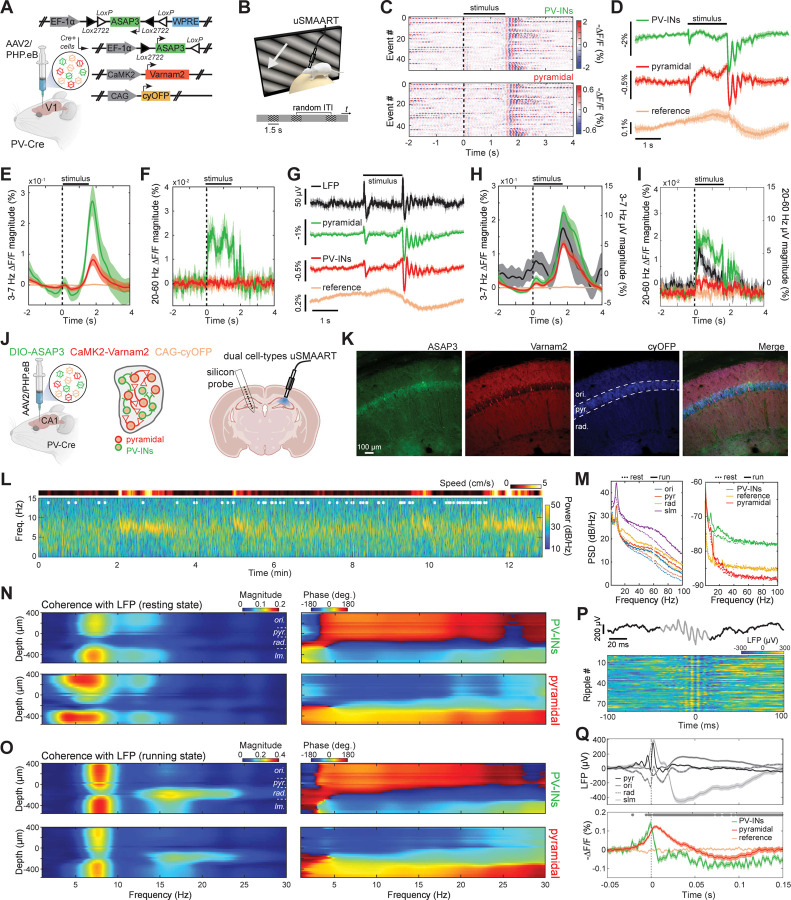
Figure 3:. uSMAART tracks the concurrent voltage dynamics of two genetically identified neuron classes in behaving mice.
(A–I) Visual stimulation evoked gamma oscillations in brain area V1 of awake mice during stimulus presentation, followed by 3–7 Hz oscillations after stimulus offset. (A) Retro-orbital injection of three PHP.eB adeno-associated viruses into PV-Cre mice enabled expression of Cre-dependent ASAP3 in PV interneurons, Varnam2 in pyramidal cells, and cyOFP (a reference fluorophore) in all neuron-types. (B) Schematic of the visual stimulation paradigm used for dual cell-type voltage-sensing studies. Head-fixed mice viewed a computer monitor placed in front of one eye, as we recorded fluorescence voltage activity in the contralateral primary visual cortex (V1). Drifting grating visual stimuli (each 1.5 s in duration) swept across the monitor. Intervals between stimulation trials were randomized between 2–5 s. (C) Visual stimuli consistently evoked post-stimulus 3–7 Hz oscillations in ASAP3-labeled PV interneurons (top) and Varnam2-labeled pyramidal (bottom) cells. Each row has data from one of 50 different trials in the same mouse. (D) Mean time-dependent fluorescence traces, obtained by averaging the signals from all 3 fluors across all 50 trials of (C). Shading in (DI): 95% C.I. (E, F) Mean time-dependent fluorescence signal magnitudes in the 3–7 Hz (E) and gamma (30–70 Hz; F) frequency bands for all 3 fluors used in (C, D), computed using wavelet transforms. (G) Mean time-dependent fluorescence traces from studies in which we reversed the GEVI assignments to PV and pyramidal cells from those of (C), and in which we concurrently performed LFP and TEMPO recordings (averages are over 100 trials). (H, I) Same as (E, F) but for the studies of G, including the LFP recordings. (J–Q) We studied the dynamical inter-relationships between excitatory and inhibitory activity in the hippocampus of an active mouse, across different behavioral states. (J) We performed dual cell-type fluorescence recordings with uSMAART, concurrently with electrophysiological recordings in the contralateral CA1 area (linear silicon probe; 32 recording sites) that allowed us to detect ripple (120–200 Hz) events. The fluorescence labeling strategy using 3 different viruses was the same as in panel (A). (K) Fluorescence confocal images of a brain slice of a mouse expressing ASAP3 in PV interneurons, Varnam2 in pyramidal cells, and cyOFP in all cell-types. The far right image shows an overlay of the three preceding images, highlighting the different targeting of all three fluorescent proteins. (L) Top: Plot of mouse speed. Bottom: Time-dependent spectrogram of LFP signals recorded in CA1 stratum pyramidale. White asterisks mark occurrences of ripple events. The LFP exhibited power increases in the theta (5–9 Hz) band during locomotion, whereas ripples occurred only during rest, consistent with past studies. (M) Power spectral densities for (left) LFP signals recorded across all 4 canonical hippocampal layers (ori.: stratum oriens, pyr.: stratum pyramidale, rad.: stratum radiatum, slm.: stratum lacunosum moleculare) and for (right) the three fluorescent signals from the TEMPO recordings, for periods of rest (dashed curves) or running (solid curves). (N, O) Plots of the coherence magnitude (left plots) and phase (right plots) between PV (top rows) and pyramidal cell (bottom rows) fluorescence voltage signals and the LFP measured across the 32 recording sites of the silicon probe (plotted as a function of depth relative to the center of stratum pyramidale; tissue layers abbreviated as in M) during periods of resting (N) or running (O). During rest, PV and pyramidal cell voltage dynamics were both coherent with the LFP but with distinct frequency signatures, extending up to the alpha frequency range (~10–15 Hz). During locomotion, both cell-types became highly coherent with the LFP at theta frequencies (~5–9 Hz) in nearly all layers of CA1; however, the LFP signal in stratum radiatum (depth: ~200 μm) had higher coherence with each cell-type in the beta band (~15–30 Hz) than at theta frequencies. Note the sharp changes in coherence phase that occur near the boundaries of different tissue layers. (P) Top: Example LFP trace showing a hippocampal ripple event (light gray part of the trace) recorded in stratum pyramidale. Bottom: LFP traces shown for 80 different ripple events from the same mouse, temporally aligned to the time on each trial at which the LFP signal was at its minimum. (Q) Mean time-dependent traces of the LFP signals across all 4 hippocampal layers (top) and fluorescence voltage signals for PV and pyramidal cells (bottom) during ripples, obtained by averaging over 273 ripples. At ripple peak magnitude (vertical dashed line), both pyramidal cells and PV depolarized. PV cells then hyperpolarized more sharply, whereas pyramidal cell voltages more gradually hyperpolarized below baseline voltages. Gray dots at the top of the bottom plot mark times at which the fluorescence changes in the two neuron classes were significantly different (two-tailed signed-rank test; p<0.05). Shaded areas: s.e.m.
Figure 4:
Figure 4:. TEMPO imaging in anesthetized mice reveals traveling neocortical waves in the delta and gamma frequency bands that exhibit cross-frequency coupling.
(A) Schematic of the TEMPO mesoscope. A pair of low-noise light-emitting diodes provides two-color illumination; a corresponding pair of photodiodes monitors their emission powers. The illumination reflects off a dual-band dichroic mirror (70 mm × 100 mm) and is focused onto the specimen by a 0.5 NA macro objective lens providing a 8-mm-diameter maximum field-of-view (FOV) when used in our system. Fluorescence returns through the objective lens and dual-band dichroic mirror. A short-pass dichroic mirror (70 mm × 100 mm) splits the fluorescence into two detection channels. After passing through a bandpass filter, fluorescence in each channel is focused onto a fast sCMOS camera by a tube lens (85 mm effective focal length). Inset: A view from the Allen Brain Atlas, showing the location of the glass cranial windows (dotted black circle; 7–8 mm diameter) used for Figures 4,5,7. Across the full area visible through the cranial window, the cameras acquired images at 130 Hz. In some studies, to increase the imaging speed to 300 Hz, we sampled a region-of-interest on the camera chip that covered the brain areas between the two black horizontal lines. Abbreviations: RSP (retrosplenial cortex), M1 (primary motor cortex), V1 (primary visual cortex), S1 (primary somatosensory cortex), BPF (bandpass filter), BS (beamsplitter), DM (dichroic mirror), LED (light-emitting diode), ND (neutral density), PD (photodiode). (B) Computer-assisted design mechanical drawing of the mesoscope. Lower inset, magnified view of the large custom fluorescence filter set. Upper inset: Timing protocol for voltage imaging using a single green GEVI plus the mRuby2 reference fluor. Illumination from both LEDs is continuous (bottom two traces). Image acquisition by the two cameras is initiated by an external trigger, ensuring that the image pairs are temporally aligned (top two traces; 800 Mbytes · s–1 data rate per camera). (C) Top, We retro-orbitally co-injected a pair of AAV2/PHP.eB viruses to co-express red fluorescent mRuby2 and a green fluorescent GEVI, ASAP3. Bottom, One virus expresses mRuby2 via the CAG promoter; the other allows Cre-dependent expression of ASAP3 via the EF-1α promoter. By using Cux2-CreERT2 or PV-Cre mice, we performed voltage-imaging studies of neocortical layer 2/3 pyramidal (L2/3) or PV cells, respectively. (D) Two examples of traveling voltage waves in the delta frequency band, shown in ASAP3 image sequences (50 ms between images) taken at 130 Hz in ketamine-xylazine-anesthetized Cux2-CreERT2 mice. Images underwent unmixing (Figure S5) to remove hemodynamic changes captured in the mRuby2 channel but were otherwise unfiltered. Brain area boundaries (see (A) inset), are superposed on the last image in each sequence. In each case, a depolarization (denoted by red hues) sweeps across cortex in the anterior to posterior (A-P) direction. Data in (E–R) are also from ketamine-xylazine-anesthetized mice and were acquired at 130 Hz in (D–J) and 300 Hz in (K–R). (E) Color plot (top) showing the anterior to posterior propagation of the two traveling waves in (D). At each time point (x-axis) and for each A-P coordinate (y-axis), we averaged fluorescence values along the medio-lateral direction. Arrows in 3 different shades of green mark 3 different positions along the A-P axis for which voltage-dependent fluorescence traces are plotted (bottom) in corresponding colors. (F) Flow maps showing local propagation directions of voltage depolarization for a pair of individual delta waves observed in example Cux2-CreERT2 (top) and PV-Cre (bottom) mice. Flow vectors are all normalized to have the same length. (G) Distributions of delta wave propagation speed across all delta events seen in two Cux2-CreERT2 (top) and two (PV-Cre) (bottom) mice, computed near the center of area V1 (marked by black dots in (I)), where there was consistent anterior to posterior propagation. Insets: Polar histograms showing distributions of wave propagation direction for the same 4 mice at the center of V1, revealing the approximate alignment of wave propagation with the A-P axis in all 4 mice (n = 313, 320, 405 and 200 delta events in the individual mice). (H) During the peaks of the delta waves, we found enhanced activity in the gamma (30–60 Hz) frequency band. In two example Cux2-CreERT2 (top) and PV-Cre mice (bottom), the amplitudes of gamma oscillations increased during delta wave depolarizations up to ~4-fold over baseline values in brain areas V1 and RSP and to a lesser extent in other areas. (I) Maps of peak correlation coefficients, r, for the same mice as in (H), computed for each spatial point by calculating the temporal correlation function between the local fluorescence trace and that at the center of V1 (black dots) and then finding this function’s maximum value. (J) Maps of peak correlation coefficients, computed as in (I) but using gamma bandpass-filtered fluorescence traces, show that the gamma oscillations were less spatially coherent than the delta waves. (K) To study gamma activity in greater detail, we acquired a subset of the video data at 300 Hz (K–R) over a more limited FOV (see inset of (A)). Top: Example fluorescence trace of voltage activity at the center of V1 in the same Cux2-CreERT2 mouse as in (H-J), showing ongoing delta waves. Bottom: Gamma-band filtered (35–100 Hz) version of the top trace, revealing increases in gamma-band activity during the peaks of the delta oscillations. (L) Top: Example fluorescence traces of voltage activity at the center of V1, from each of the two mice in (H-J), temporally aligned to the peak of delta wave depolarization to reveal the consistent waveform of delta activity (n = 260 waves shown per mouse). Bottom: Gamma-band filtered (35–100 Hz) versions of the same traces reveal delta-gamma coupling as in (K). (M) Mean time-dependent amplitudes of gamma-band (35–100 Hz) activity in the voltage (solid lines) and reference (dashed lines) signals, for each of the 4 mice in (G), computed by averaging over all delta events in each mouse, identified as in (L) and aligned to the peak of the delta oscillation using the wavelet spectrogram. Voltage but not reference channel signals showed increased gamma band activity during the depolarization phase of delta oscillations. Shading: 95% C.I. (N) Top: Magnified views of two example delta depolarization events at the center of V1 in the same mouse as in (K). Middle: Gamma-filtered (35–100 Hz) versions of the same traces, highlighting gamma events near the end of each delta depolarization. Bottom: Gamma-filtered traces of activity during Event 1, from the color-corresponding locations marked with green-shaded dots in the upper rightmost image of panel (O). (O) Sequences of gamma-band (35–100 Hz) filtered images (3 ms between successive frames), showing the spatiotemporal dynamics in V1 of the same two delta depolarization events as in (N). Green dots mark the anatomic locations for the voltage traces in the bottom panel of (N). For display purposes only, the images shown were spatially low-pass filtered using a Gaussian filter (156 μm FWHM). (P, Q) Left panels: Flow maps showing the local wave propagation directions during the same two individual gamma wave events as in (N). As in (F), all flow vectors are normalized to have the same length. Right panels: Histograms showing the distributions of propagation speed across the brain region shown in (O), for the same two gamma events as in the left panels. Unlike delta waves, which traveled along the A-P axis, the gamma waves illustrated here traveled more aligned to the medio-lateral (M-L) axis and had much faster speeds than the accompanying delta waves (compare to (G)). Insets: Polar histograms showing the distributions of propagation direction for the two gamma events, computed across the flow maps of the left panels. (R) Histograms of propagation speed, aggregated across n = 20 events and all spatial bins (62.5 µm wide) in V1, in the same two mice as in (H-J) (n = 200 and 300 waves, respectively, in the Cux2-CreERT2 and PV-Cre mice). Insets: Polar histograms of the directions of gamma wave propagation, showing that in both L2/3 pyramidal and PV cells the gamma waves traveled approximately in the M-L direction, roughly orthogonal to the propagation directions of their carrier delta waves (E–G).
Figure 5:
Figure 5:. TEMPO imaging reveals visually evoked sequences of traveling gamma and then 3–7 Hz waves in area V1 of awake head-fixed mice.
(A) For all studies in this figure, we used the same visual stimulation approach as in Figure 3B. We expressed the GEVI (ASAP3) and reference fluor (mRuby2) as in Figure 4C. (B) Example traces of visual stimulus-evoked voltage activity from a PV-Cre mouse, averaged over primary visual cortex (V1), primary motor cortex (M1) and retrosplenial cortex (RSP). In V1, visual stimuli evoked gamma oscillations (as seen in the gamma-filtered version of the raw trace) and 3–7 Hz oscillations after stimulus offset. (C) Power spectral densities (PSDs) of voltage activity determined from fluorescence traces that were averaged over V1, M1 or RSP in the same mouse as in (B) across the duration (276 s) of the recording session. Both V1 and M1 exhibited notable oscillations with peak power around 6–7 Hz, and a second-harmonic was also apparent in V1. (D) Two example sequences of fluorescence images showcasing the spatiotemporal dynamics of visually evoked 3–7-Hz waves in PV cells of area V1 (successive image frames are 75 ms apart). Brain area boundaries, based on the Allen Brain Atlas (Figure 4A inset), are superposed onto the first image in each sequence. Oscillations also arose in M1 but were not time-locked to stimulus presentation (see (F)). (E, F) Visual stimuli consistently evoked 3–7 Hz and gamma (30–60 Hz) band oscillations in V1 but not M1 in the same mouse as (D). Top plots: Raster color plots showing fluorescence voltage signals, spatially averaged over V1 (E) or over M1 (F), revealing 3–7 Hz oscillations in both areas that were locked to stimulus-offset in V1 but not M1 (50 stimulus trials shown). Bottom plots: Raster plots of gamma-band filtered (30–60 Hz) PV cell voltage activity in V1 (E) and M1 (F), showing that gamma-band activity was evoked during stimulus presentation in V1 but not M1. (G) Top trace: Mean time-dependent activity trace (mouse 1), obtained by averaging the raw signals of (E) over all 50 trials. Bottom 3 traces: Analogous traces for 3 additional mice, one a PV-Cre mouse and the other two Cux2-CreERT2 mice. Shading: 95% C.I. (H) Mean time-dependent fluorescence signal magnitudes in the gamma-band (30–60 Hz) for all 4 mice in (G), determined by a wavelet spectrogram as in Figure 4M. All 4 mice showed significant increases in gamma band power during visual stimulation as compared to baseline values (p = 4 × 10-19, 6 × 10⁻¹⁰, 1.5 × 10⁻¹⁶ and 1 × 10-17 in mice 1–4 for the 100-ms-interval after stimulus onset, and 2.6 × 10⁻¹⁸, 3 × 10-16, 6.7 × 10⁻¹⁶ and 7 × 10-15 for the 0.5-s-interval at the middle of the stimulus period, for n = 50 stimulus trials, Wilcoxon sum rank test). Shading: 95% C.I. (I) Spatial maps of 3–7 Hz power, averaged across the entire recording sessions for mice 1 and 3 of panel (H) (recording durations of 275 s and 266 s, respectively). See (D) for brain area boundaries. (J) Maps of peak correlation coefficients, r, for the Cux2-CreERT2 and PV-Cre mice of (H), computed for each point in space by calculating the temporal correlation function between the local fluorescence trace and that at the center of V1 (black dots) and then finding this function’s peak value. (K) Maps of peak correlation coefficients, r, computed as in (J), except that correlations were computed relative to a point in M1 (black dots) not V1. Unlike in (J), in which coherent 3–7-Hz-band activity is largely restricted to V1, here the coherent activity is confined to near M1. Thus, the 3–7-Hz-band oscillations in M1 and V1 appear to be incoherent with each other. (L) Maps of visually evoked increases in the amplitude of neural activity in the gamma-band (35–60 Hz), computed by wavelet transform as in (H). Both L2/3-pyramidal and PV cell-types underwent increases in gamma activity that were localized to V1. (M) Two example sequences of fluorescence images from mouse 1 of (H), from videos taken at 300 Hz (3 ms between frames) to reveal the detailed progression of 3–7 Hz waves in V1, for 2 different wave events. (N, O) Left panels: Flow maps showing the local wave propagation directions (normalized to have the same amplitudes) for the same two 3–7-Hz wave events as in (M). Right panels: Histograms showing the distributions of propagation speed across the region in (M), for the same two events as in the left panels. Insets: Polar histograms of propagation direction for the two 3–7-Hz events, computed across the flow maps of the left panels, showing that the two different events had distinct directions of propagation across V1. The number values on each polar graph refer to the counts in each bin of the histogram. (P) Histograms of propagation speed, aggregated across spatial bins (62.5 µm wide) in V1 and 30 different 3–7 Hz waves in each of the same two mice as in (L). Insets: Polar histograms of the directions of 3–7 Hz wave propagation direction, showing that while individual waves had a clear direction of propagation (e.g. as in (N, O)), the distribution of these propagation directions across all 3–7 Hz waves was less uniform. (Q) Sequences of gamma-band (35–100 Hz) filtered images (3 ms between frames), from the same mouse as in (M), showing the spatiotemporal dynamics in V1 of two different gamma oscillation events. For display purposes only, the images shown were spatially low-pass filtered using a Gaussian filter (156 μm FWHM). (R, S) Left panels: Flow maps showing the local wave propagation directions during the same two gamma events as in (Q). Right panels: Histograms showing the distributions of propagation speed across the region shown in (Q), for the same two gamma events as in the left panels. Insets: Polar histograms showing the distributions of propagation direction for the two gamma events, computed across the flow maps of the left panels. (T) Histograms of propagation speed, aggregated across all spatial bins (62.5 µm wide) in V1 and 30 gamma waves in each of the same two mice as in (L). For both L2/3 pyramidal and PV cells, modal speeds of gamma waves were higher than those of 3–7 Hz waves, (P). Insets: Polar histograms of gamma wave propagation directions across all observed events, showing that while individual gamma waves had a clear propagation direction (e.g., R, S), the distribution of these propagation directions across all gamma waves was far more isotropic.
Figure 6:
Figure 6:. TEMPO imaging reveals locomotor-evoked bi-directional, theta- and beta-band traveling voltage waves in hippocampal PV interneurons and lateral-septum-projecting pyramidal neurons.
(A) Plot of running speed in an example mouse (top), plus a set of concurrently acquired time traces (bottom 6 traces) illustrating locomotor-evoked hippocampal oscillations in the beta-band (15–30 Hz). Shown are broadband (top 3 traces) and bandpass-filtered versions (bottom 3 (overlaid) traces) of the hippocampal LFP (black traces), fluorescence voltage signals from ASAP3-expressing parvalbumin (PV) cells (green traces), and signals from the mRuby2 reference fluor (red traces). Fluorescence signals are averages across the entire visible portion of the hippocampus. During running, power in the beta band increased in both the LFP and ASAP3 traces but not the mRuby2 trace. Hemodynamic and motion artifacts are visible in the reference trace but not the ASAP3 and LFP traces. Two black arrows on the PV cell voltage trace mark events further characterized in (G) and (H). (B, C) Power spectral densities (PSDs) for the LFP (B) and fluorescence signals (C), for the same mouse as in (A) during 5 min of continuous recording, during resting (dashed curves) and running (solid curves) conditions. During running (defined as >2 cm/s speed), ASAP3 and LFP signals underwent power increases across the beta band. The mRuby2 signals had prominent spectral peaks arising from the heartbeat and its harmonics. Moreover, the mRuby2 PSD differs between resting and running states across nearly all frequencies, emphasizing the importance of correcting the GEVI signals for the changes in the reference channel. (D) Plots of the frequency-dependent coherence between the LFP and either the ASAP3 (green curves) or reference fluorescence signals (red curves) from the same mouse as in (A), during resting (dashed curves) and running (solid curves) conditions. ASAP3 but not mRuby2 signals underwent running-evoked increases in coherence with the LFP. The coherence peak near 0 Hz for mRuby2 during running reflects shared motion artifacts affecting the LFP and mRuby2 measurements but not the processed ASAP signals. Also see Figure S7B-C for differences along the CA1–CA3 axis in theta and beta power and coherence. (E, F) Spatial map of coherence (E) between the LFP and ASAP3 signals during running epochs across the hippocampal surface, averaged across the beta-band (15–25 Hz). The LFP electrode was located in CA1 (upper right portion of the map), which was, as expected, where coherence between the two measurements was highest. However, coherence values were significant across the full field-of-view, unlike values observed during rest (F; top plot) or for the fluorescence reference (F; bottom plot). (G) Space-time representation of PV voltage activity during beta waves, projected onto the CA3–CA1 (top plot) and septal-temporal (bottom plot) axes. Black arrows mark the same two voltage events marked in (A). The slope of each wave’s representation in the plots gives the reciprocal of that wave’s speed. Based on these slopes, one can see that the waves shown progress from CA3 to CA1 but exhibit almost no propagation in the septal-temporal direction. (H, I) Movie frames showing beta-frequency voltage waves traveling along the CA3-CA1, (H), or septo-temporal, (I), axes. Each row corresponds to one event; successive frames are 3.3 ms apart. The two events shown in (H) are marked with arrows in (A). Black arrows in the final frame of each plot show the direction of wave propagation, as determined computationally (STAR Methods). (J) Histogram of waves’ speeds and orientations (inset) for traveling beta waves (756 total events from n=2 mice, STAR Methods). Note that there are two main modes of wave propagation, along two orthogonal axes, the CA3-CA1 axis and the septo-temporal axes of the hippocampus. Beta waves traveled in these two directions with indistinguishable speeds (220 ± 4 mm/s and 220 ± 6 mm/s, median ± s.e.m, for n = 428 and 199 waves propagating along the CA3-CA1 and septo-temporal axes, respectively; p=0.64, rank-sum test). (K) Plots in the same format as those in (A), but with theta-band (5–9 Hz) filtered traces at bottom, for an experiment in which we used viral retrograde targeting to express ASAP3 in CA1 pyramidal neurons that had axonal projections to the lateral septum (LS). (L) Plots of coherence between the LFP and fluorescence signals from either LS-projecting pyramidal neurons (green curves) or the red reference fluor (red curves), computed across the entire recording from the same mouse as in K (left) or computed separately for resting and running epochs (right). Note that, unlike for PV-INs, for LS-projecting pyramidal cells the beta-band power is comparatively weak and is unmodulated by running; instead there is strong power in the theta- and gamma-frequency bands that is locomotor-dependent. (M) Movie frames showing traveling theta-frequency voltage waves for LS-projecting pyramidal (top plot) and PV inhibitory neurons (middle and bottom), as measured with ASAP3. Each row displays an individual theta wave event. Both neuron-types exhibited wave propagation in the CA1 to CA3 direction. Only PV neurons exhibited waves traveling in the CA3 to CA1 direction. Black arrows in the final frames of each plot show the direction of propagation, as computed computationally. (N) Histograms of speed and direction (inset) for traveling theta waves for LS-projecting pyramidal neurons (left; n=3 mice) and PV inhibitory neurons (right; n=2 mice). Note that only PV cells showed bidirectional wave propagation and that theta waves propagate with different speed between PV (40 ± 2 mm/s and 33 ± 1 mm/s, median ± s.e.m, for n = 930 and 1094 theta waves, for each 2 mice with PV cells targeting, respectively) and LS-projecting cells (90 ± 3 mm/s, 80 ± 3 mm/s and 84 ± 4 mm/s, median ± s.e.m, for n = 508, 465 and 441 theta waves, for each 3 mice with LS-projection targeting, respectively). Moreover, unlike beta waves, the two classes of propagating theta waves traveled with significantly different speeds in PV interneurons (35 ± 2 mm/s and 42 ± 2 mm/s, median ± s.e.m, for n = 777 CA3-to-CA1 and 637 CA1-to-CA3 theta waves, respectively, n=2 mice, p=0.0027).
Figure 7:
Figure 7:. Concurrent voltage dynamics of two neuron-types observed with TEMPO imaging in behaving mice.
(A) To image the voltage dynamics of two neuron-types at once, we expressed the 3 fluorophores using the same 3 viruses as for uSMAART sensing in 2 cell classes (Figure 3A). (B) Absorption and emission fluorescence spectra for the 3 fluorophores, shown along with emission spectra of the two light-emitting diodes (LEDs) and passbands of the emission filters in the TEMPO mesoscope (Figure 4A). (C) Fluorescence confocal images of a brain slice from a mouse expressing ASAP3 in PV cells, Varnam2 in pyramidal cells and cyOFP in all cell-types. The far right image is an overlay of the preceding images, highlighting the different targeting of all three proteins. L1: layer1, L6: layer 6. (D) Schematic of the timing protocol used for dual neuron-type recordings. The durations of image frame acquisitions by the two cameras are depicted via digital voltage pulses in the top two traces. Colors within each voltage pulse denote the colors of the acquired fluorescence signals. Periods of LED illumination are depicted via the voltage pulses in the bottom two traces. When the blue LED is illuminated, one camera captures ASAP3 fluorescence and the other camera captures cyOFP fluorescence. When the green LED is on, the second camera captures Varnam2 fluorescence. This scheme allows the 3 different fluorescence signals to be captured unambiguously using only 2 illumination and 2 detection pathways. (E) The visual stimulation paradigm was the same as in Figure 3B. (F) Example time traces of visually evoked membrane voltage dynamics in ASAP3-expressing PV interneurons and Varnam2-expressing pyramidal cells, spatially averaged over primary visual cortex (V1). The visual stimulus was presented during the interval marked with the black horizontal bar. Whereas both neuron-types exhibited 3–7 Hz voltage oscillations after stimulus offset, only heartbeat artifacts were observed in the reference cyOFP channel. Depolarization events marked with arrows are further characterized in (L). (G) Event-related wavelet spectrograms for PV interneurons, pyramidal cells and reference signals for the mouse in (F), averaged over the same 60 trials as in (H). 3–7 Hz oscillations arose at stimulus offset in both cell-types; the reference plot shows strong heartbeat artifacts (~10 Hz) that were successfully unmixed from both voltage channels. (H) Raster plots of visual stimulus-evoked voltage dynamics in V1. Visual stimuli consistently evoked 3–7 Hz oscillations in PV (top) and pyramidal cells (bottom) after stimulus offset. Each row shows data from one of 60 different trials in the same mouse as in (F). (I) Mean time-dependent fluorescence traces, obtained by averaging the signals from all 3 fluors across all 60 trials of (H), showing the increase in 3–7 Hz power at stimulus offset. Shading on traces in (I–K) denotes 95% C.I. (J) Mean time-dependent fluorescence signal magnitudes in the 3–7 Hz band, as obtained from a Hilbert transform, showing the rise in oscillatory power after stimulus offset. (K) Top: Raster plots of PV cell voltage dynamics in the gamma band (30–70 Hz) across the same 60 trials as in (H). Bottom: Mean time-dependent fluorescence signal magnitudes in the gamma band for all 3 fluors, as determined from a Hilbert transform. PV cells exhibited a clear increase in gamma-band power during visual stimulation, in contrast to the increase in 3–7-Hz-band power observed after stimulus offset. (L) Movie frames of fluorescence emissions showing the voltage depolarization events marked with arrows in (F), for each of the 3 fluors. Brain area boundaries, based on the Allen Brain Map, are above each column and delineate areas labeled in (M). Both PV and pyramidal cells underwent depolarizations, but the reference cyOFP signals appear unrelated to the voltage dynamics of either neuron class. (M, N) Spatial maps (M) of the correlation coefficient (top plot) and time delay (bottom plot) between excitatory and inhibitory neuronal activity in the 3–7-Hz-band for every wave event detected (n=98 visual stimulation trials). Correlations in stimulus-evoked, 3–7 Hz activity between the two neuron-types were highest in visual cortex and accompanied by a greater temporal shift between the oscillations of the excitatory and inhibitory cells. Histograms in (N) show distributions of the physiological time delays between the two neuron classes, estimated in visual cortex based on 4 imaging sessions (denoted by curves in 4 separate colors) from 3 mice, as corrected computationally for the time-lags induced by the indicators’ kinetics. To estimate these time-lags, we parametrically fit their values using the measured time-delays in (M) and 6 other complementary experiments with various GEVI and cell-type assignments (Figure S7D-F). We repeated this procedure for each of the 4 recordings to generate the 4 histograms in (N). (O, P) Same as (M) and (N), respectively, but for the reversed labeling strategy in which pyramidal neurons express ASAP3 and PV interneurons express Varnam2. Each colored histogram in (P) is for one of 4 different recordings from 4 different mice. (Q) Histograms aggregating the data from each of (N) and (P), showing the estimated physiological time delays were statistically indistinguishable for the two labeling strategies [time delay: 2.27 ± 0.02 ms (median ± s.e.m.), averaged over V1 and 332 wave events in (N); 2.32 ± 0.01 ms, averaged over 230 wave events in V1 in (P); rank-sum test p = 0.08].

References

    1. Kannan M., Vasan G., Haziza S., Huang C., Chrapkiewicz R., Luo J., Cardin J.A., Schnitzer M.J., and Pieribone V.A. (2022). Dual-polarity voltage imaging of the concurrent dynamics of multiple neuron types. Science 378. 10.1126/science.abm8797. - DOI - PMC - PubMed
    1. Gong Y., Huang C., Li J.Z., Grewe B.F., Zhang Y., Eismann S., and Schnitzer M.J. (2015). High-speed recording of neural spikes in awake mice and flies with a fluorescent voltage sensor. Science 350, 1361–1366. - PMC - PubMed
    1. Abdelfattah A.S., Kawashima T., Singh A., Novak O., Liu H., Shuai Y., Huang Y.-C., Campagnola L., Seeman S.C., Yu J., et al. (2019). Bright and photostable chemigenetic indicators for extended in vivo voltage imaging. Science 365, 699–704. - PubMed
    1. Piatkevich K.D., Bensussen S., Tseng H.-A., Shroff S.N., Lopez-Huerta V.G., Park D., Jung E.E., Shemesh O.A., Straub C., Gritton H.J., et al. (2019). Population imaging of neural activity in awake behaving mice. Nature 574, 413–417. - PMC - PubMed
    1. Fan L.Z., Kheifets S., Böhm U.L., Wu H., Piatkevich K.D., Xie M.E., Parot V., Ha Y., Evans K.E., Boyden E.S., et al. (2020). All-Optical Electrophysiology Reveals the Role of Lateral Inhibition in Sensory Processing in Cortical Layer 1. Cell 180, 521–535.e18. - PMC - PubMed

Publication types

LinkOut - more resources