


The origin of great ape gestural forms
- PMID: 39192562
- PMCID: PMC11718593
- DOI: 10.1111/brv.13136
The origin of great ape gestural forms
Abstract
Two views claim to account for the origins of great ape gestural forms. On the Leipzig view, gestural forms are ontogenetically ritualised from action sequences between pairs of individuals. On the St Andrews view, gestures are the product of natural selection for shared gestural forms. The Leipzig view predicts within- and between-group differences between gestural forms that arise as a product of learning in ontogeny. The St Andrews view predicts universal gestural forms comprehensible within and between species that arise because gestural forms were a target of natural selection. We reject both accounts and propose an alternative "recruitment view" of the origins of great ape gestures. According to the recruitment view, great ape gestures recruit features of their existing behavioural repertoire for communicative purposes. Their gestures inherit their communicative functions from visual (and sometimes tactile) presentations of familiar and easily recognisable action schemas and states and parts of the body. To the extent that great ape species possess similar bodies, this predicts mutual comprehensibility within and between species - but without supposing that gestural forms were themselves targets of natural selection. Additionally, we locate great ape gestural communication within a pragmatic framework that is continuous with human communication, and make testable predications for adjudicating between the three alternative views. We propose that the recruitment view best explains existing data, and does so within a mechanistic framework that emphasises continuity between human and non-human great ape communication.
Keywords: adaptation; communication; exaptation; great ape gestures; language evolution; meaning; pragmatics.
© 2024 The Author(s). Biological Reviews published by John Wiley & Sons Ltd on behalf of Cambridge Philosophical Society.
Figures
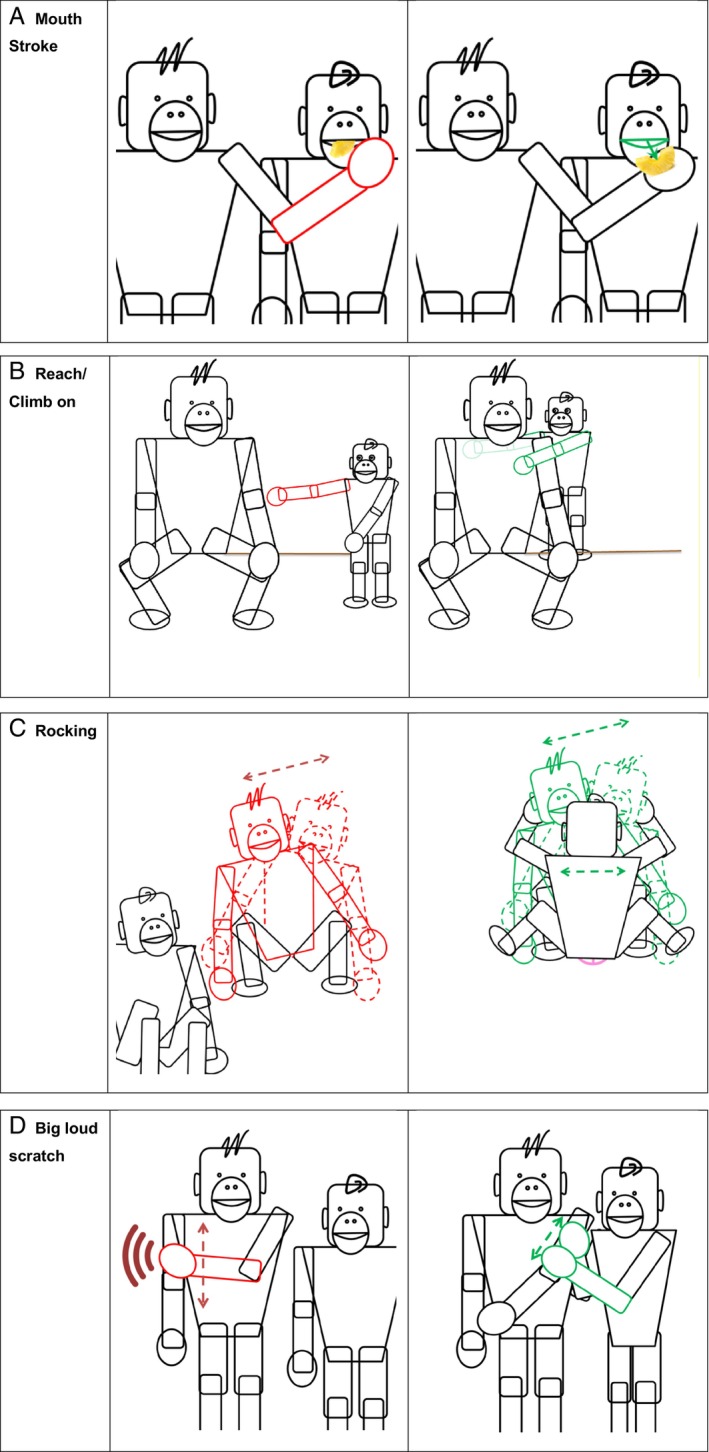
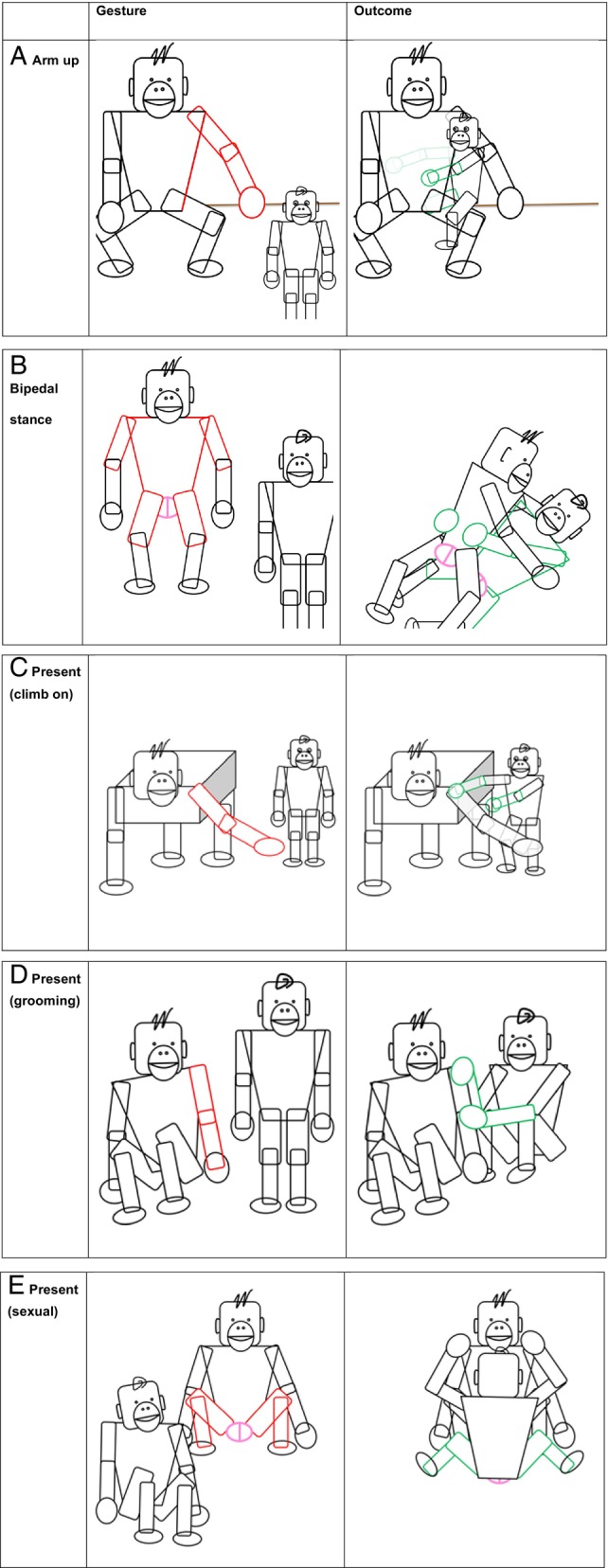
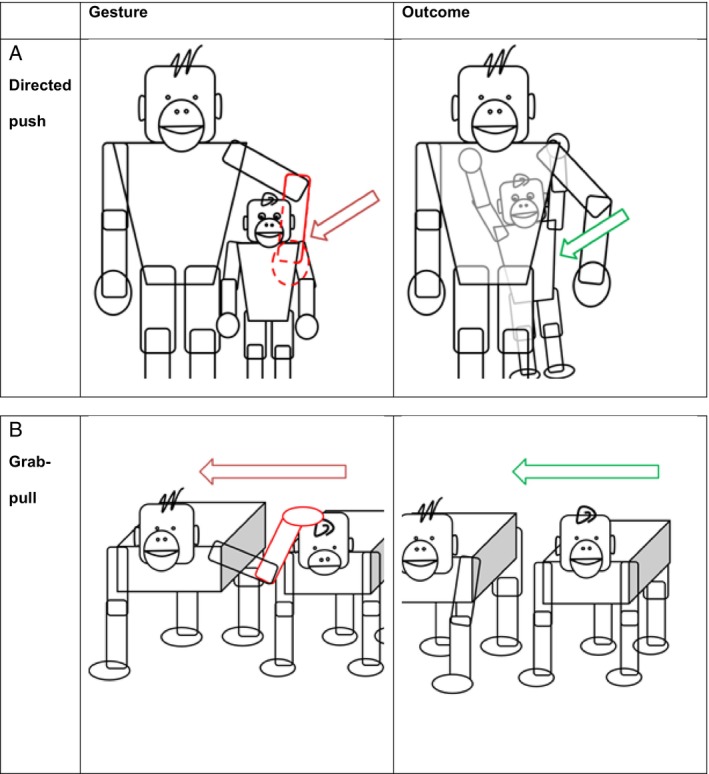
References
-
- Bar‐On, D. (2013). Origins of meaning: must we “go Gricean”? Mind & Language 28, 342–375.
-
- Bar‐On, D. (2021). How to do things with nonwords: pragmatics, biosemantics, and origins of language in animal communication. Biology & Philosophy 36, 50.
-
- Bar‐On, D. (2024). “Pragmatics first”: animal communication and the evolution of language. Review of Philosophy and Psychology, 1–28. 10.1007/s13164-023-00721-w - DOI
-
- Bar‐On, D. & Moore, R. (2017). Pragmatic interpretation and signaler‐receiver asymmetries in animal communication. In The Routledge Handbook of Philosophy of Animal Minds (ed. Beck K. A. J.), pp. 291–300. Routledge, Oxford.
-
- Berio, L. & Moore, R. (2023). Great ape enculturation studies: a neglected resource in cognitive development research. Biology & Philosophy 38(2), 17.
Publication types
MeSH terms
Grants and funding
LinkOut - more resources
Full Text Sources
Research Materials
Miscellaneous
