Review
. 2024 Aug 15;13(16):1359.
doi: 10.3390/cells13161359.

Zinc and Diabetes: A Connection between Micronutrient and Metabolism

Affiliations
Review

Zinc and Diabetes: A Connection between Micronutrient and Metabolism

Rahnuma Ahmad et al. Cells. .

Abstract

Diabetes mellitus is a global health problem and a major contributor to mortality and morbidity. The management of this condition typically involves using oral antidiabetic medication, insulin, and appropriate dietary modifications, with a focus on macronutrient intake. However, several human studies have indicated that a deficiency in micronutrients, such as zinc, can be associated with insulin resistance as well as greater glucose intolerance. Zinc serves as a chemical messenger, acts as a cofactor to increase enzyme activity, and is involved in insulin formation, release, and storage. These diverse functions make zinc an important trace element for the regulation of blood glucose levels. Adequate zinc levels have also been shown to reduce the risk of developing diabetic complications. This review article explains the role of zinc in glucose metabolism and the effects of its inadequacy on the development, progression, and complications of diabetes mellitus. Furthermore, it describes the impact of zinc supplementation on preventing diabetes mellitus. The available information suggests that zinc has beneficial effects on the management of diabetic patients. Although additional large-scale randomized clinical trials are needed to establish zinc's clinical utility further, efforts should be made to increase awareness of its potential benefits on human health and disease.

Keywords: diabetes mellitus; glycemic control; insulin sensitivity; zinc deficiency; zinc supplementation.


Conflict of interest statement

The authors declare no conflict of interest.

Figures
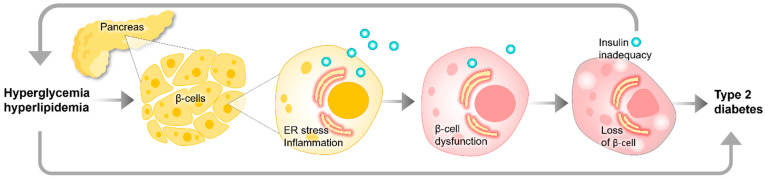
Figure 1
Figure 1
Simplified diagram of the evolution of type 2 diabetes, where metabolic disturbances lead to cellular stress, which damages insulin-producing β-cells. This damage, in turn, exacerbates the metabolic disturbances, creating a vicious cycle of disease progression.
Figure 2
Figure 2
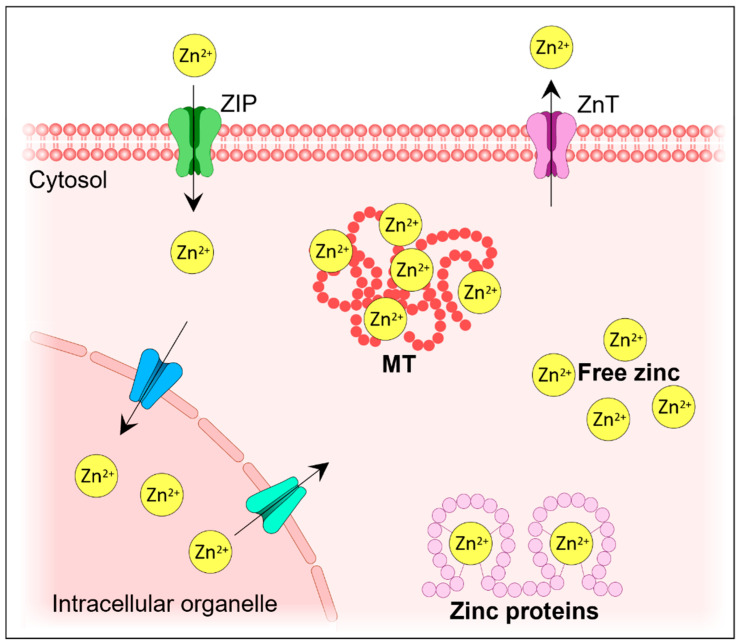
Cellular zinc homeostasis is maintained through the delicate interplay of three key protein groups: metallothioneins (MTs), Zrt-like and Irt-like proteins (ZIPs), and zinc transporters (ZnTs). The ZIP and ZnT families, which are specialized zinc transporter groups, coordinately regulate the movement of zinc ions in and out of the cytoplasm. Metallothioneins play crucial roles by binding them to zinc ions, serving as a zinc reserve, buffering zinc levels, and chelating excess zinc to prevent toxicity.
Figure 3
Figure 3
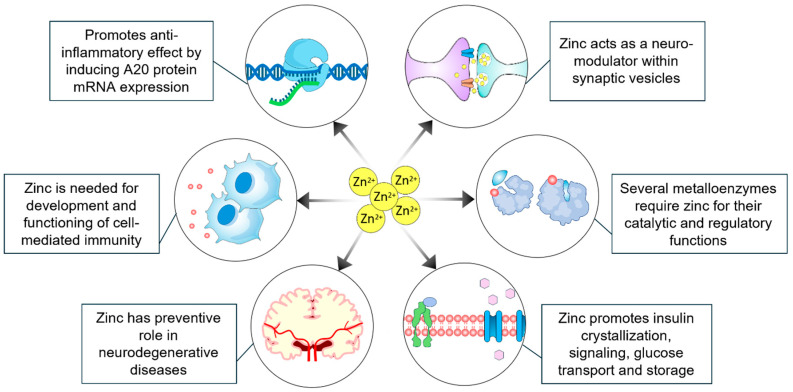
Zinc is an essential micronutrient that plays a critical role in human health by exerting positive effects on immune system function, maintaining cellular homeostasis, and delaying neurodegenerative and infectious diseases to maintain overall health and well-being.
Figure 4
Figure 4
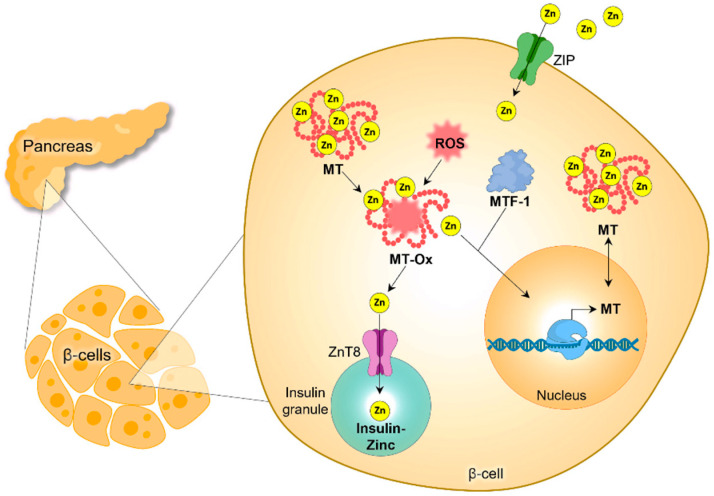
Zinc homeostasis and pancreatic β-cell: intracellular free cytosolic zinc can be imported via ZIP transporters or released from metallothionein (MT) during cellular stress. It enters insulin granules through ZnT8 to form crystalline insulin-zinc hexamers. Zinc also binds to metal-responsive transcription factor-1 (MTF-1), which translocates to the nucleus to up-regulate gene expression of MT. MT-Ox, oxidized MT; ROS, reactive oxygen species [62,63].
Figure 5
Figure 5
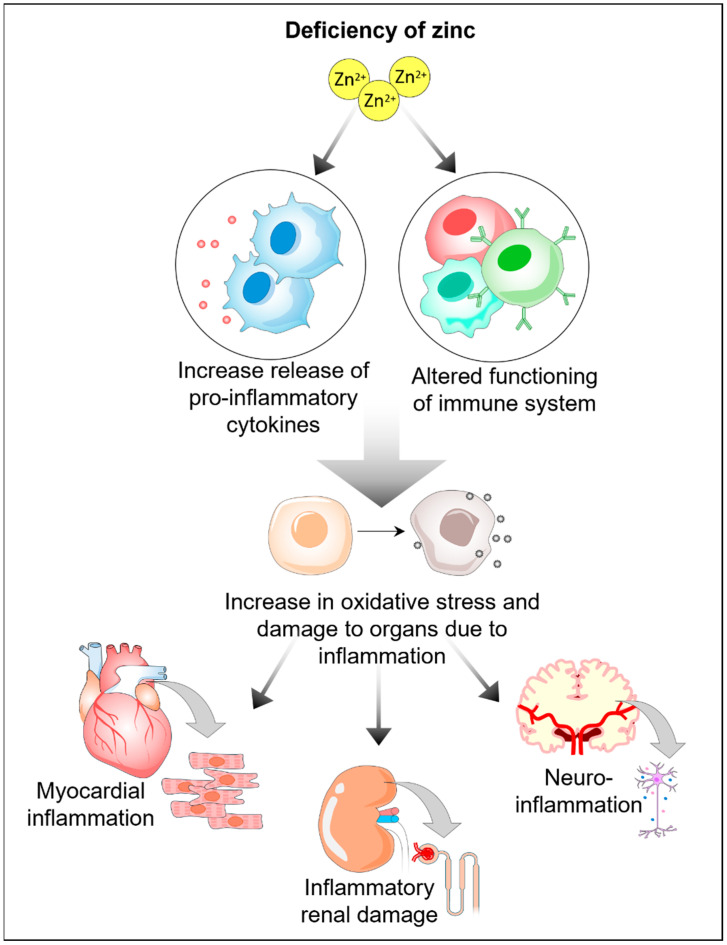
Zinc deficiency can induce an inflammatory microenvironment to induce systemic organ damage.

References

    1. Holt R.I., DeVries J.H., Hess-Fischl A., Hirsch I.B., Kirkman M.S., Klupa T., Ludwig B., Nørgaard K., Pettus J., Renard E., et al. The management of type 1 diabetes in adults. A consensus report by the American diabetes association (ADA) and the European association for the Study of Diabetes (EASD) Diabetes Care. 2021;44:2589–2625. doi: 10.2337/dci21-0043. - DOI - PubMed
    1. ElSayed N.A., Aleppo G., Aroda V.R., Bannuru R.R., Brown F.M., Bruemmer D., Collins B.S., Gaglia J.L., Hilliard M.E., Isaacs D., et al. Classification and diagnosis of diabetes: Standards of Care in Diabetes. Diabetes Care. 2022;46:S19–S40. doi: 10.2337/dc23-S002. - DOI - PMC - PubMed
    1. Hasanato R.M. Trace elements in type 2 diabetes mellitus and their association with glycemic control. Afr. Health Sci. 2020;20:287–293. doi: 10.4314/ahs.v20i1.34. - DOI - PMC - PubMed
    1. Farooq M. Zinc deficiency is associated with poor glycemic control. J. Coll. Physicians Surg. Pak. 2019;29:253–257. doi: 10.29271/jcpsp.2019.03.253. - DOI - PubMed
    1. Tamura Y. The role of zinc homeostasis in the prevention of diabetes mellitus and cardiovascular diseases. J. Atheroscler. Thromb. 2021;28:1109–1122. doi: 10.5551/jat.RV17057. - DOI - PMC - PubMed

LinkOut - more resources