


Alterations in Choline Metabolism in Non-Obese Individuals with Insulin Resistance and Type 2 Diabetes Mellitus
- PMID: 39195553
- PMCID: PMC11356528
- DOI: 10.3390/metabo14080457
Alterations in Choline Metabolism in Non-Obese Individuals with Insulin Resistance and Type 2 Diabetes Mellitus
Abstract
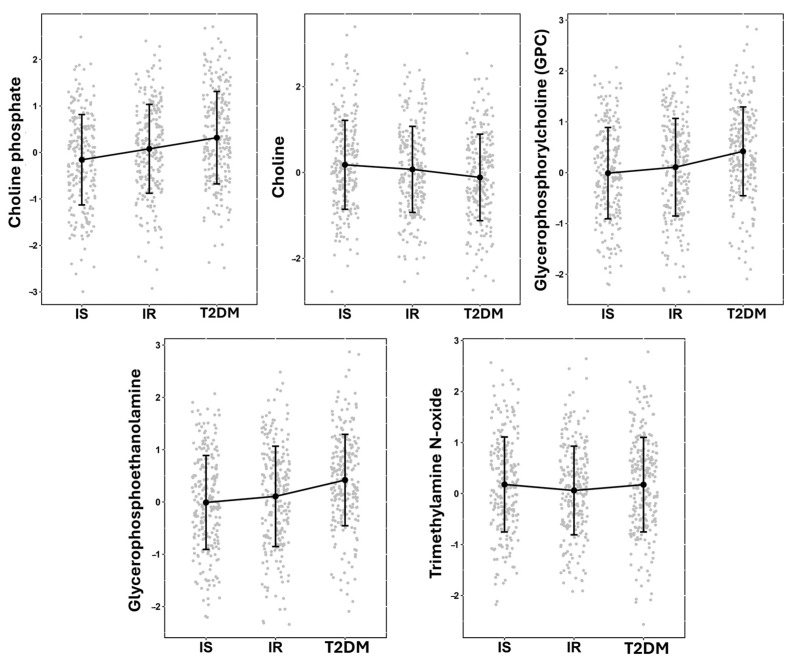
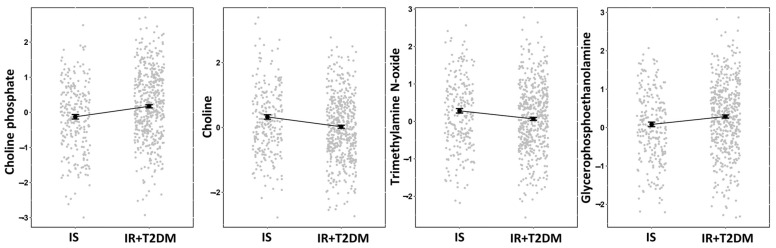
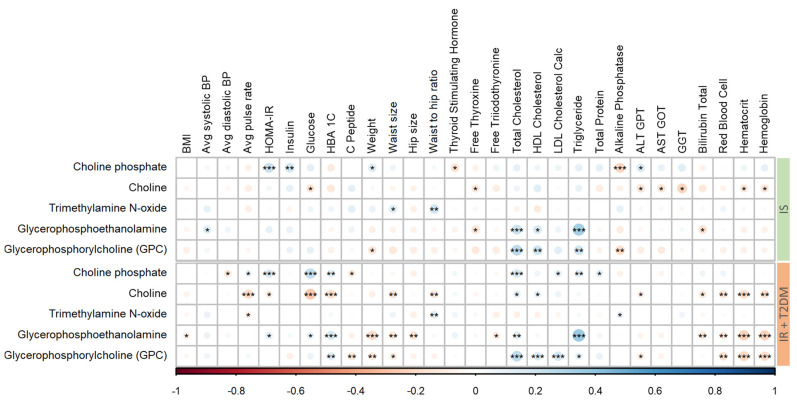
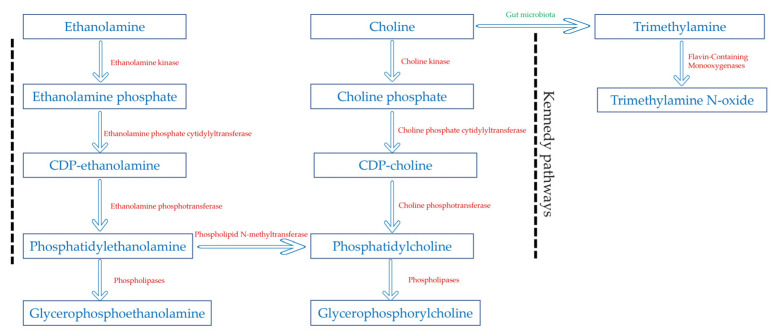
The prevalence of non-obese individuals with insulin resistance (IR) and type 2 diabetes (T2D) is increasing worldwide. This study investigates the metabolic signature of phospholipid-associated metabolites in non-obese individuals with IR and T2D, aiming to identify potential biomarkers for these metabolic disorders. The study cohort included non-obese individuals from the Qatar Biobank categorized into three groups: insulin sensitive, insulin resistant, and patients with T2D. Each group comprised 236 participants, totaling 708 individuals. Metabolomic profiling was conducted using high-resolution mass spectrometry, and statistical analyses were performed to identify metabolites associated with the progression from IS to IR and T2D. The study observed significant alterations in specific phospholipid metabolites across the IS, IR, and T2D groups. Choline phosphate, glycerophosphoethanolamine, choline, glycerophosphorylcholine (GPC), and trimethylamine N-oxide showed significant changes correlated with disease progression. A distinct metabolic signature in non-obese individuals with IR and T2D was characterized by shifts in choline metabolism, including decreased levels of choline and trimethylamine N-oxide and increased levels of phosphatidylcholines, phosphatidylethanolamines, and their degradation products. These findings suggest that alterations in choline metabolism may play a critical role in the development of glucose intolerance and insulin resistance. Targeting choline metabolism could offer potential therapeutic strategies for treating T2D. Further research is needed to validate these biomarkers and understand their functional significance in the pathogenesis of IR and T2D in non-obese populations.
Keywords: choline; choline phosphate; glycerophosphoethanolamine; glycerophosphorylcholine (GPC); insulin resistance; metabolomics; non-obese; phospholipid metabolites; trimethylamine N-oxide choline; type 2 diabetes mellitus.
Conflict of interest statement
The authors declare no conflicts of interest.
Figures
References
-
- Abbasi M.S.P., Tousi A.Z., Yazdani Y., Vahdat S., Gharebakhshi F., Nikrad N., Manzouri A., Ardekani A.M., Jafarzadeh F. Dietary choline and betaine intake, cardio-metabolic risk factors and prevalence of metabolic syndrome among overweight and obese adults. BMC Endocr. Disord. 2023;23:67. doi: 10.1186/s12902-023-01323-4. - DOI - PMC - PubMed
Grants and funding
LinkOut - more resources
Full Text Sources
