


Rapid Reversal of Carbapenemase-Producing Pseudomonas aeruginosa Epidemiology from blaVIM- to blaNDM-harbouring Isolates in a Greek Tertiary Care Hospital
- PMID: 39200062
- PMCID: PMC11350812
- DOI: 10.3390/antibiotics13080762
Rapid Reversal of Carbapenemase-Producing Pseudomonas aeruginosa Epidemiology from blaVIM- to blaNDM-harbouring Isolates in a Greek Tertiary Care Hospital
Abstract
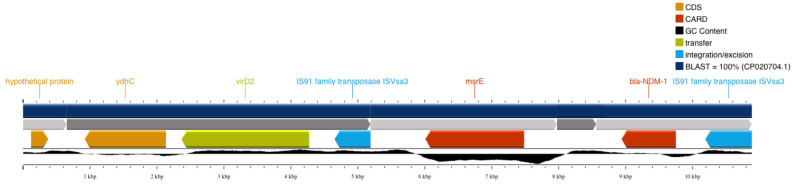
Carbapenemase-producing Pseudomonas aeruginosa strains present a specific geographical distribution regarding the type of carbapenemase-encoding genes that they harbor. For more than twenty years, VIM-type enzymes were the only major carbapenemases that were detected among P. aeruginosa isolates in Greece until the emergence of NDM-1-encoding P. aeruginosa in early 2023. In the present study, we present the rapid reversal of the carbapenemase-producing P. aeruginosa epidemiology from blaVIM- to blaNDM-harbouring isolates that occurred in our hospital since then. Between January 2023 and February 2024, 139 isolates tested positive for carbapenemase production with the NG-Test CARBA 5 immunochromatographic assay. Eight isolates were processed with the Hybrispot antimicrobial resistance direct flow chip molecular assay, and the first NDM-producing isolate was further analyzed through whole genome sequencing and bioinformatics analysis. Multiple resistance genes were detected by molecular techniques in accordance with the extensively drug-resistant phenotype. The isolate that was subjected to whole-genome sequencing belonged to the P. aeruginosa high-risk clone ST308, and the blaNDM was located in the chromosome in accordance with previously reported data. During the study period, NDM-producing isolates were increasingly detected, and only five months after their emergence, they overcame VIM producers. Our results indicate the potential of this new clone to spread rapidly and predominate within healthcare institutions, further restricting the already limited treatment options.
Keywords: NDM; Pseudomonas aeruginosa; VIM; carbapenem resistance; carbapenemases; hospital infections.
Conflict of interest statement
The authors declare no conflicts of interest.
Figures

References
-
- WHO . WHO Bacterial Priority Pathogens List, 2024: Bacterial Pathogens of Public Health Importance to Guide Research, Development and Strategies to Prevent and Control Antimicrobial Resistance. World Health Organization; Geneva, Switzerland: 2024.
-
- Antimicrobial Resistance Surveillance in Europe 2023–2021 Data. European Centre for Disease Prevention and Control and World Health Organization; Stockholm, Sweden: 2023.
-
- Horcajada J.P., Montero M., Oliver A., Sorlí L., Luque S., Gómez-Zorrilla S., Benito N., Grau S. Epidemiology and Treatment of Multidrug-Resistant and Extensively Drug-Resistant Pseudomonas aeruginosa Infections. Clin. Microbiol. Rev. 2019;32:e00031-19. doi: 10.1128/CMR.00031-19. - DOI - PMC - PubMed
LinkOut - more resources
Full Text Sources
Miscellaneous
