


Anti-Biofilm and Anti-Inflammatory Properties of the Truncated Analogs of the Scorpion Venom-Derived Peptide IsCT against Pseudomonas aeruginosa
- PMID: 39200075
- PMCID: PMC11352108
- DOI: 10.3390/antibiotics13080775
Anti-Biofilm and Anti-Inflammatory Properties of the Truncated Analogs of the Scorpion Venom-Derived Peptide IsCT against Pseudomonas aeruginosa
Abstract
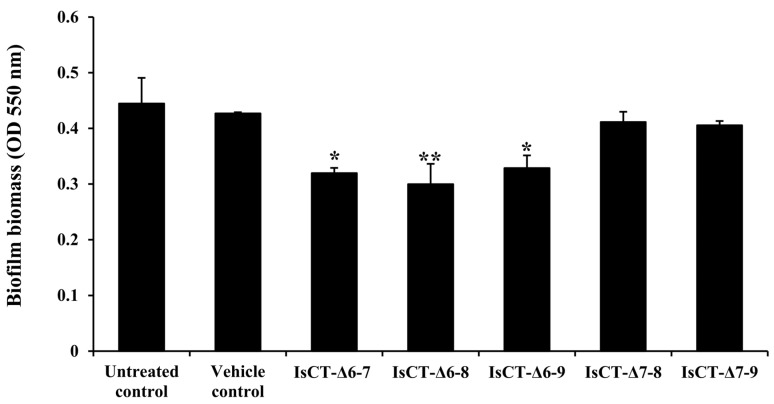
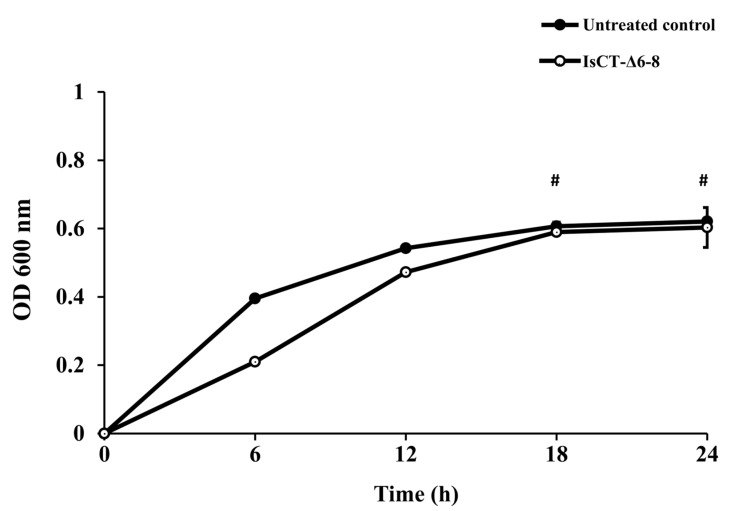
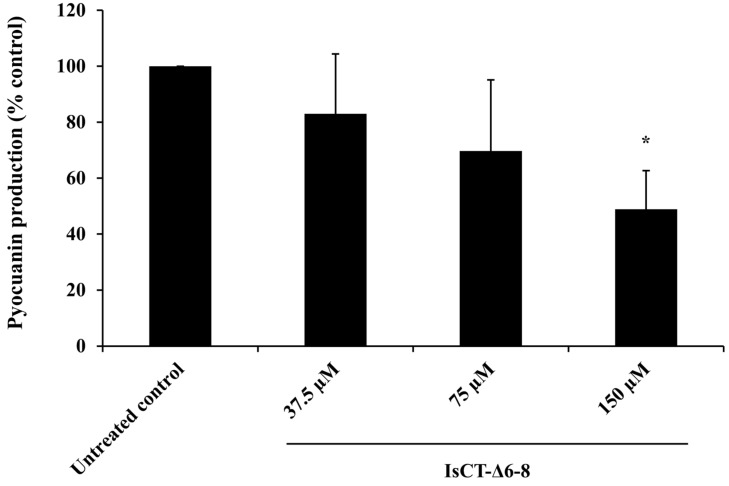
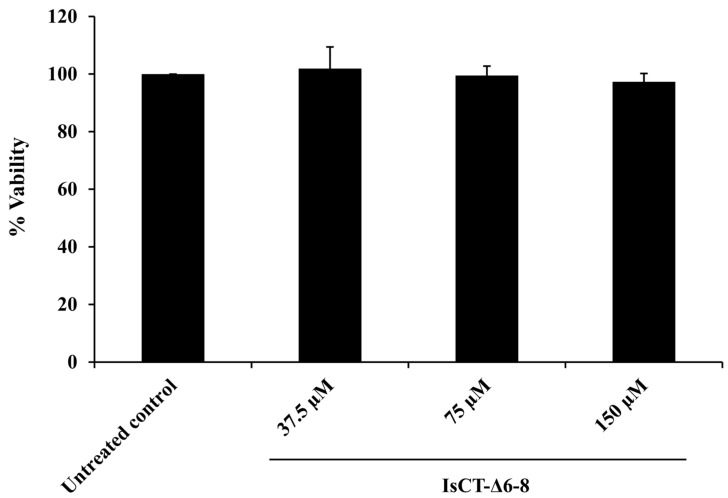
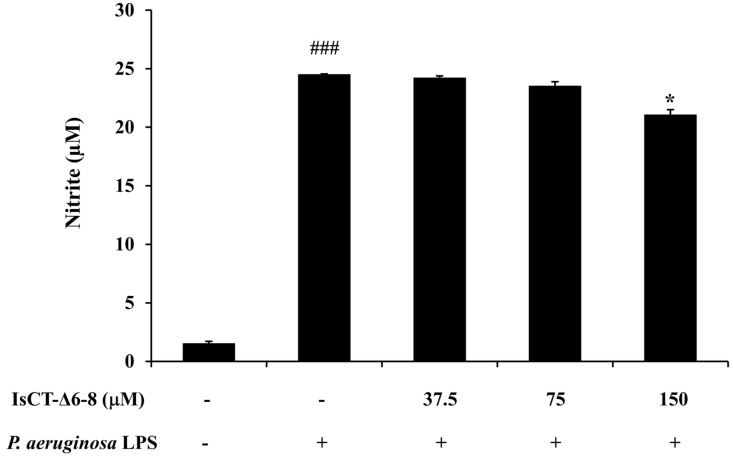
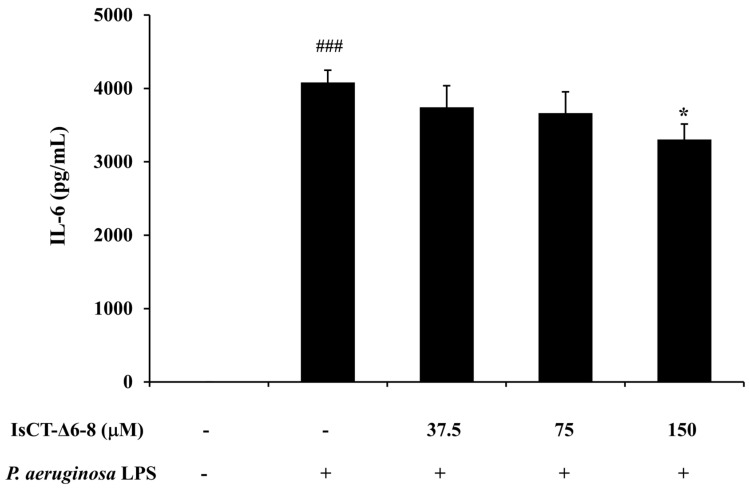
Pseudomonas aeruginosa is an opportunistic pathogen in humans and a frequent cause of severe nosocomial infections and fatal infections in immunocompromised individuals. Its ability to form biofilms has been the main driving force behind its resistance to almost all conventional antibiotics, thereby limiting treatment efficacy. In an effort to discover novel therapeutic agents to fight P. aeruginosa-associated biofilm infections, the truncated analogs of scorpion venom-derived peptide IsCT were synthesized and their anti-biofilm properties were examined. Among the investigated peptides, the IsCT-Δ6-8 peptide evidently showed the most potential anti-P. aeruginosa biofilm activity and the effect was not due to bacterial growth inhibition. The IsCT-Δ6-8 peptide also exhibited inhibitory activity against the production of pyocyanin, an important virulence factor of P. aeruginosa. Furthermore, the IsCT-Δ6-8 peptide significantly suppressed the production of inflammatory mediators nitric oxide and interleukin-6 in P. aeruginosa LPS-induced macrophages. Due to its low cytotoxicity to mammalian cells, the IsCT-Δ6-8 peptide emerges as a promising candidate with significant anti-biofilm and anti-inflammatory properties. These findings highlight its potential application in treating P. aeruginosa-related biofilm infections.
Keywords: P. aeruginosa; anti-biofilm; anti-inflammation; pyocyanin; scorpion peptide.
Conflict of interest statement
The authors declare no conflicts of interest.
Figures
References
-
- Raoofi S., Pashazadeh Kan F., Rafiei S., Hosseinipalangi Z., Noorani Mejareh Z., Khani S., Abdollahi B., Seyghalani Talab F., Sanaei M., Zarabi F., et al. Global prevalence of nosocomial infection: A systematic review and meta-analysis. PLoS ONE. 2023;18:e0274248. doi: 10.1371/journal.pone.0274248. - DOI - PMC - PubMed
-
- Hernández-Jiménez P., López-Medrano F., Fernández-Ruiz M., Silva J.T., Corbella L., San-Juan R., Lizasoain M., Díaz-Regañón J., Viedma E., Aguado J.M. Risk factors and outcomes for multidrug resistant Pseudomonas aeruginosa infection in immunocompromised patients. Antibiotics. 2022;11:1459. doi: 10.3390/antibiotics11111459. - DOI - PMC - PubMed
LinkOut - more resources
Full Text Sources
