


Remote Patient Monitoring Is Associated with Improved Outcomes in Hypertension: A Large, Retrospective, Cohort Analysis
- PMID: 39201142
- PMCID: PMC11353537
- DOI: 10.3390/healthcare12161583
Remote Patient Monitoring Is Associated with Improved Outcomes in Hypertension: A Large, Retrospective, Cohort Analysis
Abstract
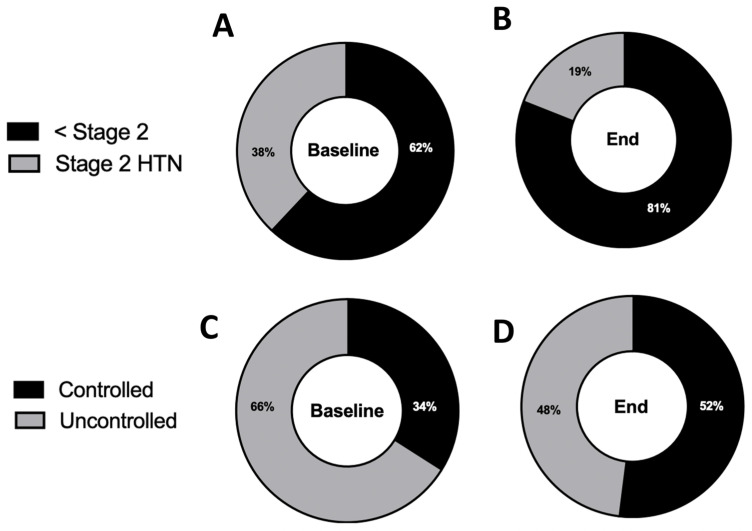
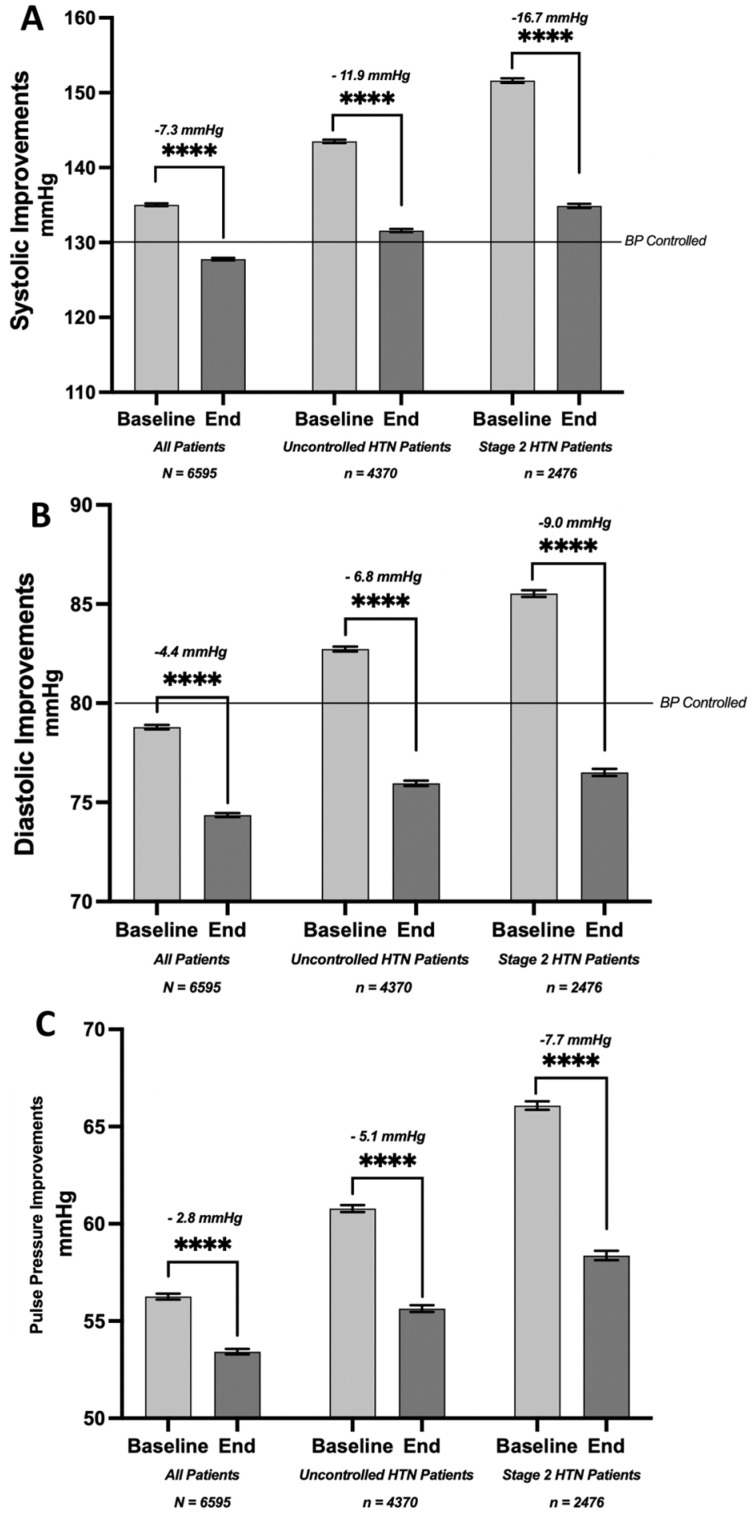
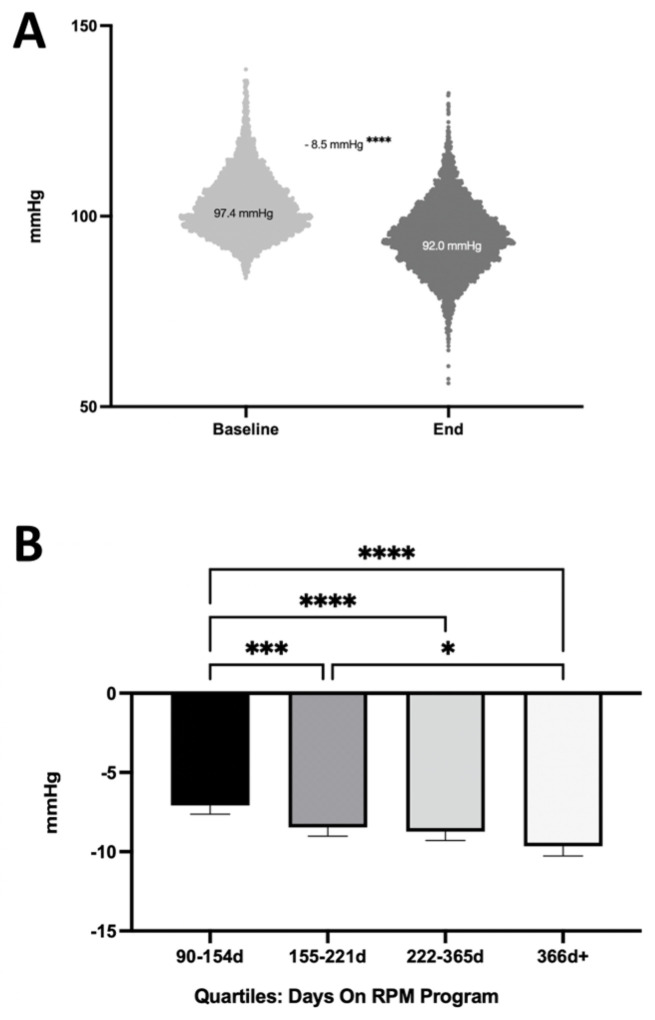
Hypertension (HTN) is a chronic condition that requires careful monitoring and management. Blood pressure readings in the clinic and self-reported blood pressure readings are often too intermittent to allow for careful management. Remote patient monitoring is a solution that may have positive impacts on HTN management. Individuals at cardiac and primary care clinics were prescribed a remote patient-monitoring (RPM) program. Patients were sent blood pressure monitors that were enabled to transmit data over cellular networks. We reviewed trends in HTN management retrospectively in patients who had previously been on conventional therapy for a year and participated in RPM for a minimum of 90 days. There were 6595 patients enrolled, and the mean duration on RPM was 289 days. A total of 4370 participants (66.3%) had uncontrolled HTN, and 2476 (37.5%) had stage 2 HTN. After at least 90 days on the RPM program, the number of patients with uncontrolled HTN reduced to 2648 (40.2%, p < 0.01), and the number of patients with stage 2 HTN reduced to 1261 (19.1%, p < 0.01). Systolic blood pressure improved by 7.3 mmHg for all patients and 16.7 mmHg for stage 2 HTN. There was improvement in mean arterial pressure (MAP) in all patients with uncontrolled HTN by 8.5 mmHg (p < 0.0001). RPM is associated with improved HTN control and provides further evidence supporting telehealth programs which can aid in chronic disease management.
Keywords: chronic care management; hypertension; remote patient monitoring; telehealth.
Conflict of interest statement
W.S. is compensated by HealthSnap, Inc. and is a shareholder. B.C. is compensated by HealthSnap, Inc. The remaining authors declare that the research was conducted in the absence of any commercial or financial relationships that could be construed as a potential conflict of interest.
Figures
References
-
- Zinzuwadia A., Goldberg J.M., Hanson M.A., Wessler J.D. Chapter 7—Continuous cardiology: The intersection of telehealth and remote patient monitoring. In: Freeman A.M., Bhatt A.B., editors. Emerging Practices in Telehealth. Academic Press; Cambridge, MA, USA: 2023. pp. 97–115. - DOI
-
- Clemente M.R.C., Felix N., Navalha D.D.P., Pasqualotto E., Morgado Ferreira R.O., Braga M.A.P., Nogueira A., Costa T.A., Marinho A.D., Fernandes A. Long-term impact of home-based monitoring after an admission for acute decompensated heart failure: A systematic review and meta-analysis of randomised controlled trials. EClinicalMedicine. 2024;71:102541. doi: 10.1016/j.eclinm.2024.102541. - DOI - PMC - PubMed
-
- Undavalli V.K., Mp H. Prevalence of undiagnosed hypertension: A public health challenge. Int. J. Community Med. Public Health. 2018;5:1366–1370. doi: 10.18203/2394-6040.ijcmph20180974. - DOI
LinkOut - more resources
Full Text Sources
