


West Nile virus triggers intestinal dysmotility via T cell-mediated enteric nervous system injury
- PMID: 39207863
- PMCID: PMC11527448
- DOI: 10.1172/JCI181421
West Nile virus triggers intestinal dysmotility via T cell-mediated enteric nervous system injury
Abstract
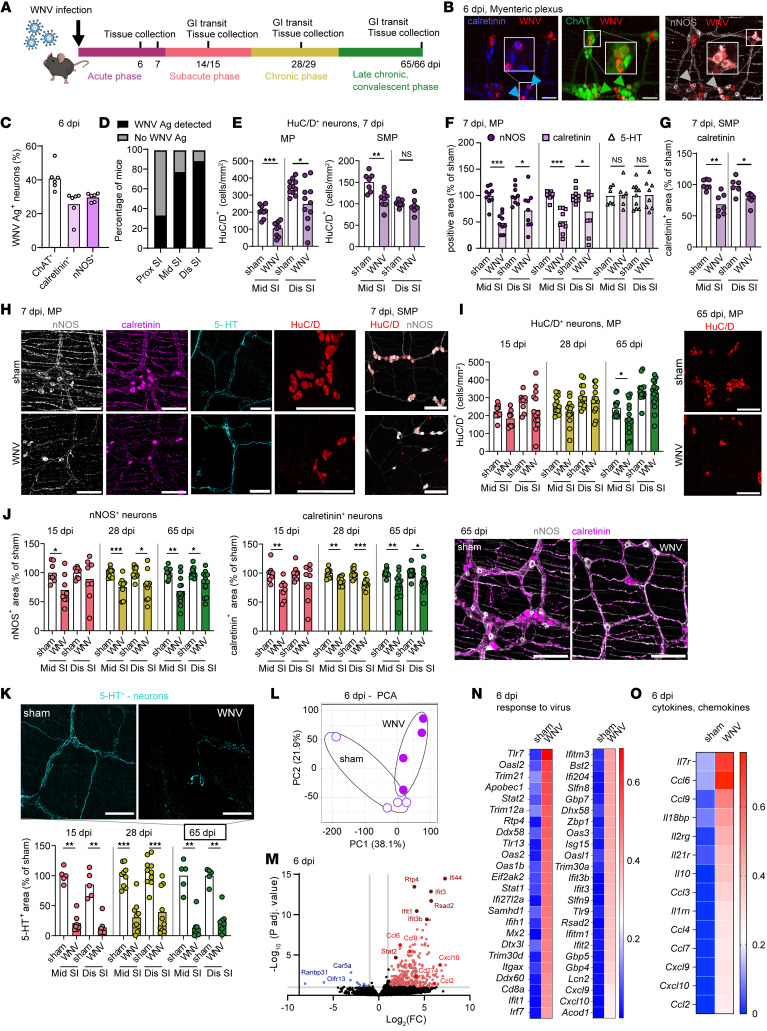
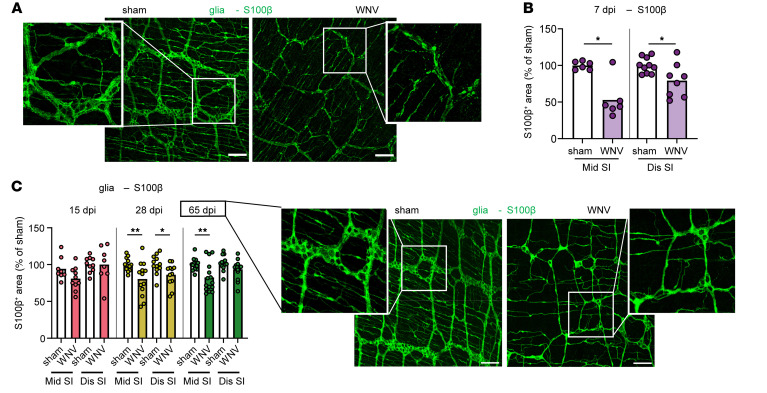
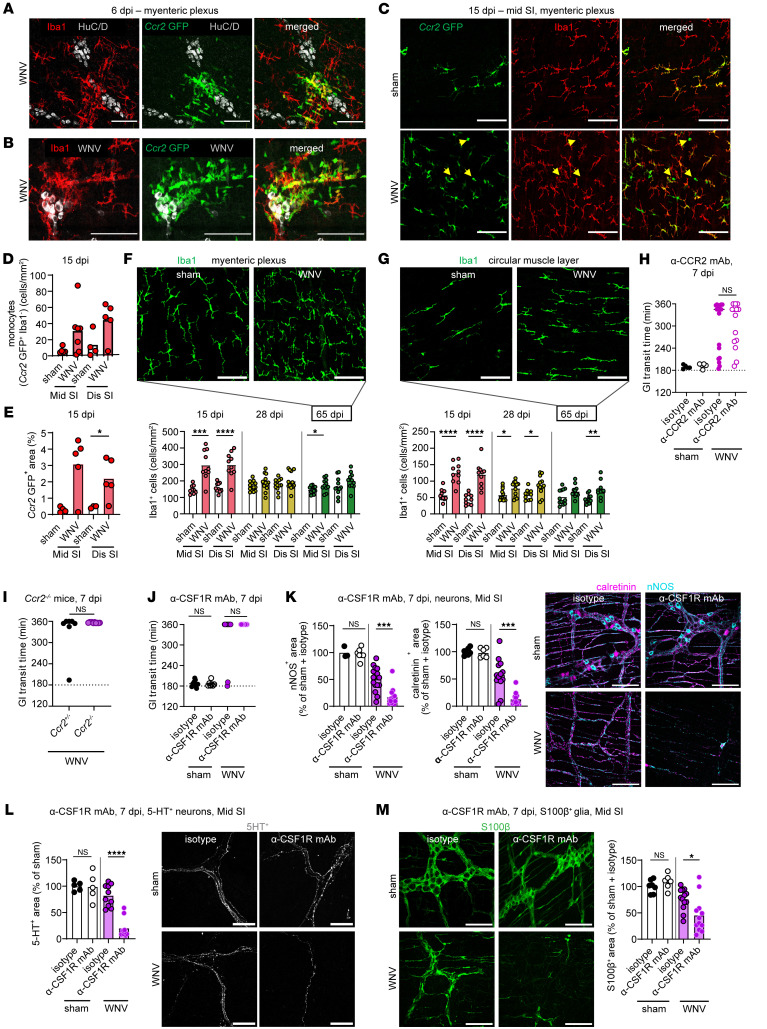
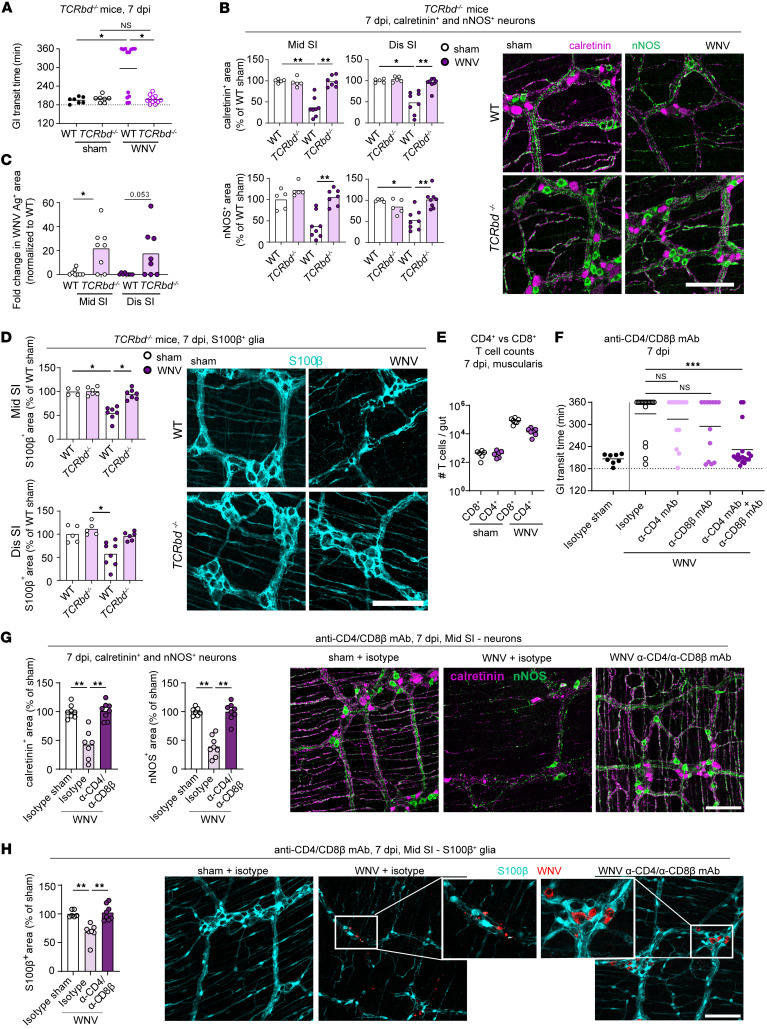
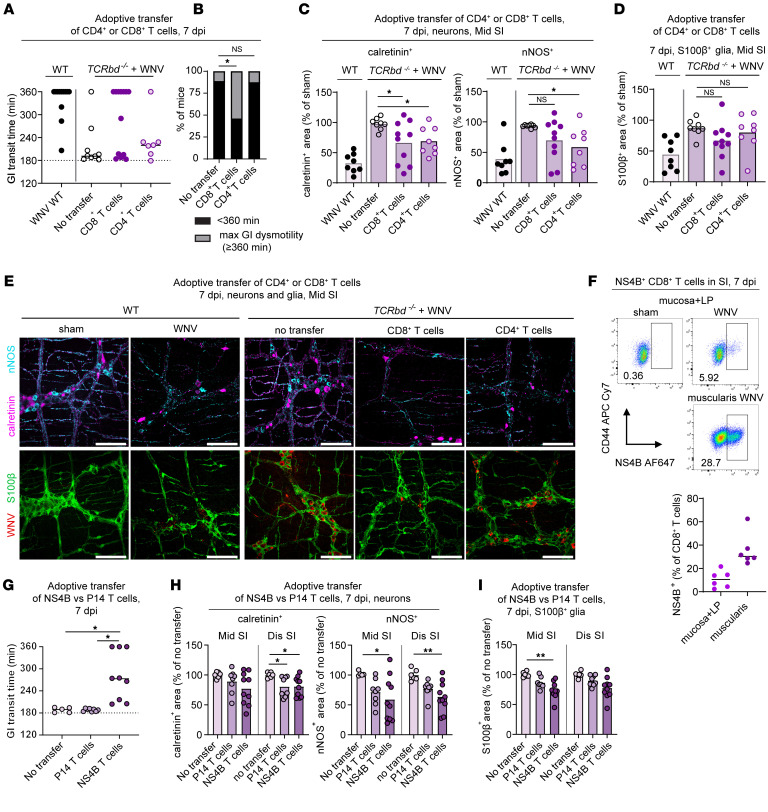
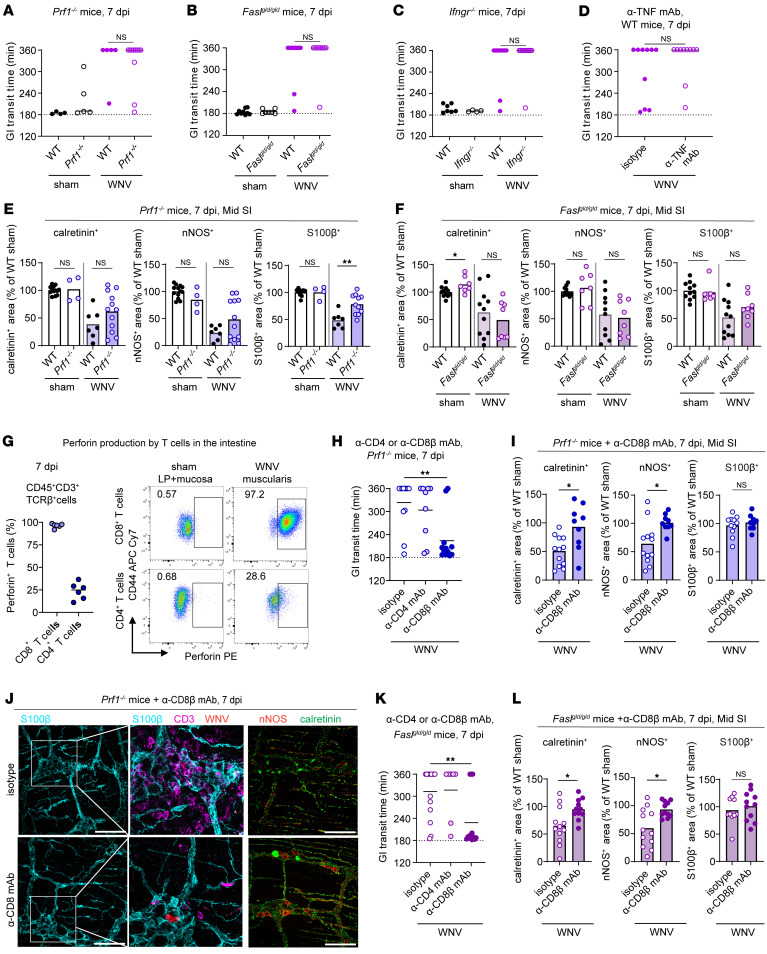
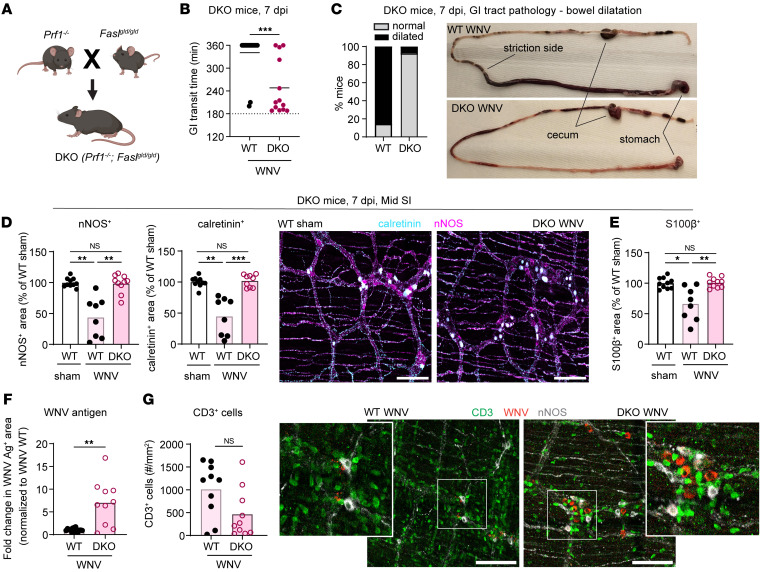
Intestinal dysmotility syndromes have been epidemiologically associated with several antecedent bacterial and viral infections. To model this phenotype, we previously infected mice with the neurotropic flavivirus West Nile virus (WNV) and demonstrated intestinal transit defects. Here, we found that within 1 week of WNV infection, enteric neurons and glia became damaged, resulting in sustained reductions of neuronal cells and their networks of connecting fibers. Using cell-depleting antibodies, adoptive transfer experiments, and mice lacking specific immune cells or immune functions, we show that infiltrating WNV-specific CD4+ and CD8+ T cells damaged the enteric nervous system (ENS) and glia, which led to intestinal dysmotility; these T cells used multiple and redundant effector molecules including perforin and Fas ligand. In comparison, WNV-triggered ENS injury and intestinal dysmotility appeared to not require infiltrating monocytes, and damage may have been limited by resident muscularis macrophages. Overall, our experiments support a model in which antigen-specific T cell subsets and their effector molecules responding to WNV infection direct immune pathology against enteric neurons and supporting glia that results in intestinal dysmotility.
Keywords: Fas signaling; Gastroenterology; Infectious disease; Neurological disorders; T cells.
Conflict of interest statement
Figures
Comment in
- Experimental West Nile virus infection provides lessons for recovery from enteric neuropathies doi: 10.1172/JCI185865
References
MeSH terms
Substances
Grants and funding
LinkOut - more resources
Full Text Sources
Medical
Research Materials
Miscellaneous
