


Obstructive sleep apnea -related hypertension: a review of the literature and clinical management strategy
- PMID: 39210083
- PMCID: PMC11534699
- DOI: 10.1038/s41440-024-01852-y
Obstructive sleep apnea -related hypertension: a review of the literature and clinical management strategy
Abstract
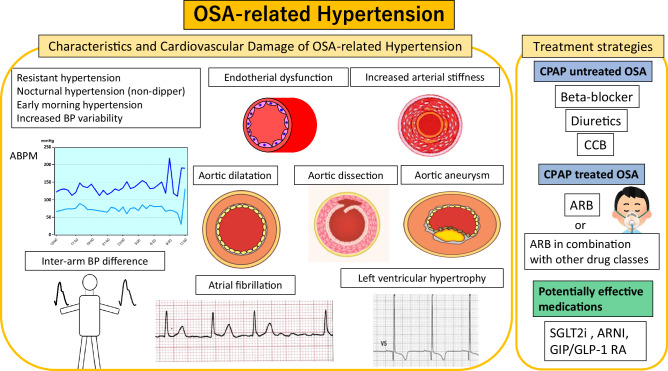
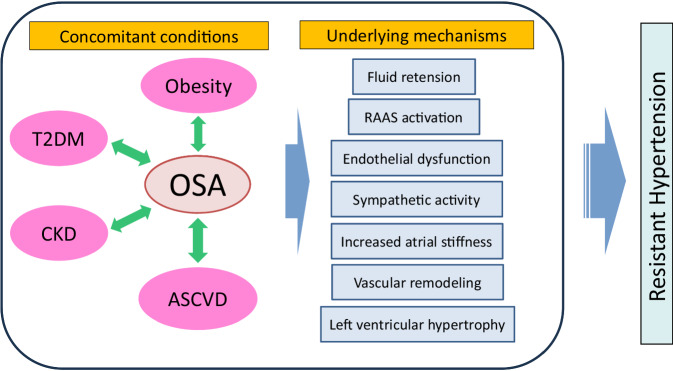
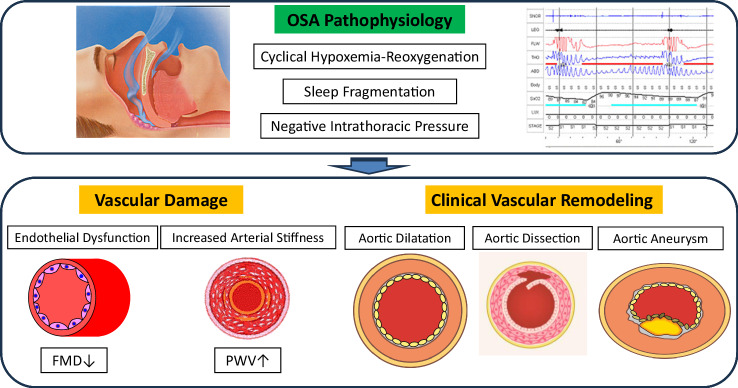
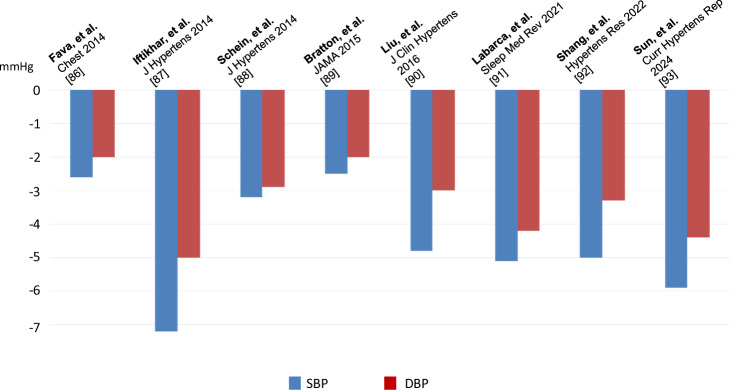
Obstructive Sleep Apnea (OSA) and hypertension have a high rate of co-occurrence, with OSA being a causative factor for hypertension. Sympathetic activity due to intermittent hypoxia and/or fragmented sleep is the most important mechanisms triggering the elevation in blood pressure in OSA. OSA-related hypertension is characterized by resistant hypertension, nocturnal hypertension, abnormal blood pressure variability, and vascular remodeling. In particular, the prevalence of OSA is high in patients with resistant hypertension, and the mechanism proposed includes vascular remodeling due to the exacerbation of arterial stiffness by OSA. Continuous positive airway pressure therapy is effective at lowering blood pressure, however, the magnitude of the decrease in blood pressure is relatively modest, therefore, patients often need to also take antihypertensive medications to achieve optimal blood pressure control. Antihypertensive medications targeting sympathetic pathways or the renin-angiotensin-aldosterone system have theoretical potential in OSA-related hypertension, Therefore, beta-blockers and renin-angiotensin system inhibitors may be effective in the management of OSA-related hypertension, but current evidence is limited. The characteristics of OSA-related hypertension, such as nocturnal hypertension and obesity-related hypertension, suggests potential for angiotensin receptor-neprilysin inhibitor (ARNI), sodium-glucose cotransporter 2 inhibitors (SGLT2i) and glucose-dependent insulinotropic polypeptide receptor/ glucagon-like peptide-1 receptor agonist (GIP/GLP-1 RA). Recently, OSA has been considered to be caused not only by upper airway anatomy but also by several non-anatomic mechanisms, such as responsiveness of the upper airway response, ventilatory control instability, and reduced sleep arousal threshold. Elucidating the phenotypic mechanisms of OSA may potentially advance more personalized hypertension treatment strategies in the future. Clinical characteristics and management strategy of OSA-related hypertension. OSA obstructive sleep apnea, BP blood pressure, ABPM ambulatory blood pressure monitoring, CPAP continuous positive airway pressure, LVH left ventricular hypertrophy, ARB: angiotensin II receptor blocker, SGLT2i Sodium-glucose cotransporter 2 inhibitors, ARNI angiotensin receptor-neprilysin inhibitor, CCB calcium channel blocker, GIP/GLP-1 RA glucose-dependent insulinotropic polypeptide receptor and glucagon-like peptide-1 receptor agonist.
Keywords: Antihypertensive medication; Continuous positive airway pressure (CPAP); Hypertension; Obstructive sleep apnea; Vascular remodeling..
© 2024. The Author(s).
Conflict of interest statement
K.S. has received funds from Fukuda Lifetec Ltd.
Figures
References
-
- Marin JM, Carrizo SJ, Vicente E, Agusti AG. Long-term cardiovascular outcomes in men with obstructive sleep apnoea-hypopnoea with or without treatment with continuous positive airway pressure: an observational study. Lancet 2005;365:1046–53. - PubMed
-
- Yeghiazarians Y, Jneid H, Tietjens JR, Redline S, Brown DL, El-Sherif N, et al. Obstructive Sleep Apnea and Cardiovascular Disease: A Scientific Statement From the American Heart Association. Circulation 2021;144:e56–e67. - PubMed
-
- Cowie MR, Linz D, Redline S, Somers VK, Simonds AK. Sleep Disordered Breathing and Cardiovascular Disease: JACC State-of-the-Art Review. J Am Coll Cardiol. 2021;78:608–24. - PubMed
-
- Mancia G, Kreutz R, Brunstrom M, Burnier M, Grassi G, Januszewicz A, et al. 2023 ESH Guidelines for the management of arterial hypertension. J Hypertens. 2023;41:1874–2071. - PubMed
Publication types
MeSH terms
Substances
LinkOut - more resources
Full Text Sources
Medical
