


Effect of matcha green tea on cognitive functions and sleep quality in older adults with cognitive decline: A randomized controlled study over 12 months
- PMID: 39213264
- PMCID: PMC11364242
- DOI: 10.1371/journal.pone.0309287
Effect of matcha green tea on cognitive functions and sleep quality in older adults with cognitive decline: A randomized controlled study over 12 months
Abstract
Objective: Lifestyle habits after middle age significantly impact the maintenance of cognitive function in older adults. Nutritional intake is closely related to lifestyle habits; therefore, nutrition is a pivotal factor in the prevention of dementia in the preclinical stages. Matcha green tea powder (matcha), which contains epigallocatechin gallate, theanine, and caffeine, has beneficial effects on cognitive function and mood. We conducted a randomized, double-blind, placebo-controlled clinical study over 12 months to examine the effect of matcha on cognitive function and sleep quality.
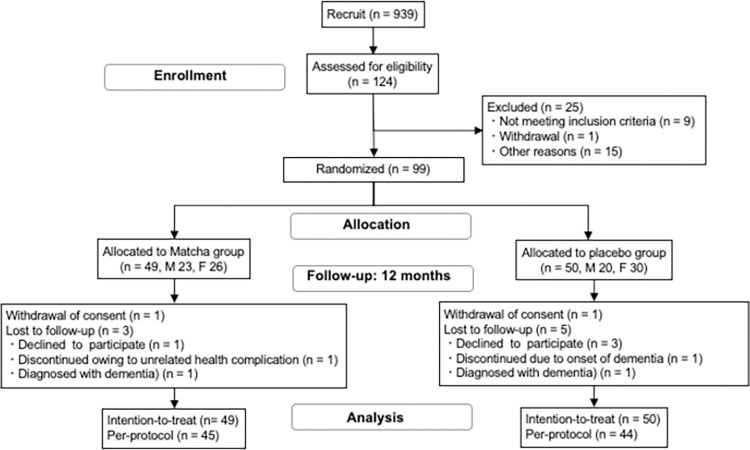
Methods: Ninety-nine participants, including 64 with subjective cognitive decline and 35 with mild cognitive impairment were randomized, with 49 receiving 2 g of matcha and 50 receiving a placebo daily. Participants were stratified based on two factors: age at baseline and APOE genotype. Changes in cognitive function and sleep quality were analyzed using a mixed-effects model.
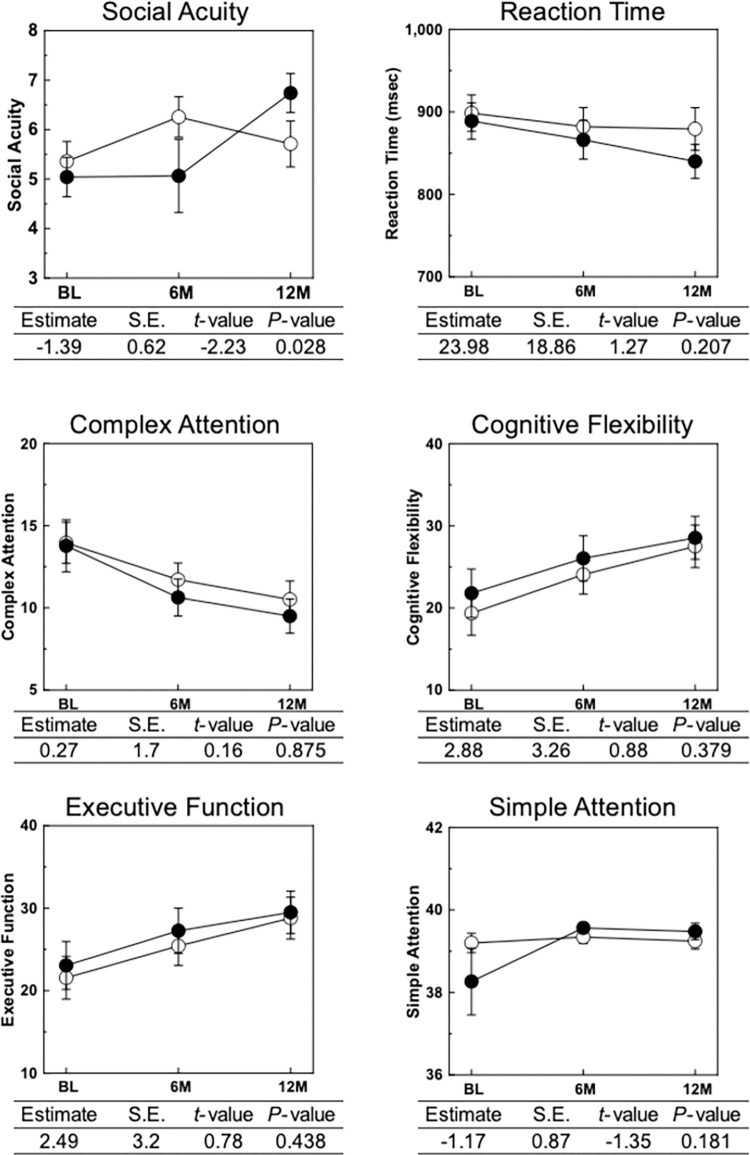
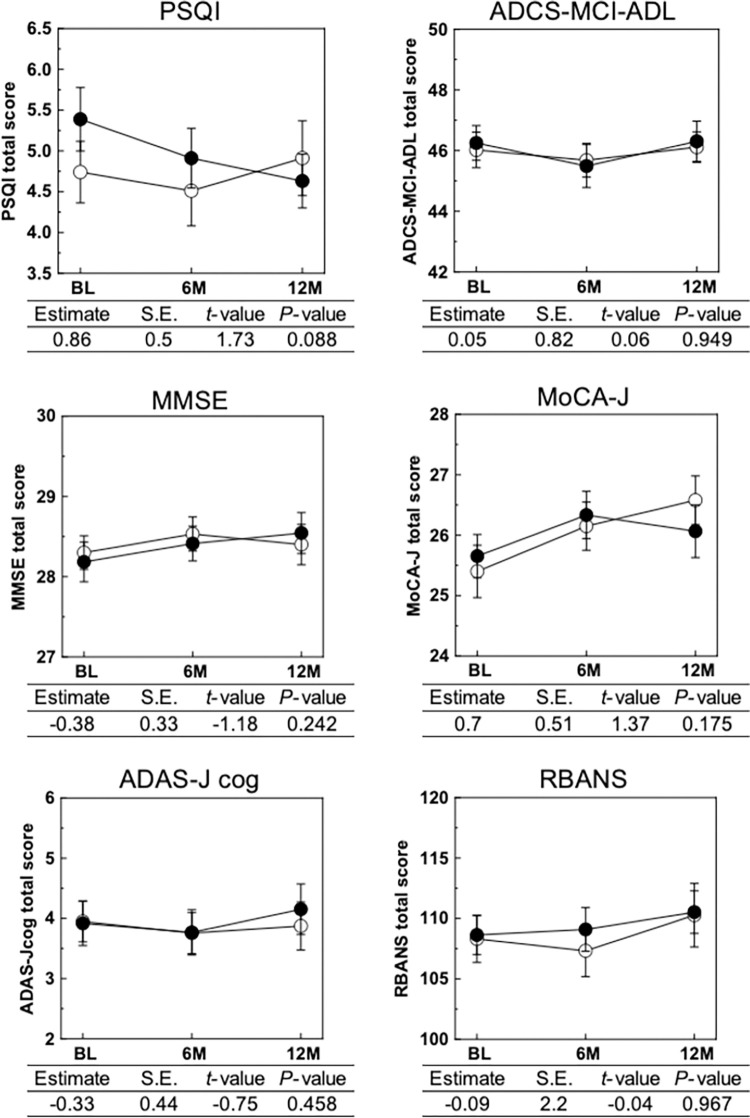
Results: Matcha consumption led to significant improvements in social acuity score (difference; -1.39, 95% confidence interval; -2.78, 0.002) (P = 0.028) as evaluated by the perception of facial emotions in cognitive function. The primary outcomes, that is, Montreal Cognitive Assessment and Alzheimer's Disease Cooperative Study Activity of Daily Living scores, showed no significant changes with matcha intervention. Meanwhile, Pittsburgh Sleep Quality Index scores indicated a trend toward improvement with a difference of 0.86 (95% confidence interval; -0.002, 1.71) (P = 0.088) between the groups in changes from baseline to 12 months.
Conclusions: The present study suggests regular consumption of matcha could improve emotional perception and sleep quality in older adults with mild cognitive decline. Given the widespread availability and cultural acceptance of matcha green tea, incorporating it into the daily routine may offer a simple yet effective strategy for cognitive enhancement and dementia prevention.
Copyright: © 2024 Uchida et al. This is an open access article distributed under the terms of the Creative Commons Attribution License, which permits unrestricted use, distribution, and reproduction in any medium, provided the original author and source are credited.
Conflict of interest statement
Authors with competing interests Enter competing interest details beginning with this statement: I have read the journal’s policy and the authors of this manuscript have the following competing interests: [Kazuhiko Uchida serves as a board member of MCBI Inc. Kohji Meno, Tatsumi Korenaga, Liu Shan, and Hideaki Suzuki are employees of MCBI Inc. Yoshitake Baba, Chika Tagata, Yoshiharu Araki, Shuto Tsunemi, Kenta Aso, Shun Inagaki, Sae Nakagawa, Makoto Kobayashi, and Takanobu Takihara are employees of ITO EN, LTD. This research received no external funding.] This does not alter our adherence to PLOS ONE policies on sharing data and materials.
Figures
References
-
- Gauthier S, Webster C, Servaes S, Morais J, Rosa-Neto P. World Alzheimer Report 2022: Life after diagnosis: Navigating treatment, care and support. Alzheimer’s Disease International; 2022.
-
- Ngandu T, Lehtisalo J, Solomon A, Levälahti E, Ahtiluoto S, Antikainen R, et al. A 2 year multidomain intervention of diet, exercise, cognitive training, and vascular risk monitoring versus control to prevent cognitive decline in at-risk elderly people (FINGER): a randomised controlled trial. Lancet. 2015;385: 2255–2263. doi: 10.1016/S0140-6736(15)60461-5 - DOI - PubMed
-
- Spartano NL, Demissie S, Himali JJ, Dukes KA, Murabito JM, Vasan RS, et al. Accelerometer-determined physical activity and cognitive function in middle-aged and older adults from two generations of the Framingham Heart Study. Alzheimers Dement. 2019;5: 618–626. doi: 10.1016/j.trci.2019.08.007 - DOI - PMC - PubMed
Publication types
MeSH terms
Substances
LinkOut - more resources
Full Text Sources
Medical
Miscellaneous
