


Gene profiling of Epstein-Barr Virus and human endogenous retrovirus in peripheral blood mononuclear cells of SLE patients: immune response implications
- PMID: 39215087
- PMCID: PMC11364757
- DOI: 10.1038/s41598-024-70913-6
Gene profiling of Epstein-Barr Virus and human endogenous retrovirus in peripheral blood mononuclear cells of SLE patients: immune response implications
Erratum in
-
Author Correction: Gene profiling of Epstein-Barr Virus and human endogenous retrovirus in peripheral blood mononuclear cells of SLE patients: immune response implications.Sci Rep. 2024 Sep 26;14(1):22032. doi: 10.1038/s41598-024-73833-7. Sci Rep. 2024. PMID: 39327478 Free PMC article. No abstract available.
Abstract
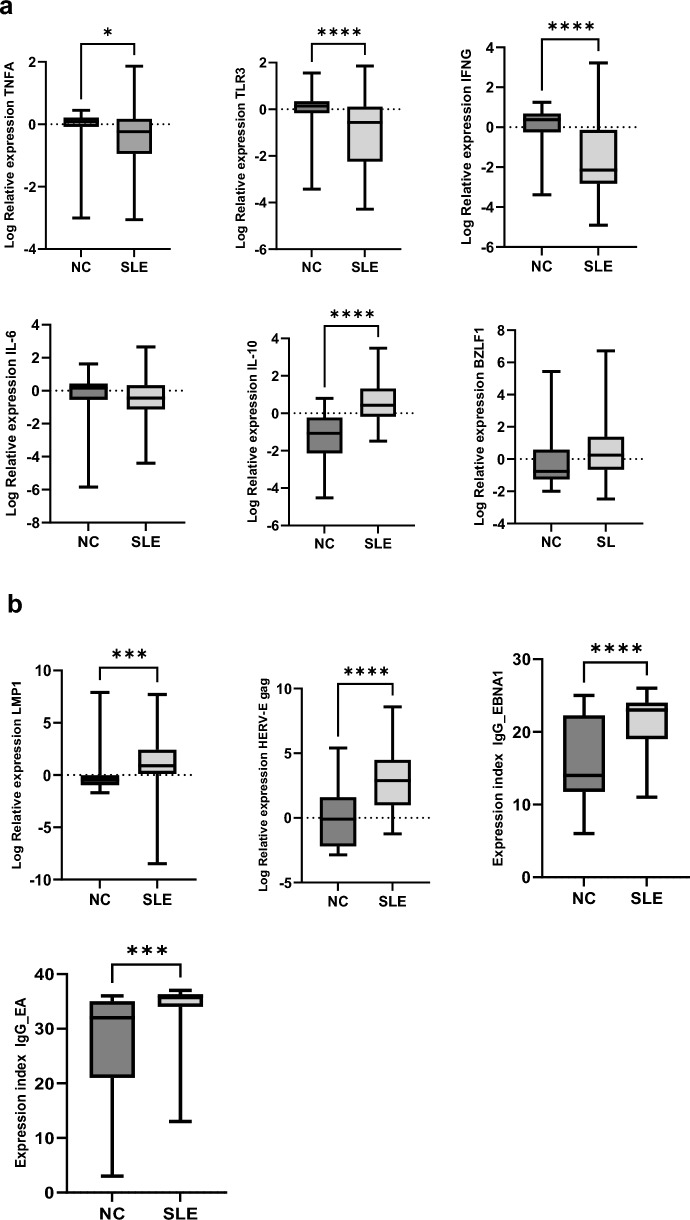
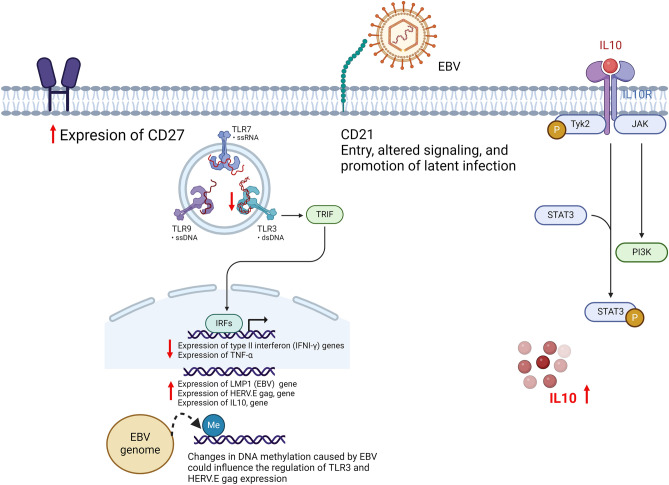
Systemic lupus erythematosus (SLE) is a multifactorial disease characterized by the convergence of genetic, immunological, and viral elements resulting in a complex interaction of both internal and external factors. The role of the Epstein-Barr virus (EBV) and human endogenous retroviruses (HERV-E) as triggers and maintenance elements in the pathogenesis of SLE has been widely recognized. Previous studies have independently evaluated the effects of EBV and HERV-E in this disease. In this work, for the first time, these viral factors are jointly investigated in SLE patients. This study aimed at assessing the differential expression of immune regulatory genes and the incidence of specific viral pathogens (EBV and HERV-E), alongside the detailed characterization of surface markers in T- and B-lymphocytes in patients with SLE and control participants. A comparative analysis between patients with SLE and control participants was performed, evaluating the expression of phenotypic markers and genes involved in the immune response (TNF-α, IL-2, IL-6, IL-10, IFNG, TLR3), as well as HERV-E gag and EBV viral genes (LMP1 and BZLF1).A significant association between SLE and EBV was found in this study. A notable increase in EBV LMP1 gene expression was observed in patients with SLE . Also, a significant overexpression of HERV-E was observed, in addition to a considerable increase in the distribution of the cell surface marker CD27 + on T- and B-lymphocytes, observed in individuals with SLE compared to the control group. This study provides evidence regarding the role that EBV virus plays in lymphocytes in the context of SLE, highlighting how both the virus and the host gene expression may influence disease pathogenesis by altering immune regulatory pathways mediated by TNF-α, IFN-γ, and IL-10, as well as parallel overexpression of HERV-E gag. The decrease in TLR3 could indicate a compromised antiviral response, which could facilitate viral reactivation and contribute to disease activity.
Keywords: B lymphocytes; Epstein-Barr virus (EBV); Human endogenous retrovirus (HERV-E); Lupus; T lymphocytes.
© 2024. The Author(s).
Conflict of interest statement
The authors declare no competing interests.
Figures

References
-
- Lugo, L. P., Olmos, Y. D. & Martínez, G. A. Biomarcadores en fluídos biológicos y su potencial uso como indicadores de nefritis lúpica en individuos con lupus eritematoso sistémico. Rev. Colomb. Nefrol.1, 39–47 (2014).
-
- García Tello, A., Villegas Martínez, A. & González Fernández, A. F. Manifestaciones hematológicas en el lupus eritematoso sistémico. An.Med. Interna19, 53–57 (2002). - PubMed
-
- Wu, Z. et al. DNA methylation modulates HERV-E expression in CD4+ T cells from systemic lupus erythematosus patients. J. Dermatol. Sci.77, 110–116 (2015). - PubMed
MeSH terms
Substances
LinkOut - more resources
Full Text Sources
Medical
Research Materials
