


Mechanism of Chaihuang-Yishen formula to attenuate renal fibrosis in the treatment of chronic kidney disease: Insights from network pharmacology and experimental validation
- PMID: 39220918
- PMCID: PMC11365344
- DOI: 10.1016/j.heliyon.2024.e35728
Mechanism of Chaihuang-Yishen formula to attenuate renal fibrosis in the treatment of chronic kidney disease: Insights from network pharmacology and experimental validation
Abstract
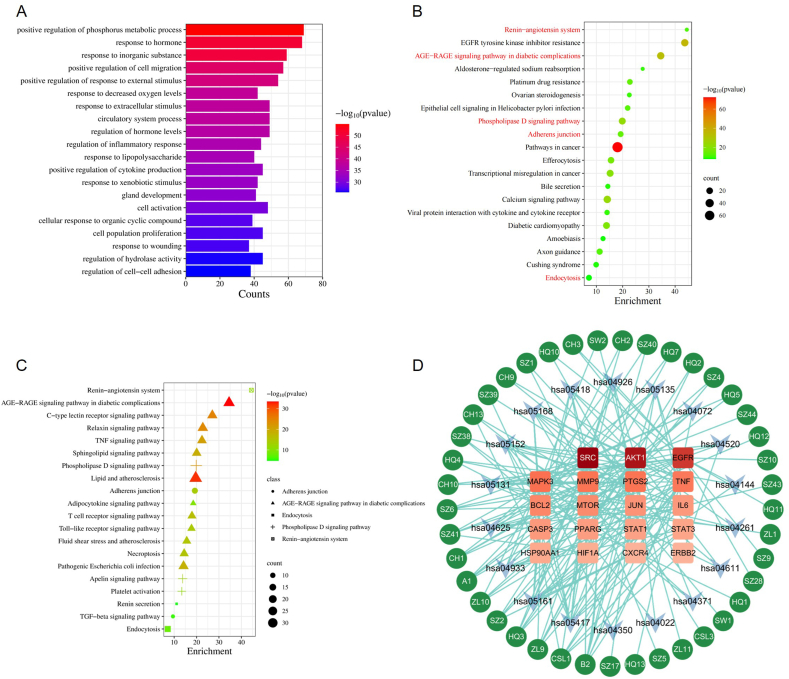
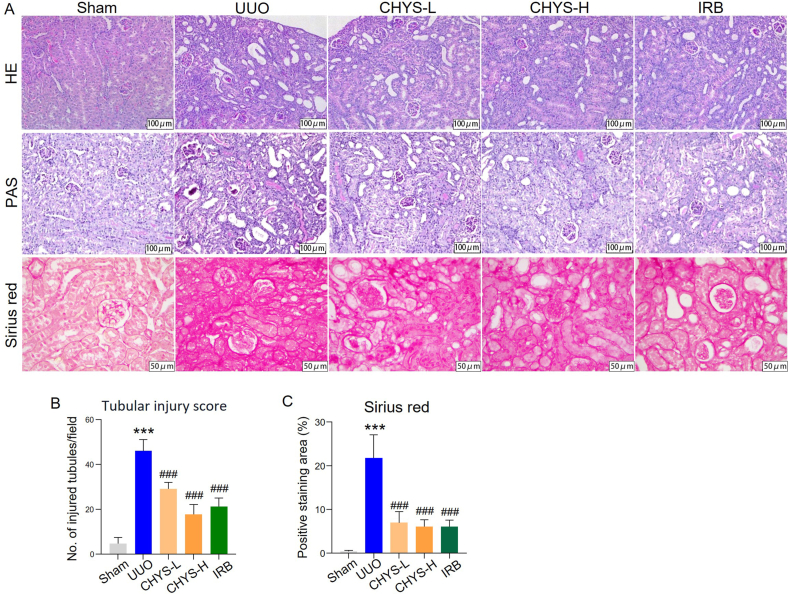
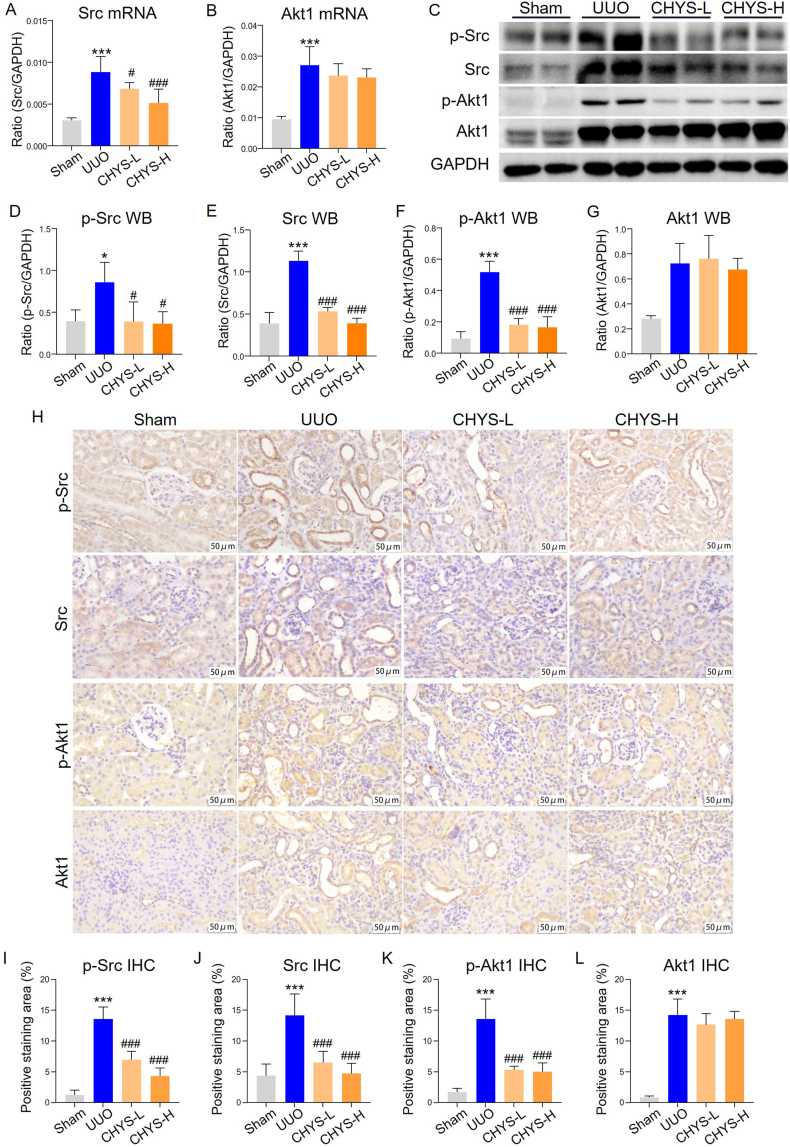
Renal fibrosis represents a pivotal characteristic of chronic kidney disease (CKD), for which effective interventions are currently lacking. The Src kinase activates the phosphatidylinositol-3 kinases (PI3K)/Akt1 pathway to promote renal fibrosis, casting a promising target for anti-fibrosis treatment. Chaihuang-Yishen formula (CHYS), a traditional Chinese medicinal prescription, has a validated efficacy in the treatment of CKD, however, with the underlying mechanism unresolved. This study aimed to uncover the pharmacological mechanisms mediating the effect of CHYS in treating renal fibrosis using network pharmacology followed by experimental validation. The chemical compounds of CHYS were retrieved from the Traditional Chinese Medicine Systems Pharmacology (TCMSP) database or published literature, followed by the prediction of their targets using SwissTargetPrediction software. Disease (CKD/renal fibrosis)-related targets were retrieved from the Genecards database. Protein-protein interaction (PPI) network was generated using the drug-disease common targets and visualized in Cytoscape software. The drug-disease targets were further subjected to Gene Ontology (GO) and Kyoto Encyclopedia of Genes and Genomes (KEGG) enrichment analyses by Metascape software. Additionally, the compound-target-pathway network was established in Cytosape to identify key compounds, targets, and pathways. Network pharmacology analysis screened out 96 active compounds and 837 potential targets within the 7 herbal/animal medicines of CHYS, among which 237 drug-disease common targets were identified. GO and KEGG analysis revealed the enrichment of fibrosis-related biological processes and pathways among the 237 common targets. Compound-target-pathway network analysis highlighted protein kinases Src and Akt1 as the top two targets associated with the anti-renal fibrosis effects of CHYS. In UUO mice, treatment with CHYS attenuates renal fibrosis, accompanied by suppressed expression and phosphorylation activation of Src. Unlike Src, CHYS reduced Akt1 phosphorylation without affecting its expression. In summary, network pharmacology and in vivo evidence suggest that CHYS exerts its anti-renal fibrosis effects, at least in part, by inhibiting the Src/Akt1 signaling axis.
Keywords: AKT1; Chaihuang-Yishen formula; Chronic kidney disease; Network pharmacology; Renal fibrosis; SRC.
© 2024 The Author(s).
Conflict of interest statement
The authors declare the following financial interests/personal relationships which may be considered as potential competing interests: Ping Li reports financial support was provided by 10.13039/501100001809National Natural Science Foundation of China. Hong-Wei Su reports financial support was provided by Sichuan Province Science and Technology Support Program. Li Wang reports financial support was provided by Luzhou-10.13039/501100014895Southwest Medical University Science and Technology Strategic 10.13039/100019767Cooperation Project. Li Wang reports financial support was provided by The Affiliated Hospital of Traditional Chinese Medicine of 10.13039/501100014895Southwest Medical University. If there are other authors, they declare that they have no known competing financial interests or personal relationships that could have appeared to influence the work reported in this paper.
Figures



References
LinkOut - more resources
Full Text Sources
Miscellaneous
