


Updating and calibrating the Real-World Progression In Diabetes (RAPIDS) model in a non-Veterans Affairs population
- PMID: 39223846
- PMCID: PMC11479577
- DOI: 10.1111/dom.15878
Updating and calibrating the Real-World Progression In Diabetes (RAPIDS) model in a non-Veterans Affairs population
Abstract
Objectives: To present the Real-World Progression In Diabetes (RAPIDS) 2.0 Risk Engine, the only simulation model to study the long-term trajectories of outcomes arising from dynamic sequences of glucose-lowering treatments in type 2 diabetes (T2DM).
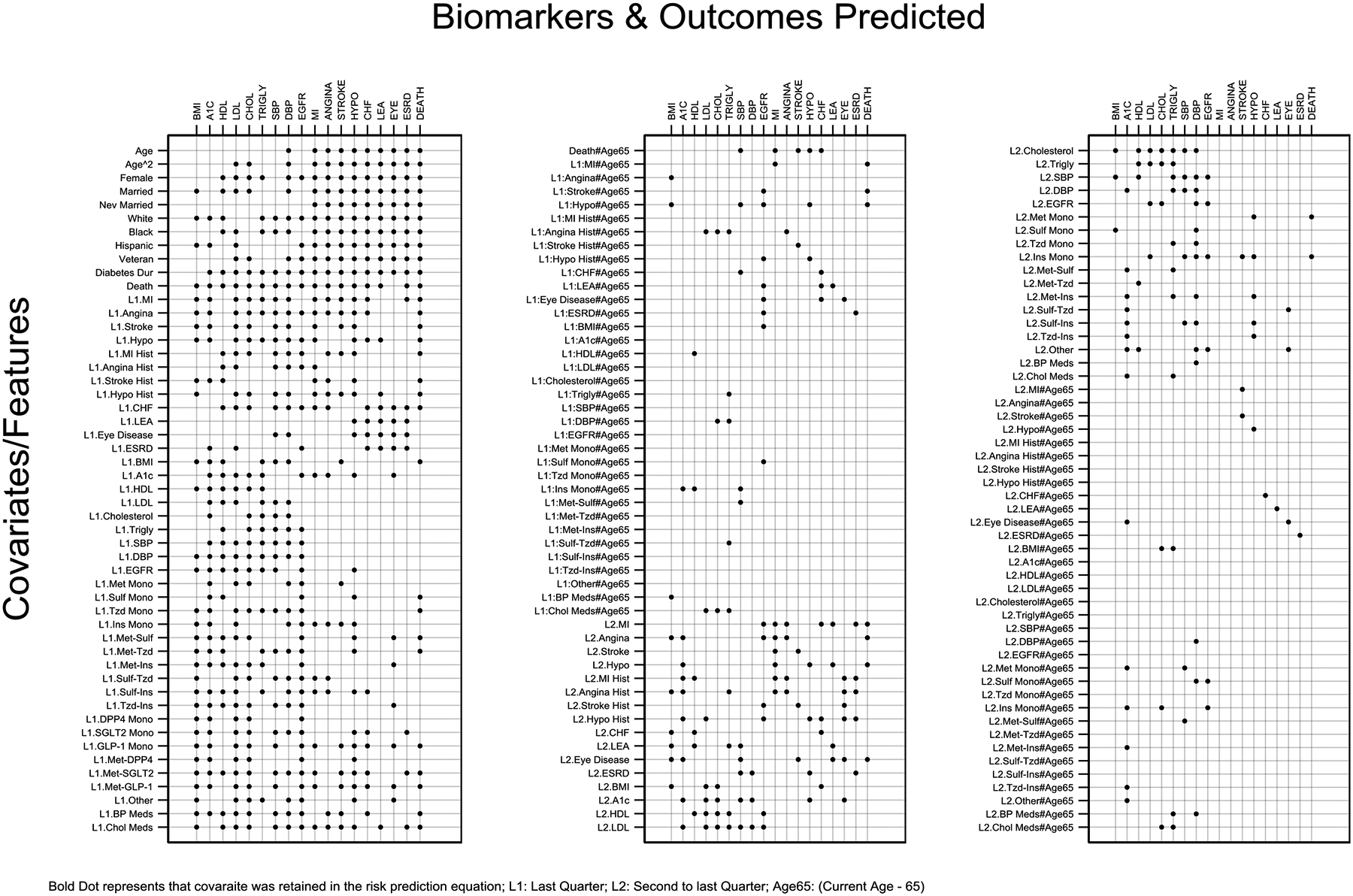
Research design and methods: The RAPIDS model's risk equations were re-estimated using a Least Absolute Shrinkage and Selection Operator (LASSO)-based regularization of features that spanned baseline data from the last two quarters of current time and interactions with age. These equations were supplemented with estimates for the impact of dipeptidyl peptidase-4 inhibitors, glucagon-like peptide-1 receptor agonists, and sodium-glucose cotransporter-2 inhibitor classes of drugs as monotherapies and their combinations with metformin based on newer trial data and comprehensive meta-analyses. The probabilistic RAPIDS 2.0 model was calibrated (N = 25 000) and validated (N = 263 816) using electronic medical records (EMR) data between 2008 and 2021 from a national network of US healthcare organizations.
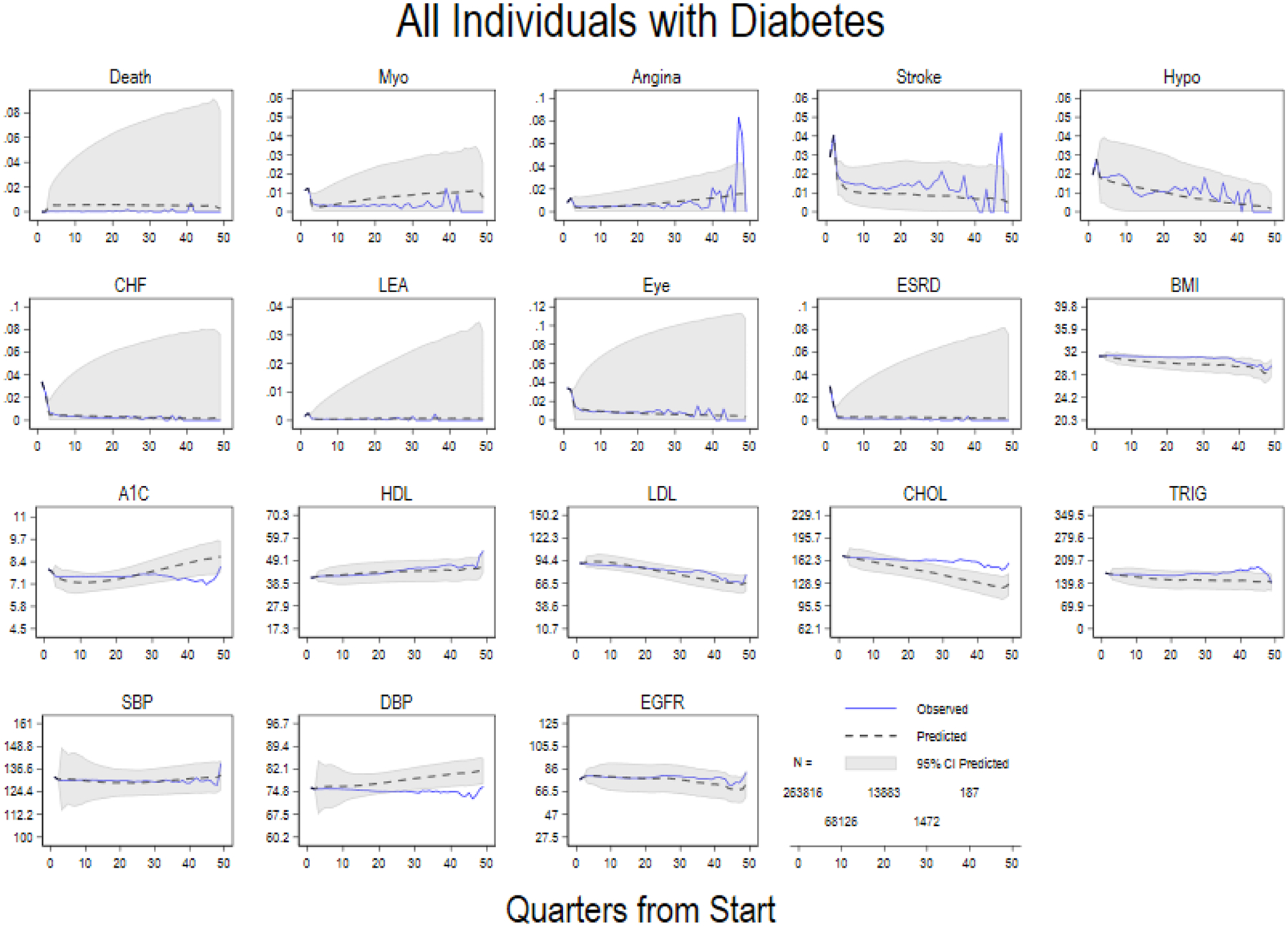
Results: The EMR-based cohort had a mean age of 61 years at baseline, with 50% women, 70% non-Hispanic White individuals and 20% non-Hispanic Black individuals, and was followed for 17.5 quarters (range: 3-50). The final RAPIDS 2.0 risk engine accurately predicted the long-term trajectories of all nine biomarkers and nine outcomes in the hold-out validation sample. Similar accuracies in predictions were observed in each of the 14 subgroups studied.
Conclusion: The RAPIDS 2.0 model demonstrated valid long-term predictions of outcomes in individuals with T2DM in the United States as a function of dynamic sequences of treatment use patterns. This highlights its potential to project long-term comparative effectiveness between alternative sequences of glucose-lowering treatment uses in the United States.
Keywords: RAPIDS; biomarkers; drugs; prediction; type 2 diabetes.
© 2024 John Wiley & Sons Ltd.
Conflict of interest statement
Figures
References
-
- Fowler MJ. Microvascular and macrovascular complications of diabetes. Clin Diabetes 2008;26:77–82.
-
- Hayward RA, Reaven PD, Wiitala WL, Bahn GD, Reda DJ, Ge L, McCarren M, Duckworth WC, Emanuele NV; VADT Investigators. Follow-up of glycemic control and cardiovascular outcomes in type 2 diabetes. N Engl J Med. 2015. Jun 4;372(23):2197–206. - PubMed
MeSH terms
Substances
Grants and funding
LinkOut - more resources
Full Text Sources
Medical
