


Age differences in BOLD modulation to task difficulty as a function of amyloid burden
- PMID: 39227310
- PMCID: PMC11371418
- DOI: 10.1093/cercor/bhae357
Age differences in BOLD modulation to task difficulty as a function of amyloid burden
Abstract
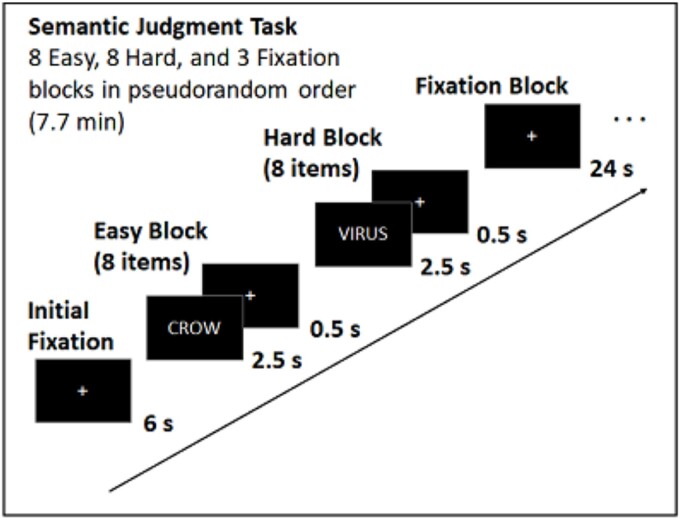
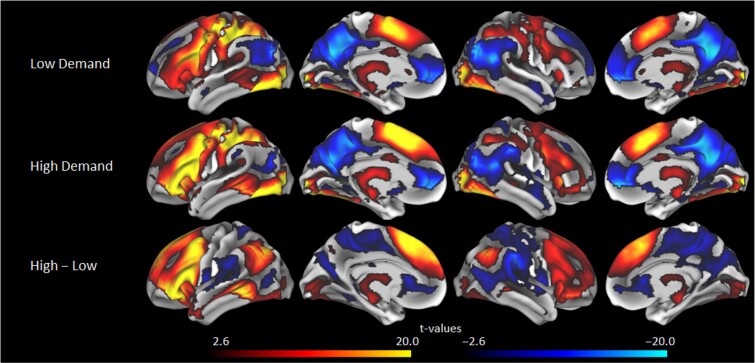
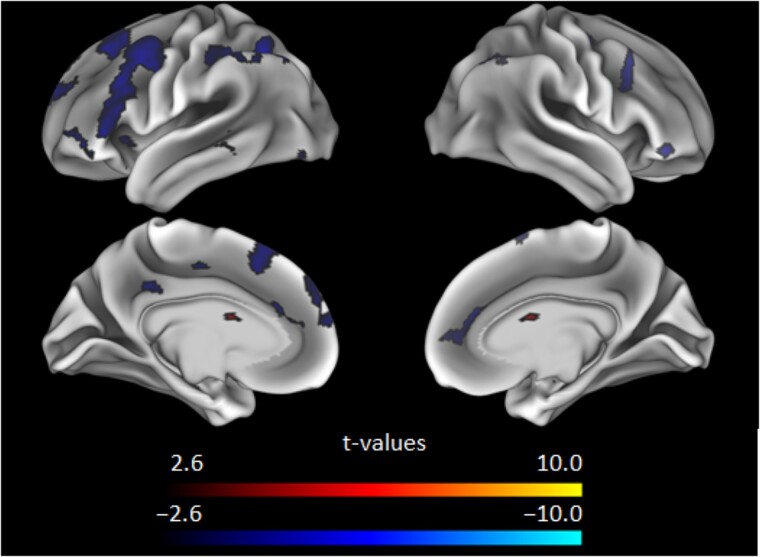
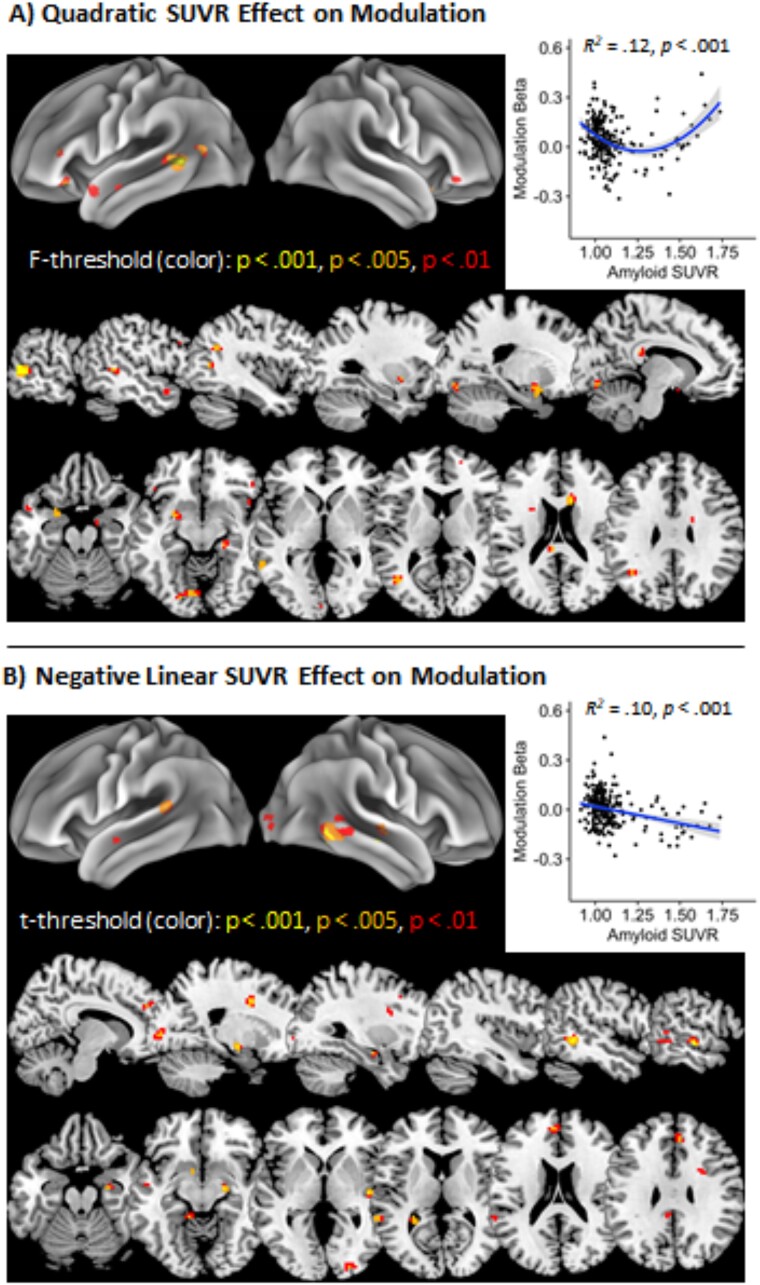
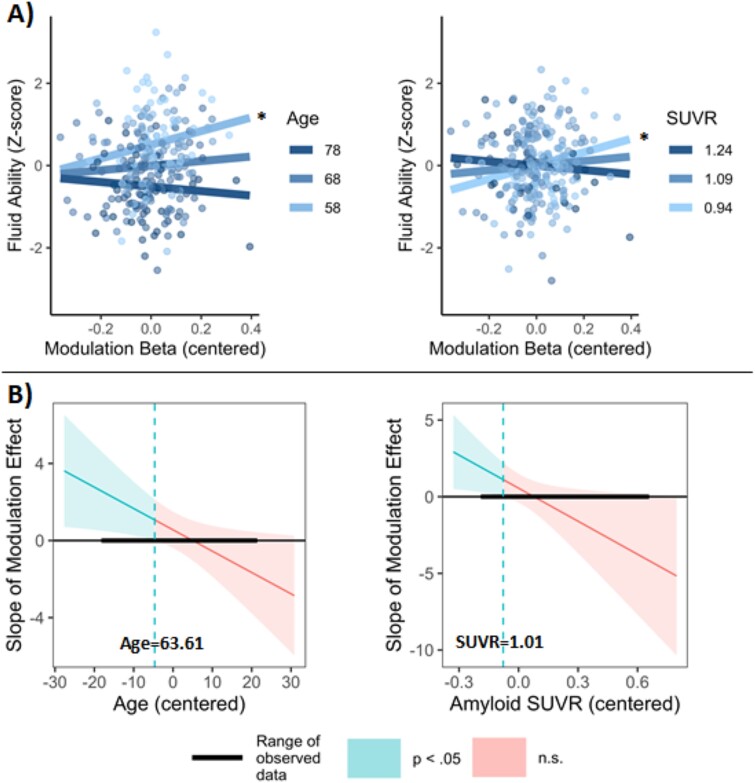
Effective cognitive performance often requires the allocation of additional neural resources (i.e. blood-oxygen-level-dependent [BOLD] activation) as task demands increase, and this demand-related modulation is affected by amyloid-beta deposition and normal aging. The present study investigated these complex relationships between amyloid, modulation, and cognitive function (i.e. fluid ability). Participants from the Dallas Lifespan Brain Study (DLBS, n = 252, ages 50-89) completed a semantic judgment task during functional magnetic resonance imaging (fMRI) where the judgments differed in classification difficulty. Amyloid burden was assessed via positron emission tomography (PET) using 18F-florbetapir. A quadratic relationship between amyloid standardized value uptake ratios (SUVRs) and BOLD modulation was observed such that modulation was weaker in those with moderately elevated SUVRs (e.g. just reaching amyloid-positivity), whereas those with very high SUVRs (e.g. SUVR > 1.5) showed strong modulation. Greater modulation was related to better fluid ability, and this relationship was strongest in younger participants and those with lower amyloid burden. These results support the theory that effective demand-related modulation contributes to healthy cognitive aging, especially in the transition from middle age to older adulthood, whereas high modulation may be dysfunctional in those with substantial amyloid deposition.
Keywords: PET; aging; fMRI; fluid intelligence; semantic.
© The Author(s) 2024. Published by Oxford University Press. All rights reserved. For permissions, please e-mail: journals.permission@oup.com.
Figures
References
-
- Ben-Nejma IRH, Keliris AJ, Daans J, Ponsaerts P, Verhoye M, van der Linden A, Keliris GA. Increased soluble amyloid-beta causes early aberrant brain network hypersynchronisation in a mature-onset mouse model of amyloidosis. Acta Neuropathol Commun. 2019:7(1):180. 10.1186/s40478-019-0810-7. - DOI - PMC - PubMed
Publication types
MeSH terms
Substances
Grants and funding
LinkOut - more resources
Full Text Sources
Medical
