


Detection and spread of high pathogenicity avian influenza virus H5N1 in the Antarctic Region
- PMID: 39227574
- PMCID: PMC11372179
- DOI: 10.1038/s41467-024-51490-8
Detection and spread of high pathogenicity avian influenza virus H5N1 in the Antarctic Region
Abstract
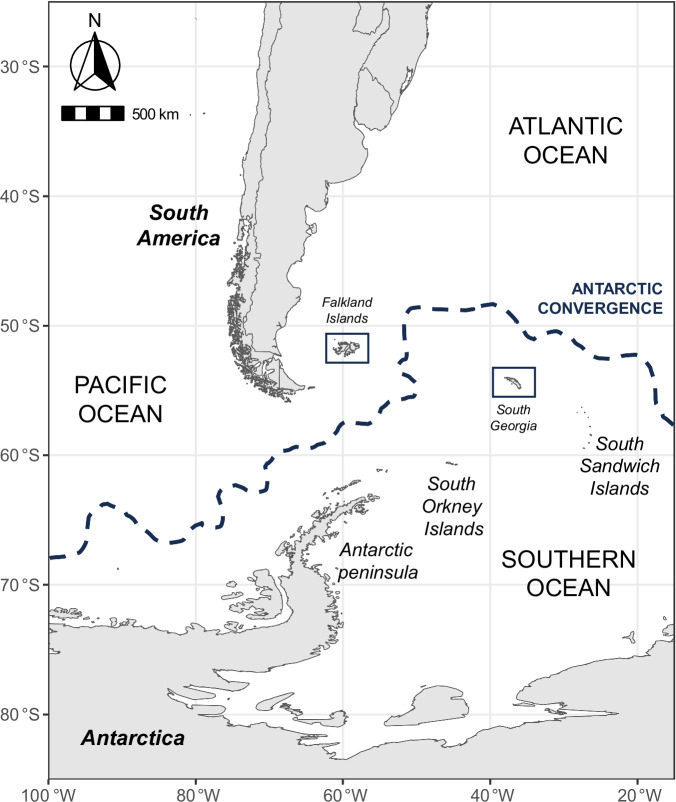
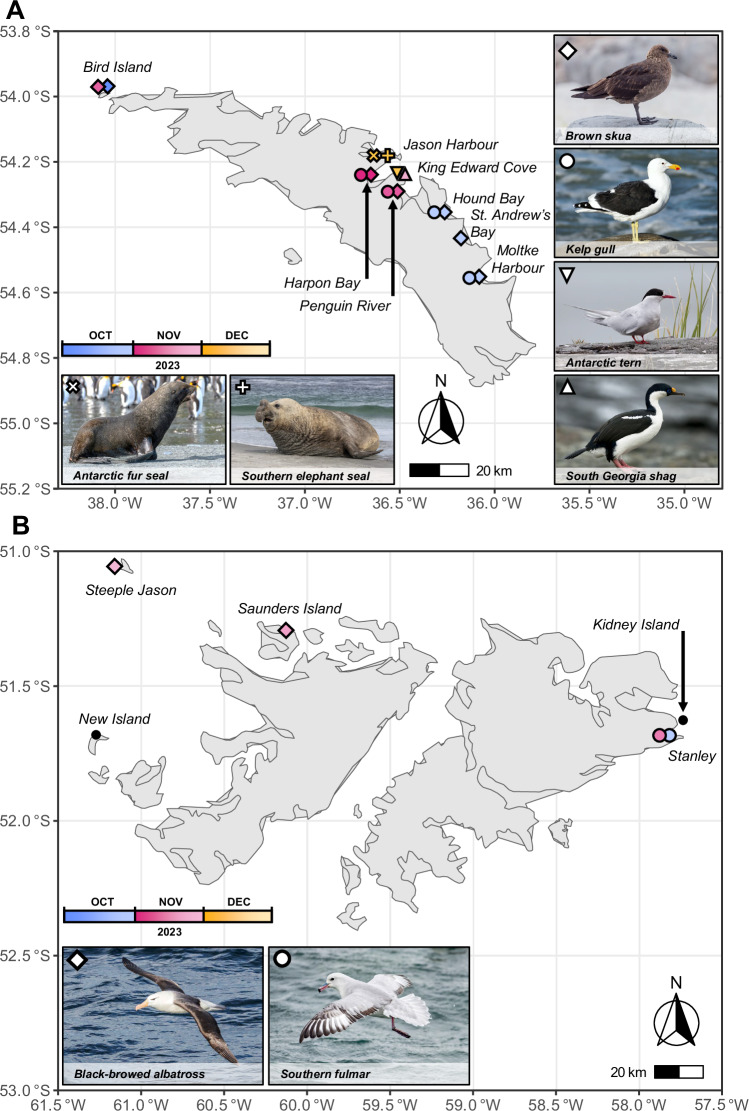
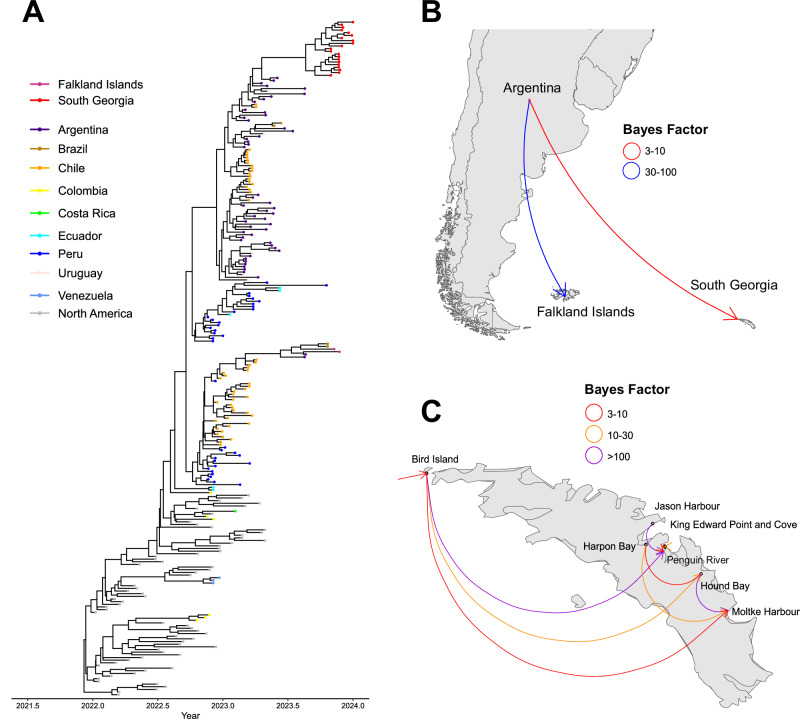
Until recent events, the Antarctic was the only major geographical region in which high pathogenicity avian influenza virus (HPAIV) had never previously been detected. Here we report on the detection of clade 2.3.4.4b H5N1 HPAIV in the Antarctic and sub-Antarctic regions of South Georgia and the Falkland Islands, respectively. We initially detected H5N1 HPAIV in samples collected from brown skuas at Bird Island, South Georgia on 8th October 2023. Since this detection, mortalities were observed in several avian and mammalian species at multiple sites across South Georgia. Subsequent testing confirmed H5N1 HPAIV across several sampling locations in multiple avian species and two seal species. Simultaneously, we also confirmed H5N1 HPAIV in southern fulmar and black-browed albatross in the Falkland Islands. Genetic assessment of the virus indicates spread from South America, likely through movement of migratory birds. Critically, genetic assessment of sequences from mammalian species demonstrates no increased risk to human populations above that observed in other instances of mammalian infections globally. Here we describe the detection, species impact and genetic composition of the virus and propose both introductory routes and potential long-term impact on avian and mammalian species across the Antarctic region. We also speculate on the threat to specific populations following recent reports in the area.
© 2024. Crown.
Conflict of interest statement
The authors declare no competing interests.
Figures
References
-
- Lane, J. V. et al. High pathogenicity avian influenza (H5N1) in Northern Gannets (Morus bassanus): Global spread, clinical signs and demographic consequences. Ibis166, 633–650 (2023). 10.1111/ibi.13275 - DOI
Publication types
MeSH terms
Grants and funding
- SV3400/Department for Environment, Food and Rural Affairs (Defra)
- SV3006/Department for Environment, Food and Rural Affairs (Defra)
- SE2213/Department for Environment, Food and Rural Affairs (Defra)
- SE2227/Department for Environment, Food and Rural Affairs (Defra)
- BB/Y007271/1/RCUK | Biotechnology and Biological Sciences Research Council (BBSRC)
LinkOut - more resources
Full Text Sources
Medical
