


Terminalia bellirica and Andrographis paniculata dietary supplementation in mitigating heat stress-induced behavioral, metabolic and genetic alterations in broiler chickens
- PMID: 39227945
- PMCID: PMC11370032
- DOI: 10.1186/s12917-024-04233-2
Terminalia bellirica and Andrographis paniculata dietary supplementation in mitigating heat stress-induced behavioral, metabolic and genetic alterations in broiler chickens
Abstract
Background: Heat stress (HS) is one of the most significant environmental stressors on poultry production and welfare worldwide. Identification of innovative and effective solutions is necessary. This study evaluated the effects of phytogenic feed additives (PHY) containing Terminalia bellirica and Andrographis paniculata on behavioral patterns, hematological and biochemical parameters, Oxidative stress biomarkers, and HSP70, I-FABP2, IL10, TLR4, and mTOR genes expression in different organs of broiler chickens under chronic HS conditions. A total of 208 one-day-old Avian-480 broiler chicks were randomly allocated into four treatments (4 replicate/treatment, 52 birds/treatment): Thermoneutral control treatment (TN, fed basal diet); Thermoneutral treatment (TN, fed basal diet + 1 kg/ton feed PHY); Heat stress treatment (HS, fed basal diet); Heat stress treatment (HS, fed basal diet + 1 kg/ton feed PHY).
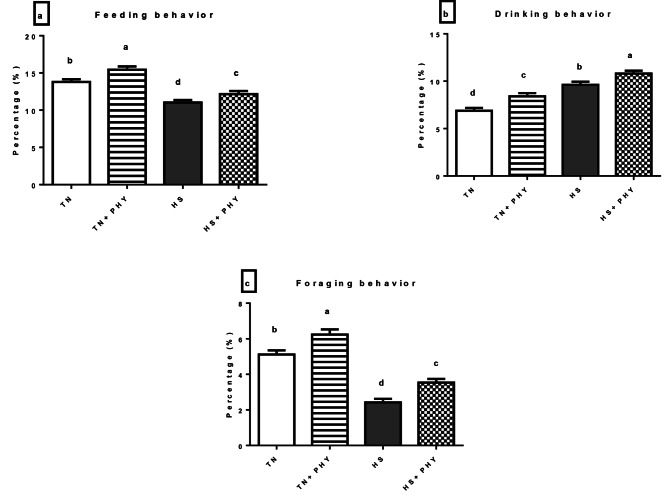
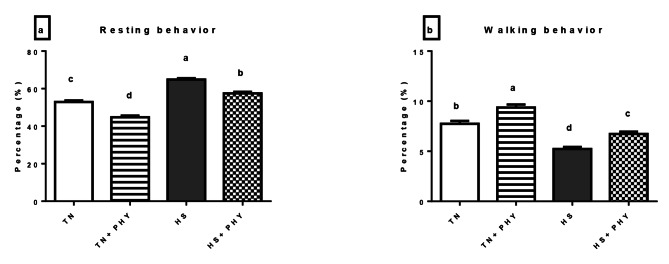
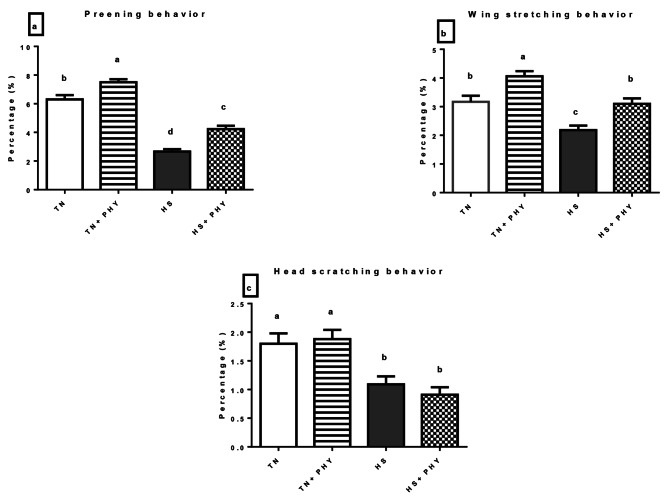
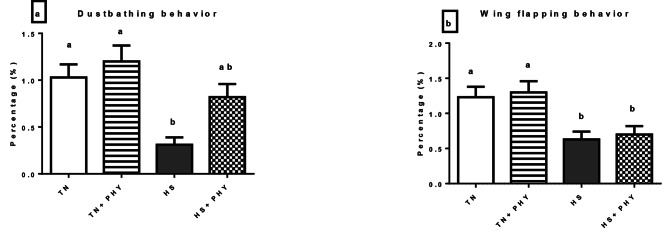
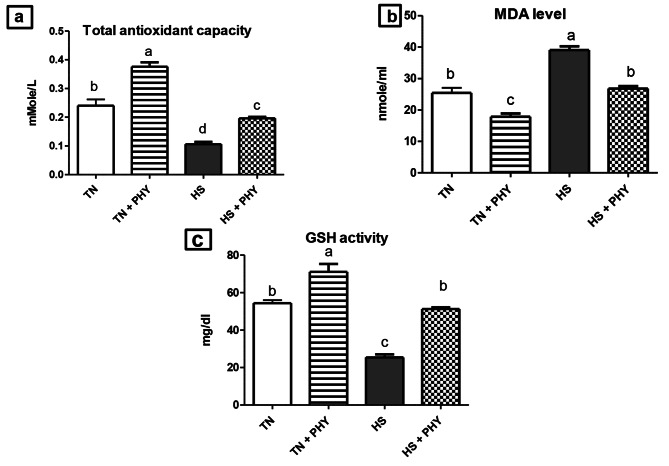
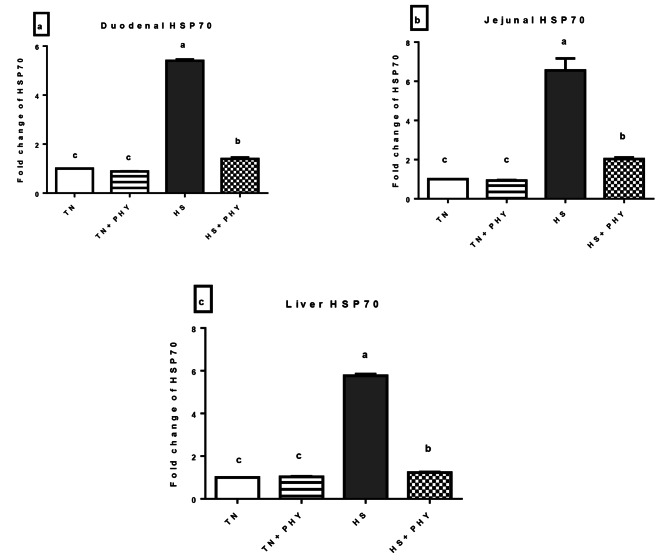
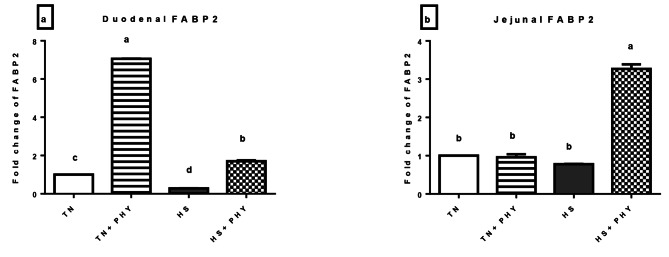
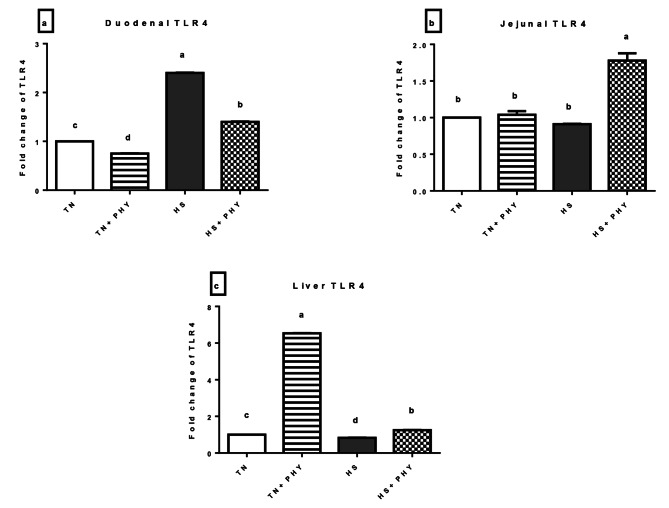
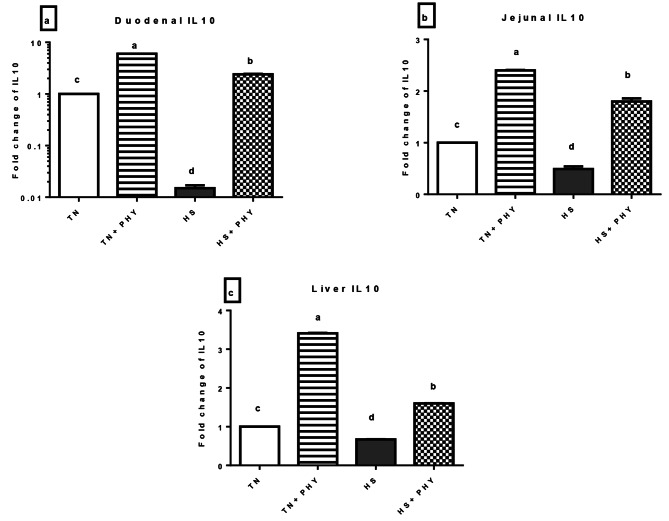
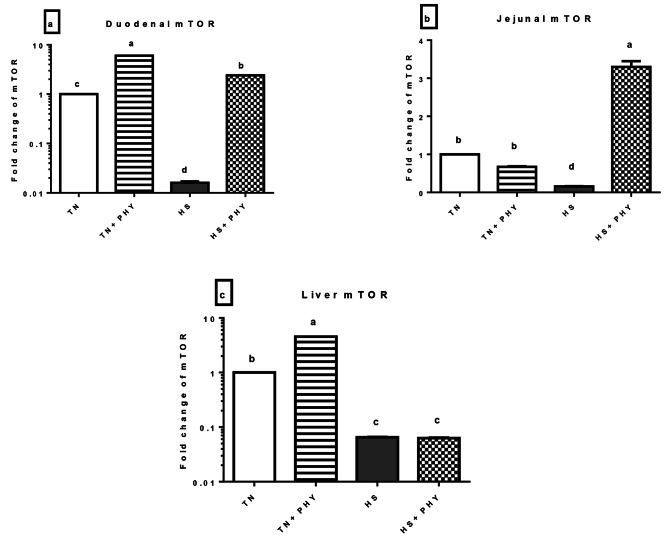
Results: The findings of the study indicate that HS led to a decrease in feeding, foraging, walking, and comfort behavior while increasing drinking and resting behavior, also HS increased red, and white blood cells (RBCs and WBCs) counts, and the heterophile/ lymphocyte (H/L) ratio (P < 0.05); while both mean corpuscular volume (MCV), and mean corpuscular hemoglobin (MCH) were decreased (P < 0.05). In addition, HS negatively impacted lipid, protein, and glucose levels, liver and kidney function tests, and oxidative biomarkers by increasing malondialdehyde (MDA) levels and decreasing reduced glutathion (GSH) activity (P < 0.05). Heat stress (HS) caused the upregulation in HSP70, duodenal TLR4 gene expression, and the downregulation of I-FABP2, IL10, mTOR in all investigated tissues, and hepatic TLR4 (P < 0.05) compared with the TN treatment. Phytogenic feed additives (PHY) effectively mitigated heat stress's negative impacts on broilers via an improvement of broilers' behavior, hematological, biochemical, and oxidative stress biomarkers with a marked decrease in HSP70 expression levels while all tissues showed increased I-FABP2, IL10, TLR4, and mTOR (except liver) levels (P < 0.05).
Conclusion: Phytogenic feed additives (PHY) containing Terminalia bellirica and Andrographis paniculata have ameliorated the HS-induced oxidative stress and improved the immunity as well as the gut health and welfare of broiler chickens.
Keywords: Andrographis paniculata; HSP70; Terminalia bellirica; Welfare; Oxidative stress.
© 2024. The Author(s).
Conflict of interest statement
The authors declare no competing interests.
Figures
References
-
- Calik A, Emami NK, Schyns G, White MB, Walsh MC, Romero LF, Dalloul RA. Influence of dietary vitamin E and selenium supplementation on broilers subjected to heat stress, part II: oxidative stress, immune response, gut integrity, and intestinal microbiota. Poult Sci. 2022;101(6):101858. 10.1016/j.psj.2022.101858. 10.1016/j.psj.2022.101858 - DOI - PMC - PubMed
-
- Abdel-Moneim AME, Shehata AM, Mohamed NG, Elbaz AM, Ibrahim NS. Synergistic effect of Spirulina platensis and selenium nanoparticles on growth performance, serum metabolites, immune responses, and antioxidant capacity of heat-stressed broiler chickens. Biol Trace Elem Res. 2022:1–12. - PubMed
MeSH terms
LinkOut - more resources
Full Text Sources
Medical
Research Materials
Miscellaneous
