


Anatomical-Radiological Aspects and Their Influence on the Results of Pituitary Adenomas Endoscopic Endonasal Surgery
- PMID: 39228890
- PMCID: PMC11368454
- DOI: 10.1055/a-2095-6442
Anatomical-Radiological Aspects and Their Influence on the Results of Pituitary Adenomas Endoscopic Endonasal Surgery
Abstract
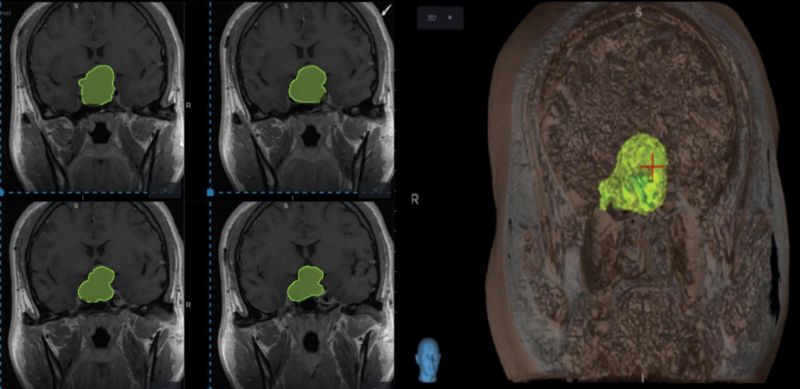
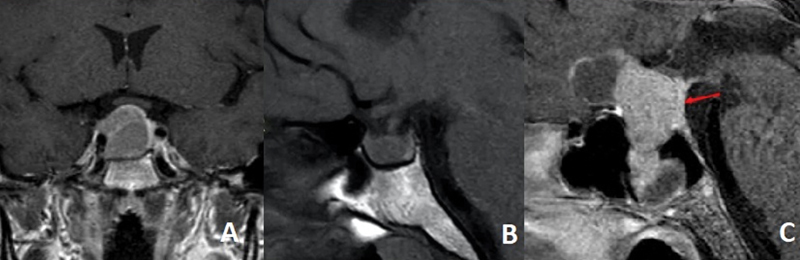
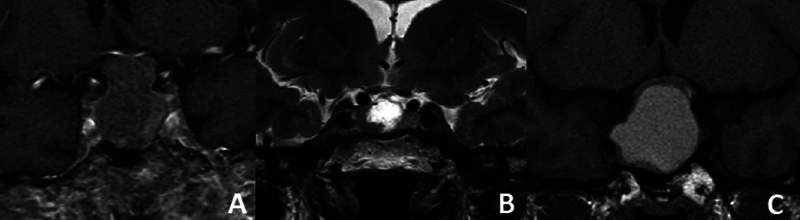
Introduction Endoscopic endonasal surgery has globally improved postoperative results in pituitary adenomas. Material and Methods We retrospectively analyzed 101 patients who underwent endonasal endoscopic surgery for pituitary adenomas in the period from 2016 to 2021. Data on epidemiological variables, preoperative radiological factors including tumor volume, tumor appearance, cavernous sinus invasion (modified Knosp scale), degree of extension according to the SIPAP (stands for the five directions in which a pituitary adenoma can extend: suprasellar, infrasellar, parasellar, anterior, and posterior) classification, and preoperative visualization of the healthy gland on magnetic resonance imaging (MRI) were collected as well as intra- and postoperative cerebrospinal fluid (CSF) leak. As variables of interest, data on the degree of tumoral resection and preservation of hormonal function were collected. Results Among the preoperative factors related to greater tumoral resection, we found a lesser tumoral extension according to the SIPAP scale, and the absence of a postoperative CSF leak had a statistically significant relation with greater hormonal preservation. Conclusion The SIPAP classification is a simple-to-measure preoperative radiological variable that could predict the extent of resection, and, conversely, the occurrence of a postoperative CSF leak has been associated with an inferior endocrinological outcome in this type of surgery.
Keywords: CSF leak; Knosp; SIPAP; endoscopic endonasal approach; hormonal deficiency; pituitary adenoma; sellar barrier.
Thieme. All rights reserved.
Conflict of interest statement
Conflict of Interest None declared.
Figures
References
-
- Ezzat S, Asa S L, Couldwell W T et al.The prevalence of pituitary adenomas: a systematic review. Cancer. 2004;101(03):613–619. - PubMed
-
- Niveiro de Jaime M, Aranda López F I, Peiró Cabrera G. Patología de los adenomas hipofisarios. Rev Esp Patol. 2003;36(04):357–372.
-
- Fontana E, Gaillard R. [Epidemiology of pituitary adenoma: results of the first Swiss study] Rev Med Suisse. 2009;5(223):2172–2174. - PubMed
-
- Daly A F, Rixhon M, Adam C, Dempegioti A, Tichomirowa M A, Beckers A. High prevalence of pituitary adenomas: a cross-sectional study in the province of Liege, Belgium. J Clin Endocrinol Metab. 2006;91(12):4769–4775. - PubMed
-
- Dehdashti A R, Ganna A, Karabatsou K, Gentili F.Pure endoscopic endonasal approach for pituitary adenomas: early surgical results in 200 patients and comparison with previous microsurgical series Neurosurgery 200862051006–1015., discussion 1015–1017 - PubMed
LinkOut - more resources
Full Text Sources
Research Materials
