


Are there interindividual differences in the reactive hypoglycaemia response to breakfast? A replicate crossover trial
- PMID: 39231870
- PMCID: PMC11519142
- DOI: 10.1007/s00394-024-03467-y
Are there interindividual differences in the reactive hypoglycaemia response to breakfast? A replicate crossover trial
Abstract
Background: Following consumption of a meal, circulating glucose concentrations can rise and then fall briefly below the basal/fasting concentrations. This phenomenon is known as reactive hypoglycaemia but to date no researcher has explored potential inter-individual differences in response to meal consumption.
Objective: We conducted a secondary analysis of existing data to examine inter-individual variability of reactive hypoglycaemia in response to breakfast consumption.
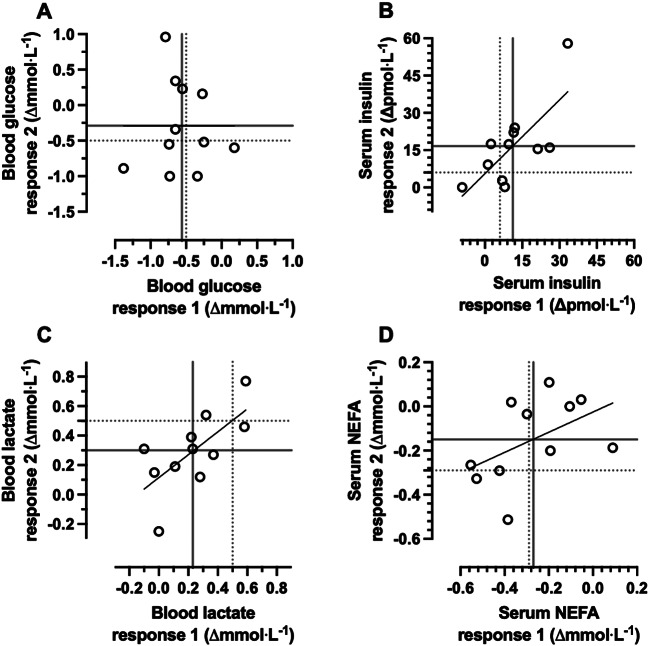
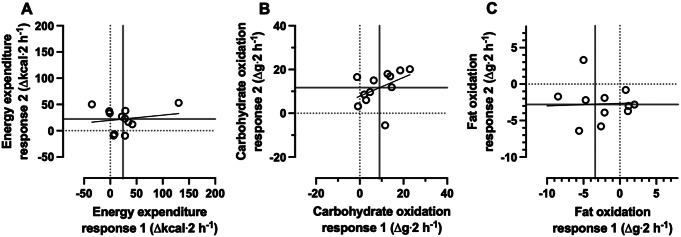
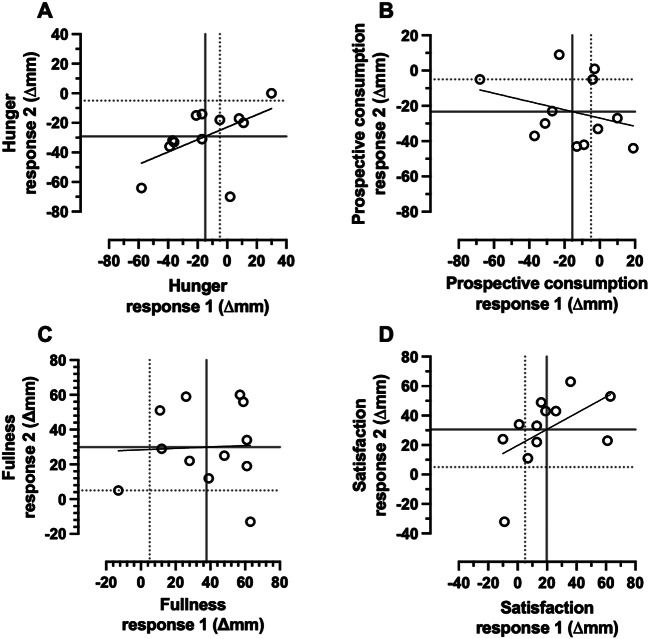
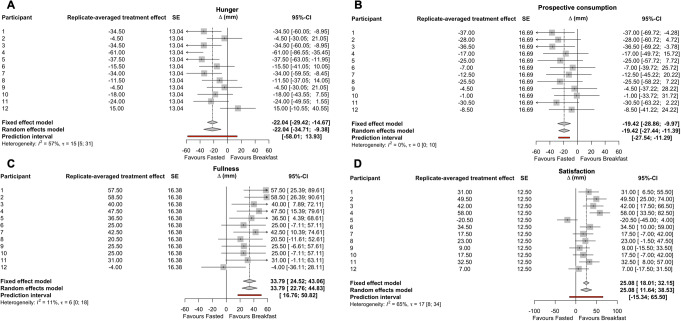
Methods: Using a replicate crossover design, 12 healthy, physically active men (age: 18-30 y, body mass index: 22.1 to 28.0 kg⋅m- 2) completed two identical control (continued overnight fasting) and two breakfast (444 kcal; 60% carbohydrate, 17% protein, 23% fat) conditions in randomised sequences. Blood glucose and lactate concentrations, serum insulin and non-esterified fatty acid concentrations, whole-body energy expenditure, carbohydrate and fat oxidation rates, and appetite ratings were determined before and 2 h after the interventions. Inter-individual differences were explored using Pearson's product-moment correlations between the first and second replicates of the fasting-adjusted breakfast response. Within-participant covariate-adjusted linear mixed models and a random-effects meta-analytical approach were used to quantify participant-by-condition interactions.
Results: Breakfast consumption lowered 2-h blood glucose by 0.44 mmol/L (95%CI: 0.76 to 0.12 mmol/L) and serum NEFA concentrations, whilst increasing blood lactate and serum insulin concentrations (all p < 0.01). Large, positive correlations were observed between the first and second replicates of the fasting-adjusted insulin, lactate, hunger, and satisfaction responses to breakfast consumption (all r > 0.5, 90%CI ranged from 0.03 to 0.91). The participant-by-condition interaction response variability (SD) for serum insulin concentration was 11 pmol/L (95%CI: 5 to 16 pmol/L), which was consistent with the τ-statistic from the random-effects meta-analysis (11.7 pmol/L, 95%CI 7.0 to 22.2 pmol/L) whereas effects were unclear for other outcome variables (e.g., τ-statistic value for glucose: 0 mmol/L, 95%CI 0.0 to 0.5 mmol/L).
Conclusions: Despite observing reactive hypoglycaemia at the group level, we were unable to detect any meaningful inter-individual variability of the reactive hypoglycaemia response to breakfast. There was, however, evidence that 2-h insulin responses to breakfast display meaningful inter-individual variability, which may be explained by relative carbohydrate dose ingested and variation in insulin sensitivity of participants.
Keywords: Breakfast; Carbohydrate; Glucose; Metabolism; Response heterogeneity.
© 2024. The Author(s).
Figures


References
-
- Edinburgh RM, Hengist A, Smith HA, Travers RL, Koumanov F, Betts JA, Thompson D, Walhin JP, Wallis GA, Hamilton DL et al (2018) Preexercise breakfast ingestion versus extended overnight fasting increases postprandial glucose flux after exercise in healthy men. Am J Physiol - Endocrinol Metabolism 315(5):E1062–E74. 10.1152/ajpendo.00163.2018 - DOI - PMC - PubMed
-
- Taylor R, Magnusson I, Rothman DL, Cline GW, Caumo A, Cobelli C, Shulman GI (1996) Direct assessment of liver glycogen storage by 13 C nuclear magnetic resonance spectroscopy and regulation of glucose homeostasis after a mixed meal in normal subjects. J Clin Investig 97(1):126–132 - DOI - PMC - PubMed
Publication types
MeSH terms
Substances
LinkOut - more resources
Full Text Sources
Medical
