


What we mean when we say semantic: Toward a multidisciplinary semantic glossary
- PMID: 39231896
- PMCID: PMC11836185
- DOI: 10.3758/s13423-024-02556-7
What we mean when we say semantic: Toward a multidisciplinary semantic glossary
Abstract
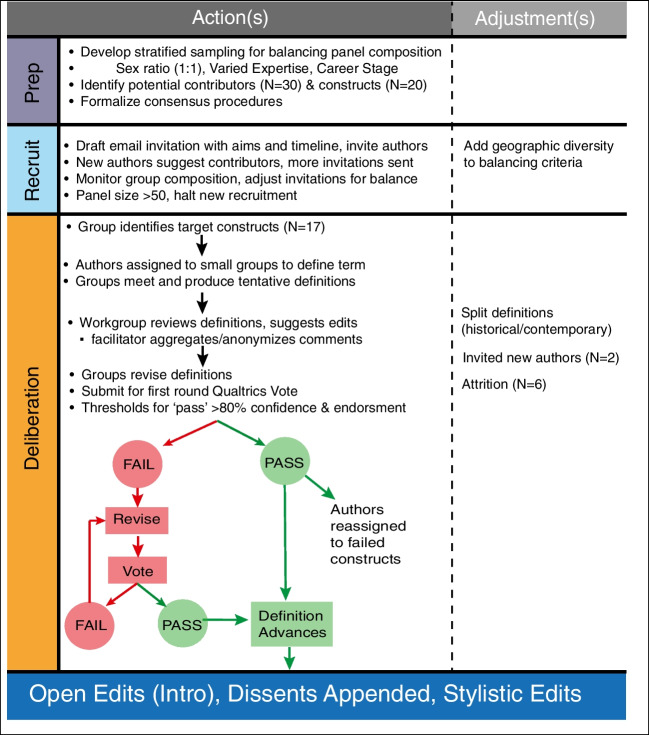
Tulving characterized semantic memory as a vast repository of meaning that underlies language and many other cognitive processes. This perspective on lexical and conceptual knowledge galvanized a new era of research undertaken by numerous fields, each with their own idiosyncratic methods and terminology. For example, "concept" has different meanings in philosophy, linguistics, and psychology. As such, many fundamental constructs used to delineate semantic theories remain underspecified and/or opaque. Weak construct specificity is among the leading causes of the replication crisis now facing psychology and related fields. Term ambiguity hinders cross-disciplinary communication, falsifiability, and incremental theory-building. Numerous cognitive subdisciplines (e.g., vision, affective neuroscience) have recently addressed these limitations via the development of consensus-based guidelines and definitions. The project to follow represents our effort to produce a multidisciplinary semantic glossary consisting of succinct definitions, background, principled dissenting views, ratings of agreement, and subjective confidence for 17 target constructs (e.g., abstractness, abstraction, concreteness, concept, embodied cognition, event semantics, lexical-semantic, modality, representation, semantic control, semantic feature, simulation, semantic distance, semantic dimension). We discuss potential benefits and pitfalls (e.g., implicit bias, prescriptiveness) of these efforts to specify a common nomenclature that other researchers might index in specifying their own theoretical perspectives (e.g., They said X, but I mean Y).
Keywords: Abstraction; Concept; Concreteness; Lexical; Representation; Semantic memory.
© 2024. The Author(s).
Conflict of interest statement
Declarations. Ethics approval: Not applicable (theoretical review/no human subjects). Consent to participate: Not applicable. Consent to publish: Not applicable. Conflict of interest: We, the authors, have no known conflicts of interest to report.
Figures
References
-
- Abrahamsen, A., & Bechtel, W. (2012). History and core themes. The Cambridge handbook of cognitive science (pp. 9–28). Cambridge University Press.
-
- Abdel Rahman, R., & Melinger, A. (2009). Semantic context effects in language production: A swinging lexical network proposal and a review. Language and Cognitive Processes,24(5), 713–734. 10.1080/01690960802597250 - DOI
-
- Alam, T. R. del J. G., Karapanagiotidis, T., Smallwood, J., & Jefferies, E. (2019). Degrees of lateralisation in semantic cognition: Evidence from intrinsic connectivity. NeuroImage, 202, Article 116089. - PubMed
-
- Albertella, L., Kirkham, R., Adler, A. B., Crampton, J., Drummond, S. P. A., Fogarty, G. J., Gross, J. J., Zaichkowsky, L., Andersen, J. P., Bartone, P. T., Boga, D., Bond, J. W., Brunyé, T. T., Campbell, M. J., Ciobanu, L. G., Clark, S. R., Crane, M. F., Dietrich, A., Doty, T. J., … Yücel, M. (2023). Building a transdisciplinary expert consensus on the cognitive drivers of performance under pressure: An international multi-panel Delphi study. Frontiers in Psychology, 13. 10.3389/fpsyg.2022.1017675 - PMC - PubMed
Publication types
MeSH terms
Grants and funding
LinkOut - more resources
Full Text Sources
Research Materials
