An hepatitis B and D virus infection model using human pluripotent stem cell-derived hepatocytes
- PMID: 39232200
- PMCID: PMC11466959
- DOI: 10.1038/s44319-024-00236-0
An hepatitis B and D virus infection model using human pluripotent stem cell-derived hepatocytes
Abstract
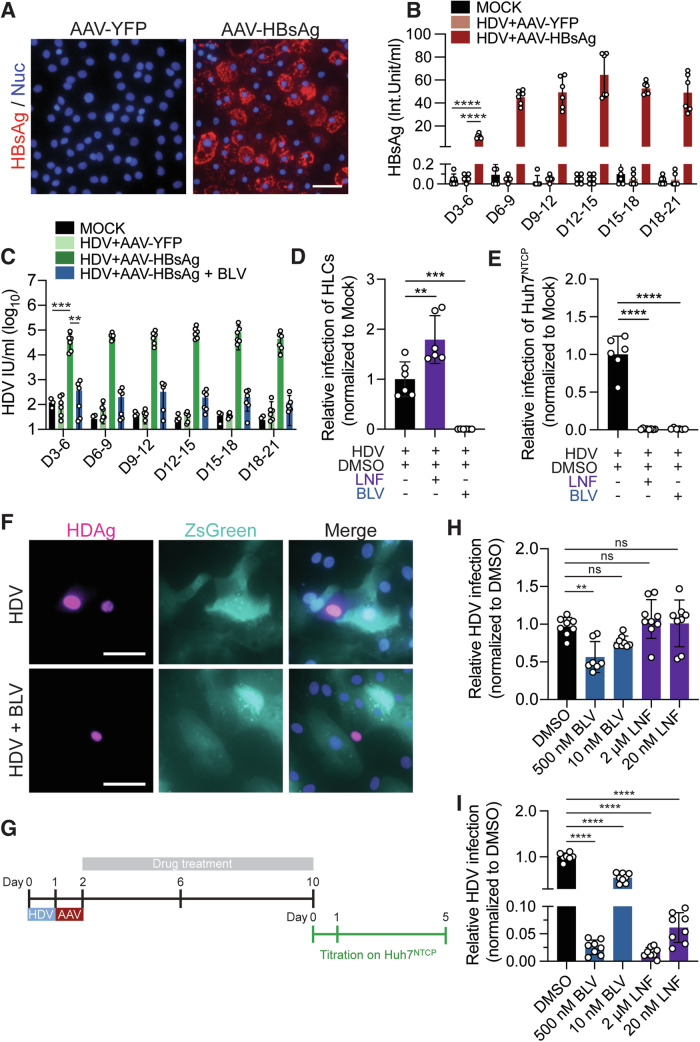
Current culture systems available for studying hepatitis D virus (HDV) are suboptimal. In this study, we demonstrate that hepatocyte-like cells (HLCs) derived from human pluripotent stem cells (hPSCs) are fully permissive to HDV infection across various tested genotypes. When co-infected with the helper hepatitis B virus (HBV) or transduced to express the HBV envelope protein HBsAg, HLCs effectively release infectious progeny virions. We also show that HBsAg-expressing HLCs support the extracellular spread of HDV, thus providing a valuable platform for testing available anti-HDV regimens. By challenging the cells along the differentiation with HDV infection, we have identified CD63 as a potential HDV co-entry factor that was rate-limiting for HDV infection in immature hepatocytes. Given their renewable source and the potential to derive hPSCs from individual patients, we propose HLCs as a promising model for investigating HDV biology. Our findings offer new insights into HDV infection and expand the repertoire of research tools available for the development of therapeutic interventions.
Keywords: Antiviral Treatment; Hepatitis B Virus; Hepatitis D Virus; Hepatocyte-like Cells; Human Pluripotent Stem Cells.
© 2024. The Author(s).
Conflict of interest statement
Stephan Urban is a co-inventor and applicant on patents protecting HBV pre-S1-derived lipopeptides (Myrcludex B/Bulevirtide/Hepcludex). The remaining authors declare no competing interests.
Figures




References
-
- Alexa A, Rahnenfuhrer J (2016) topGO: enrichment analysis for Gene Ontology. R Packag. version 2.26.0. R Package version 2260
MeSH terms
Substances
Grants and funding
LinkOut - more resources
Full Text Sources
Medical
Molecular Biology Databases
Miscellaneous