


Targeting the Tie-2 Receptor With Faricimab in Central Serous Chorioretinopathy: A Case Series Motivated by a Genetic Finding
- PMID: 39233019
- PMCID: PMC11968134
- DOI: 10.1016/j.ajo.2024.08.040
Targeting the Tie-2 Receptor With Faricimab in Central Serous Chorioretinopathy: A Case Series Motivated by a Genetic Finding
Abstract
Purpose: To investigate the effects of faricimab, a bispecific antibody targeting VEGF and Ang-2 (thus increasing Tie-2 activity), in patients with CSC based on a recent genetic study that implicated Tie-2 signaling in CSC pathophysiology.
Design: A retrospective interventional multicenter case series.
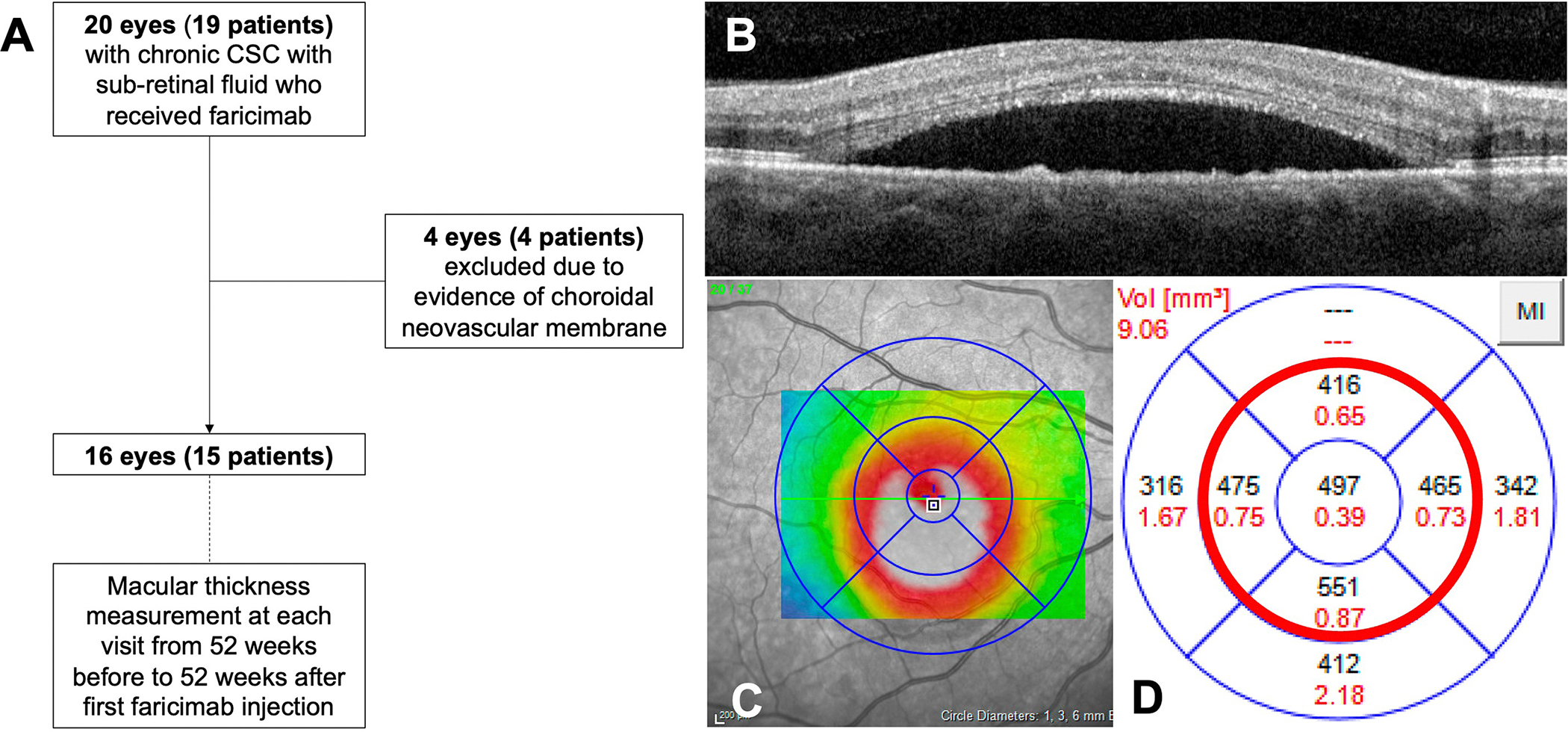
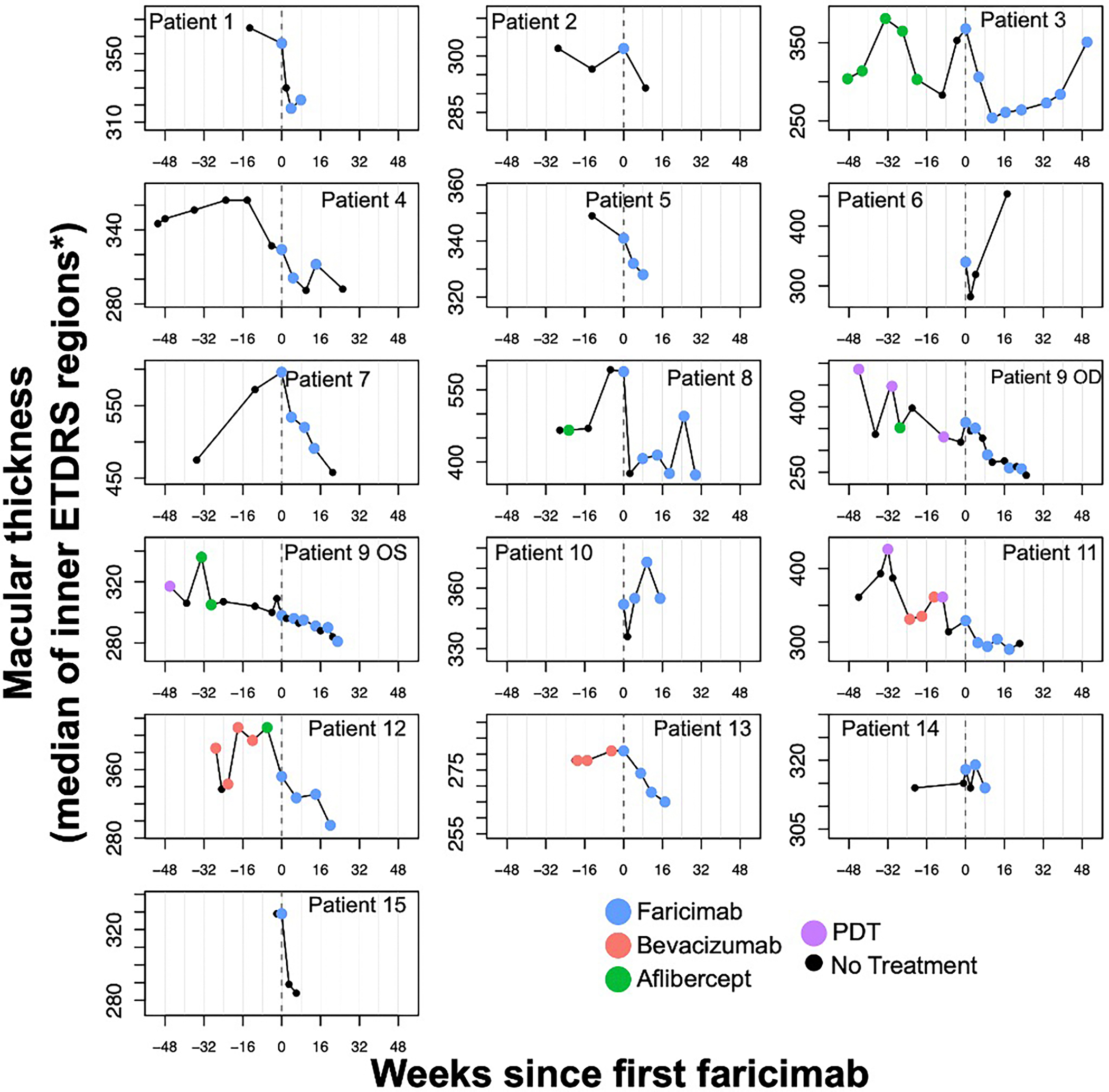
Methods: We included patients with chronic CSC (persistent or recurrent SRF for ≥6 months) who received at least one faricimab 6 mg injection between January 1 2022, and April 1 2024,. Study sites included Massachusetts Eye and Ear and University of California San Francisco. Patients with evidence of a choroidal neovascular membrane on color photos, optical coherence tomography (OCT) and/or fluorescein angiography were excluded. 16 eyes (15 patients) met the inclusion criteria. The median central macular thickness at each visit from 52 weeks before to 52 weeks after the first faricimab injection was calculated using automated Heidelberg Spectralis ETDRS subfield measurements.
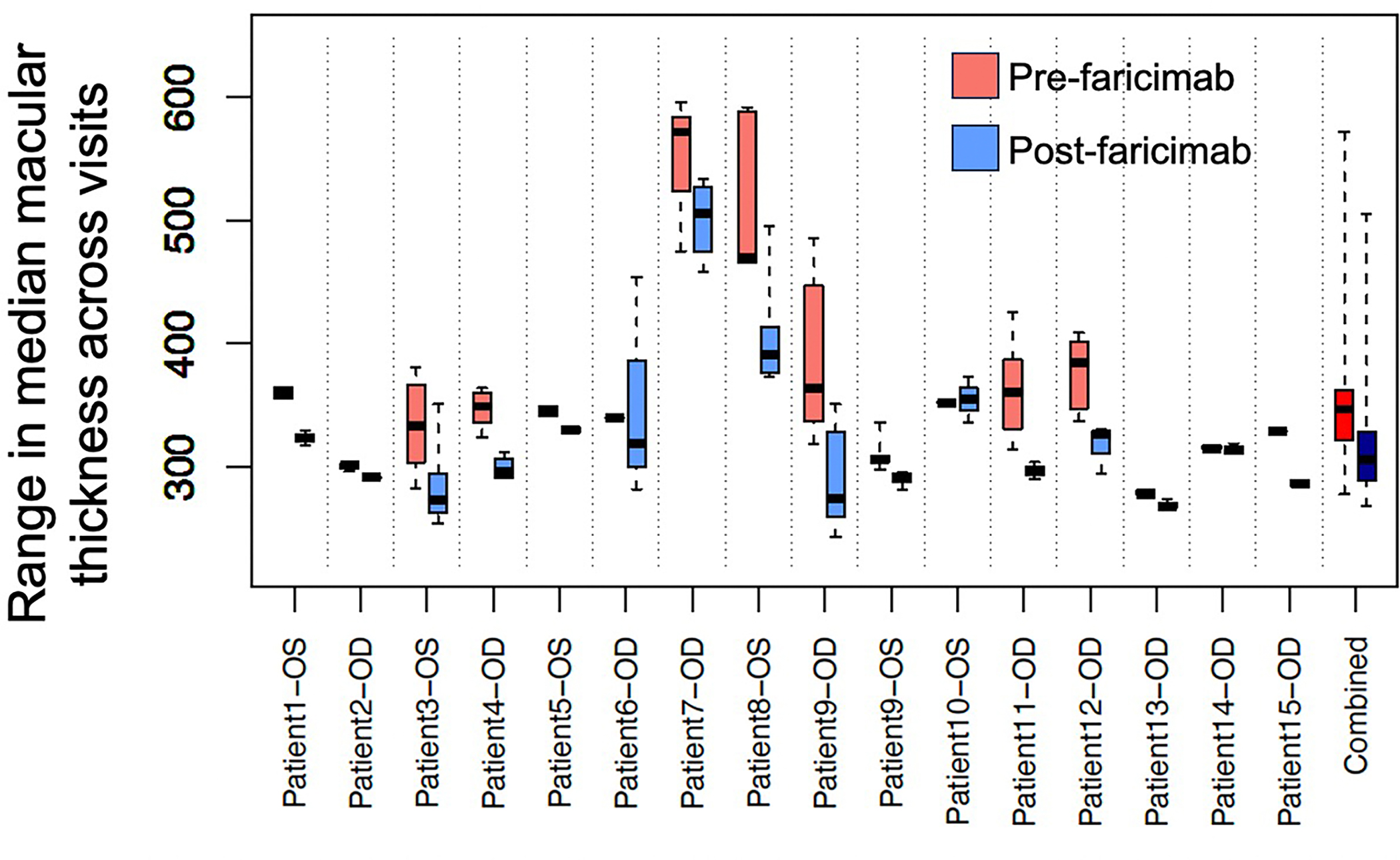
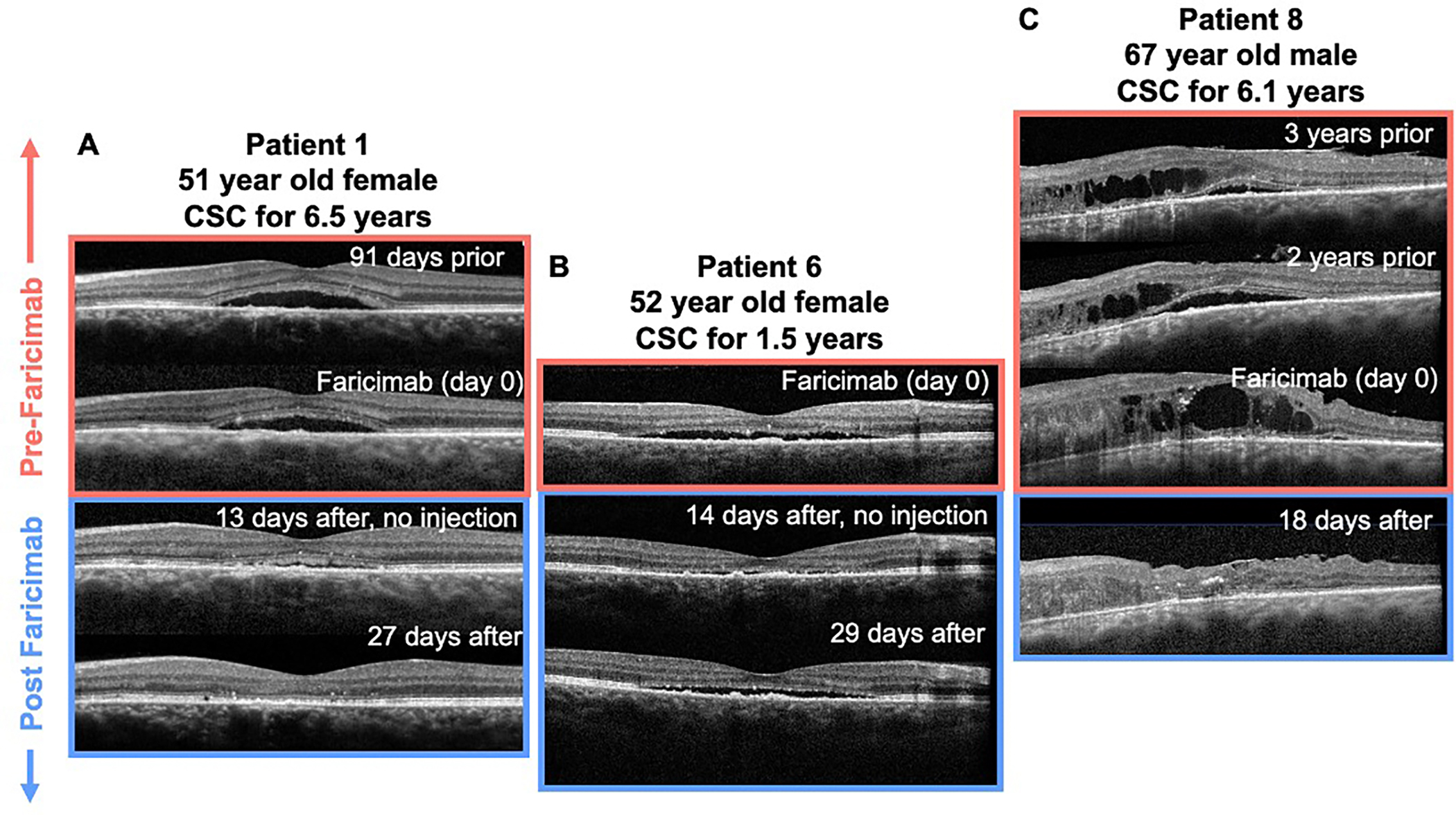
Results: Prior to treatment with faricimab, CSC had been diagnosed a median of 4.1 years (range 0.9-8) earlier and SRF (and intraretinal fluid [IRF] in a subset) had been continuously present for a median of 30 weeks (range 9-257). Decreases in macular thickness were observed in 14/16 eyes after the first faricimab injection and in 14/16 eyes in the full follow-up period compared with prior, 10 of which experienced complete resolution of SRF following the start of the first series of injections at a median of 4 weeks (range 2-25). One eye worsened after the second injection. The median improvement in macular thickness was 40 μm [range -3 to 89.5] (P = .0007). Upon review of OCT images, reductions in macular thickness were consistent with reductions in SRF and/or IRF. Visual acuity improved by 2 lines or more in 6/16 eyes.
Conclusions: In a retrospective case series of patients with chronic CSC and longstanding SRF, we observed improvement in macular thickness after intravitreal faricimab. While the small number of patients and variable natural history of CSC preclude definitive conclusions, a randomized controlled trial seems warranted.
Copyright © 2024 Elsevier Inc. All rights reserved.
Figures
References
-
- Spaide RF, Campeas L, Haas A, et al. Central serous chorioretinopathy in younger and older adults. Ophthalmology. 1996;103(12):2070–2079; discussion 2079–80. - PubMed
-
- Mrejen S, Balaratnasingam C, Kaden TR, et al. Long-term Visual Outcomes and Causes of Vision Loss in Chronic Central Serous Chorioretinopathy. Ophthalmology. 2019;126(4):576–588. - PubMed
-
- Chan WM, Lai TYY, Lai RYK, Liu DTL, Lam DSC. Half-dose verteporfin photodynamic therapy for acute central serous chorioretinopathy: one-year results of a randomized controlled trial. Ophthalmology. 2008;115(10):1756–1765. - PubMed
Publication types
MeSH terms
Substances
Grants and funding
LinkOut - more resources
Full Text Sources
Miscellaneous
