


Global burden of benign prostatic hyperplasia in males aged 60-90 years from 1990 to 2019: results from the global burden of disease study 2019
- PMID: 39237966
- PMCID: PMC11376082
- DOI: 10.1186/s12894-024-01582-w
Global burden of benign prostatic hyperplasia in males aged 60-90 years from 1990 to 2019: results from the global burden of disease study 2019
Abstract
Background: Benign prostatic hyperplasia (BPH) is a prevalent urological disease in elderly males. However, few studies have estimated the temporal and spatial distributions of the BPH burden in male adults aged 60 years and over at the global, national, and regional scales.
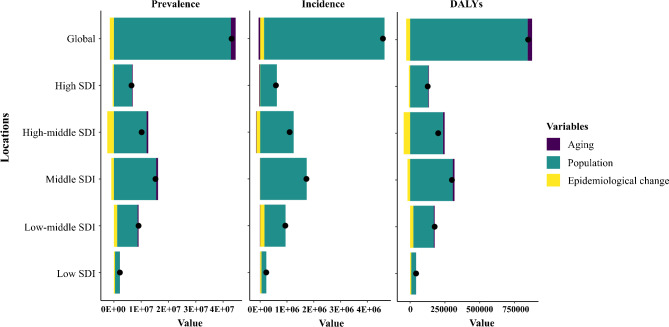
Methods: Leveraging the Global Burden of Disease, Injuries, and Risk Factors Study, we estimated the global epidemiological trends in the prevalence, incidence, and disability-adjusted life-years (DALYs) of BPH in 204 countries and 21 regions and 5 sociodemographic index (SDI) regions in males aged 60 years and over between 1990 and 2019. The average annual percentage changes (AAPCs) in age-specific rates were estimated to quantify overall trends. We estimated the contribution of population aging and epidemiological alterations in disease burden via composition analysis.
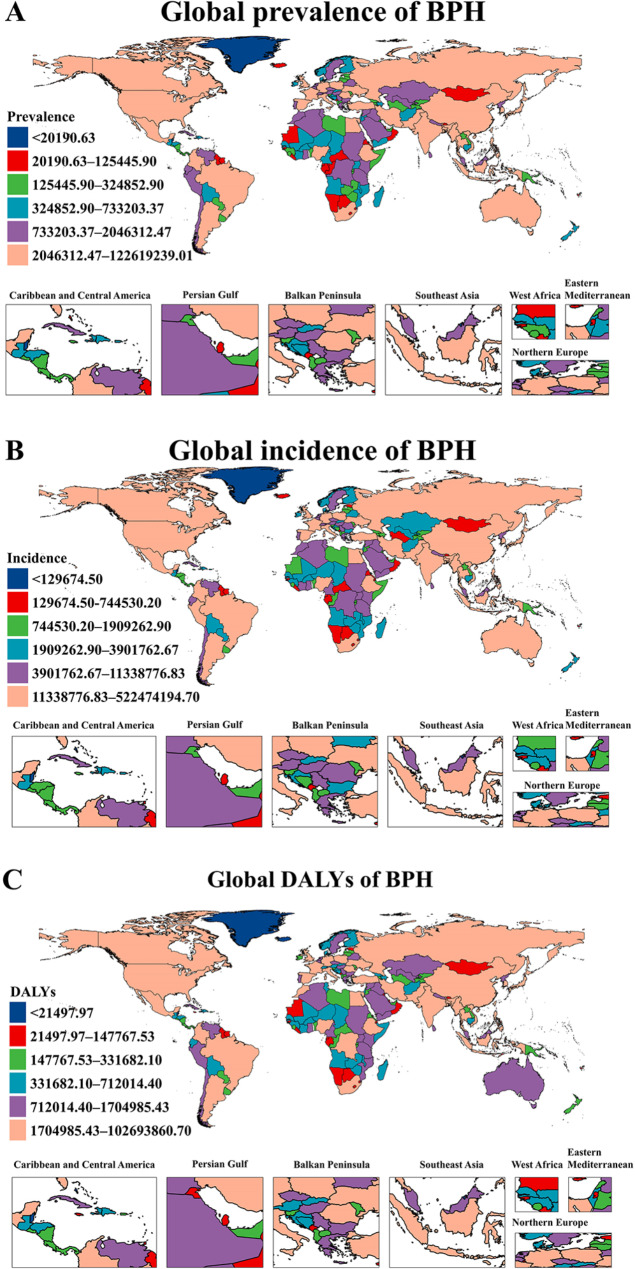
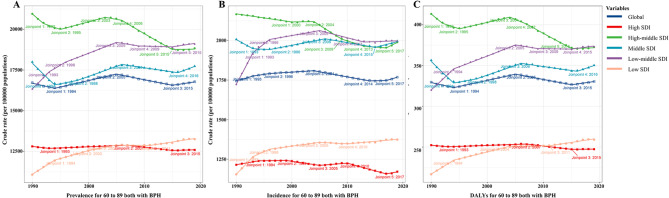
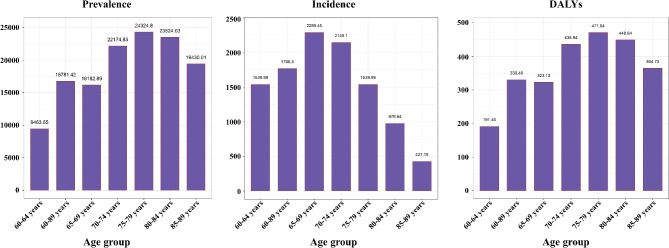
Results: Over the past three decades, the global prevalent cases, incident cases and DALYs of BPH have increased, ranging from 118.78 to 121.22%. The global number of prevalent BPH cases reached 79 million in people aged 60 years and older in 2019. The prevalence, incidence, and DALYs rates gradually increased, with AAPCs of 0.02, 0.02, and 0.01, respectively. Low-middle, middle, and low SDI regions experienced rapid increases in the number of prevalent cases of BPH. In 2019, China, India, and United States of America bore the largest burden of prevalent cases among people aged 60 years and over. The three regions with the highest prevalence rates of BPH were Eastern Europe, Central Latin America, and Andean Latin America. The increased prevalence was attributed to population growth (94.93%), epidemiological changes (3.45%), and aging (1.62%), globally.
Conclusions: BPH is a global health issue that imposes substantial economic burdens on most countries, particularly males aged 60 years and over. Effective health decisions are imperative for BPH prevention and treatment.
Keywords: Benign prostatic hyperplasia; Disability-adjusted life-years; Global disease burden; Incidence; Prevalence.
© 2024. The Author(s).
Conflict of interest statement
The authors declare no competing interests.
Figures
References
-
- Collaborators GBDBPH. The global, regional, and national burden of benign prostatic hyperplasia in 204 countries and territories from 2000 to 2019: a systematic analysis for the global burden of Disease Study 2019. Lancet Healthy Longev. 2022;3(11):e754–76. 10.1016/S2666-7568(22)00213-6 - DOI - PMC - PubMed
MeSH terms
LinkOut - more resources
Full Text Sources
Medical
Miscellaneous
