


Anxiety and Depression Associated With Increased Cardiovascular Disease Risk Through Accelerated Development of Risk Factors
- PMID: 39238850
- PMCID: PMC11375258
- DOI: 10.1016/j.jacadv.2024.101208
Anxiety and Depression Associated With Increased Cardiovascular Disease Risk Through Accelerated Development of Risk Factors
Abstract
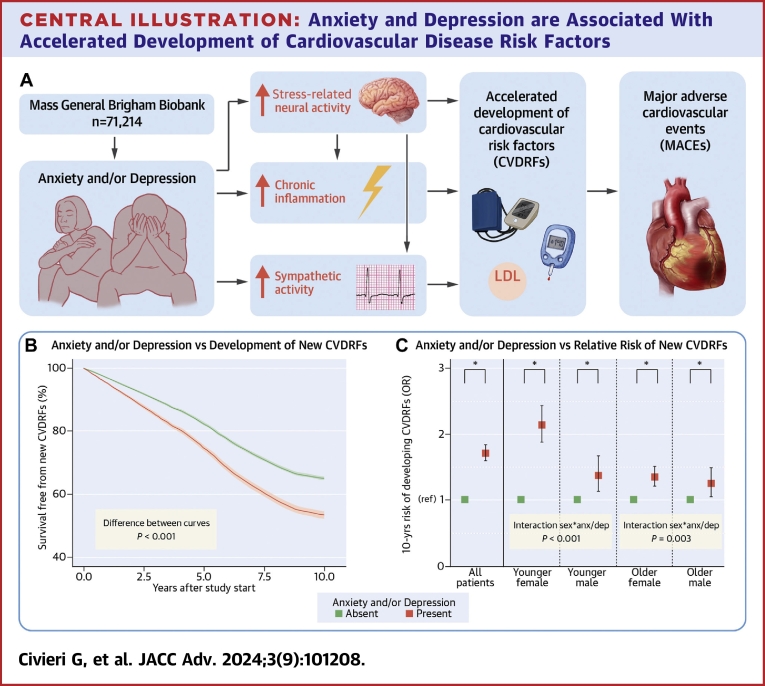
Background: Prior studies have incompletely assessed whether the development of cardiometabolic risk factors (CVDRF) (hypertension, hyperlipidemia, and diabetes mellitus) mediates the association between anxiety and depression (anxiety/depression) and cardiovascular disease (CVD).
Objectives: The authors aimed to evaluate the following: 1) the association between anxiety/depression and incident CVDRFs and whether this association mediates the increased CVD risk; and 2) whether neuro-immune mechanisms and age and sex effects may be involved.
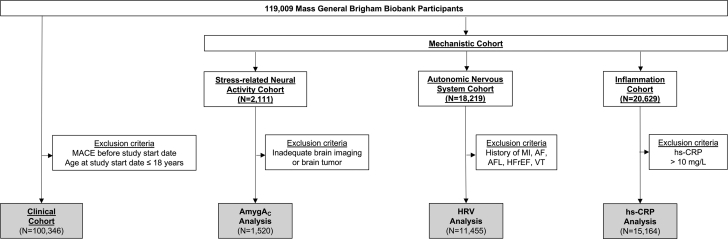
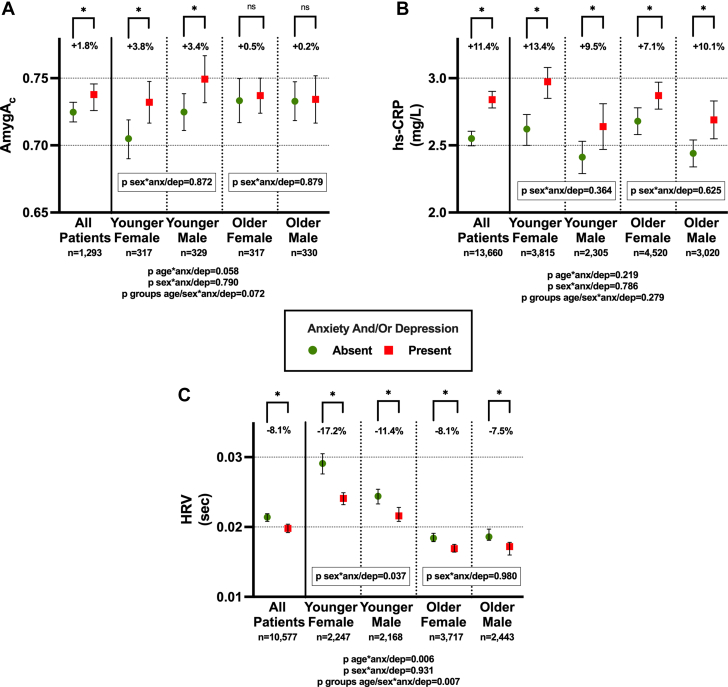
Methods: Using a retrospective cohort design, Mass General Brigham Biobank subjects were followed for 10 years. Presence and timing of anxiety/depression, CVDRFs, and CVD were determined using ICD codes. Stress-related neural activity, chronic inflammation, and autonomic function were measured by the assessment of amygdalar-to-cortical activity ratio, high-sensitivity CRP, and heart rate variability. Multivariable regression and mediation analyses were employed.
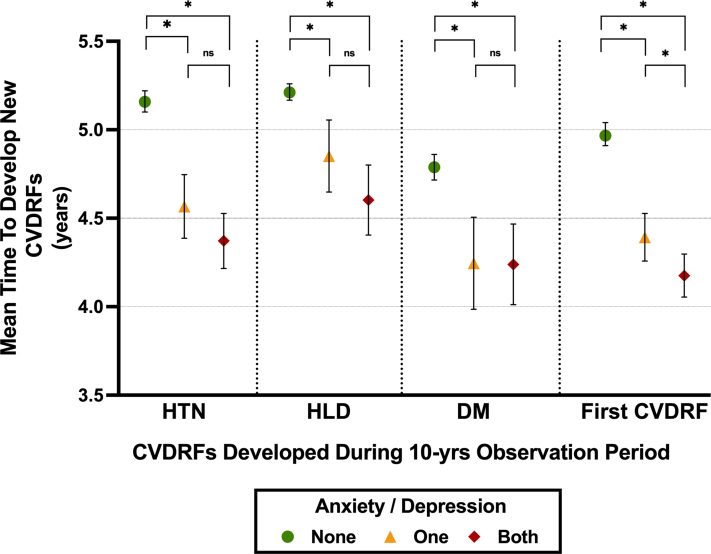
Results: Among 71,214 subjects (median age 49.6 years; 55.3% female), 27,048 (38.0%) developed CVDRFs during follow-up. Pre-existing anxiety/depression associated with increased risk of incident CVDRF (OR: 1.71 [95% CI: 1.59-1.83], P < 0.001) and with a shorter time to their development (β = -0.486 [95% CI: -0.62 to -0.35], P < 0.001). The development of CVDRFs mediated the association between anxiety/depression and CVD events (log-odds: 0.044 [95% CI: 0.034-0.055], P < 0.05). Neuro-immune pathways contributed to the development of CVDRFs (P < 0.05 each) and significant age and sex effects were noted: younger women experienced the greatest acceleration in the development of CVDRFs after anxiety/depression.
Conclusions: Anxiety/depression accelerate the development of CVDRFs. This association appears to be most notable among younger women and may be mediated by stress-related neuro-immune pathways. Evaluations of tailored preventive measures for individuals with anxiety/depression are needed to reduce CVD risk.
Keywords: amygdala; cardiometabolic; mental health; neuro immune; prevention; sex differences.
© 2024 The Authors.
Conflict of interest statement
Dr Osborne has received consulting fees from WCG Clinical for unrelated work; and is supported in part by NIH K23HL151909 and AHA 23SCISA1143491. Dr Tawakol’s institution has received grant support from Lung Biotechnologies for unrelated work. Dr Seligowski is supported in part by NIH MH125920. All other authors have reported that they have no relationships relevant to the contents of this paper to disclose.PerspectivesCOMPETENCY IN MEDICAL KNOWLEDGE: Important neuroimmune pathways underlie the association between anxiety, depression, and cardiovascular risk. Specific treatment of these pathways may reduce the cardiovascular risk associated with anxiety and depression. COMPETENCY IN PATIENT CARE: A close screening of cardiovascular risk factors should be performed in subjects with anxiety and depression. Younger female, although generally being at low risk of developing cardiovascular risk factors, are particularly susceptible to the cardiometabolic effects of anxiety and depression,
Figures
References
-
- Carney R.M., Freedland K.E. Depression and coronary heart disease. Nat Rev Cardiol. 2017;14:145–155. - PubMed
-
- Roest A.M., Martens E.J., de Jonge P., Denollet J. Anxiety and risk of incident coronary heart disease: a meta-analysis. J Am Coll Cardiol. 2010;56:38–46. - PubMed
-
- Golden S.H., Williams J.E., Ford D.E., et al. Depressive symptoms and the risk of type 2 diabetes: the Atherosclerosis Risk in Communities study. Diabetes Care. 2004;27:429–435. - PubMed
-
- Santos-Veloso M.A.O., Melo MISL de, Cavalcanti R.A.N., Bezerra L.S., Chaves-Markman Â.V., Lima SG de. Prevalence of depression and anxiety and their association with cardiovascular risk factors in Northeast Brasil primary care patients. Rev Assoc Med Bras. 2019;65:801–809. - PubMed
-
- Zhang W.-Y., Nan N., He Y., et al. Prevalence of depression and anxiety symptoms and their associations with cardiovascular risk factors in coronary patients. Psychol Health Med. 2022;28:1275–1287. - PubMed
Grants and funding
LinkOut - more resources
Full Text Sources
Research Materials
Miscellaneous
