


A Comprehensive Review of the Contemporary Methods for Enhancing Osseointegration and the Antimicrobial Properties of Titanium Dental Implants
- PMID: 39238921
- PMCID: PMC11376426
- DOI: 10.7759/cureus.68720
A Comprehensive Review of the Contemporary Methods for Enhancing Osseointegration and the Antimicrobial Properties of Titanium Dental Implants
Abstract
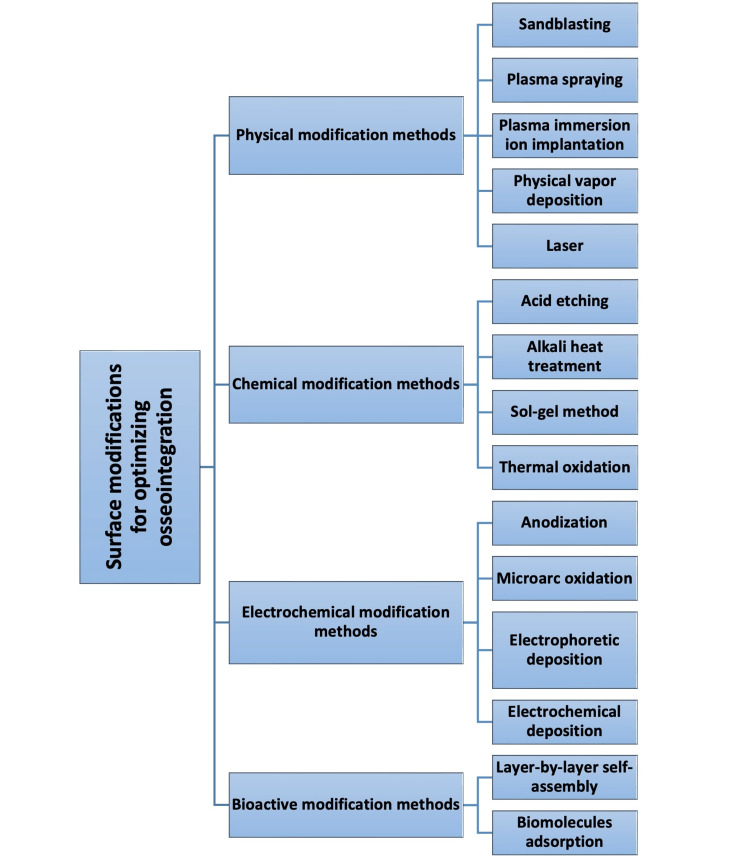
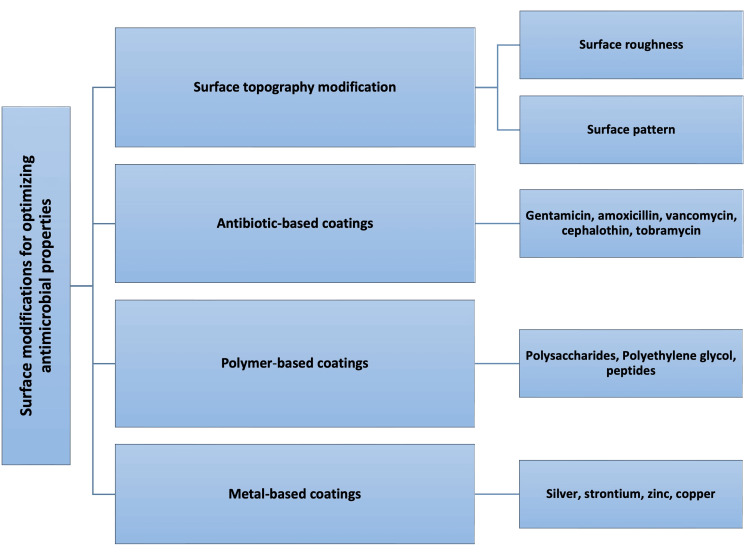
Titanium dental implants with various restorative options are popular for replacing missing teeth due to their comfortable fit, excellent stability, natural appearance, and impressive track record in clinical settings. However, challenges such as potential issues with osseointegration, peri-implant bone loss, and peri-implantitis might lead to implant failure, causing concern for patients and dental staff. Surface modification has the potential to significantly enhance the success rate of titanium implants and meet the needs of clinical applications. This involves the application of various physical, chemical, and bioactive coatings, as well as adjustments to implant surface topography, offering significant potential for enhancing implant outcomes in terms of osseointegration and antimicrobial properties. Many surface modification methods have been employed to improve titanium implants, showcasing the diversity of approaches in this field including sandblasting, acid etching, plasma spraying, plasma immersion ion implantation, physical vapor deposition, electrophoretic deposition, electrochemical deposition, anodization, microarc oxidation, laser treatments, sol-gel method, layer-by-layer self-assembly technology, and the adsorption of biomolecules. This article provides a comprehensive overview of the surface modification methods for titanium implants to address issues with insufficient osseointegration and implant-related infections. It encompasses the physical, chemical, and biological aspects of these methods to provide researchers and dental professionals with a robust resource to aid them in their study and practical use of dental implant materials, ensuring they are thoroughly knowledgeable and well-prepared for their endeavors.
Keywords: dental implant; implant osseointegration; implant surface modification; peri-implantitis; titanium.
Copyright © 2024, Bakitian et al.
Conflict of interest statement
Conflicts of interest: In compliance with the ICMJE uniform disclosure form, all authors declare the following: Payment/services info: All authors have declared that no financial support was received from any organization for the submitted work. Financial relationships: All authors have declared that they have no financial relationships at present or within the previous three years with any organizations that might have an interest in the submitted work. Other relationships: All authors have declared that there are no other relationships or activities that could appear to have influenced the submitted work.
Figures
References
-
- Patient satisfaction 8-14 years after dental implant therapy - a questionnaire study. Adler L, Liedholm E, Silvegren M, Modin C, Buhlin K, Jansson L. Acta Odontol Scand. 2016;74:423–429. - PubMed
-
- Dental implants: a review. Guillaume B. Morphologie. 2016;100:189–198. - PubMed
-
- Comparison of the use of titanium-zirconium alloy and titanium alloy in dental implants: a systematic review and meta-analysis. Cruz RS, Lemos CA, Oliveira HF, de Souza Batista VE, Pellizzer EP, Verri FR. J Oral Implantol. 2018;44:305–312. - PubMed
Publication types
LinkOut - more resources
Full Text Sources