


Development of a Core Outcome Set for Studies Assessing Interventions for Diabetes-Related Foot Ulceration
- PMID: 39240785
- PMCID: PMC11502534
- DOI: 10.2337/dc24-1112
Development of a Core Outcome Set for Studies Assessing Interventions for Diabetes-Related Foot Ulceration
Abstract
Objective: Diabetes affects 537 million people globally, with 34% expected to develop foot ulceration in their lifetime. Diabetes-related foot ulceration causes strain on health care systems worldwide, necessitating provision of high-quality evidence to guide their management. Given heterogeneity of reported outcomes, a core outcome set (COS) was developed to standardize outcome measures in studies assessing treatments for diabetes-related foot ulceration.
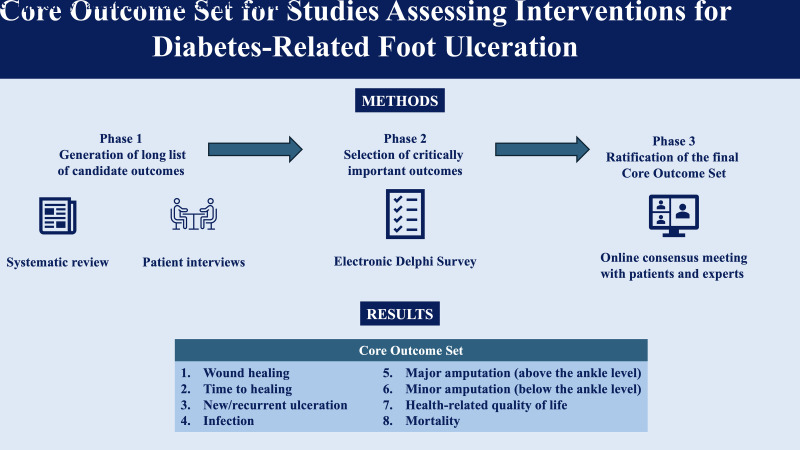
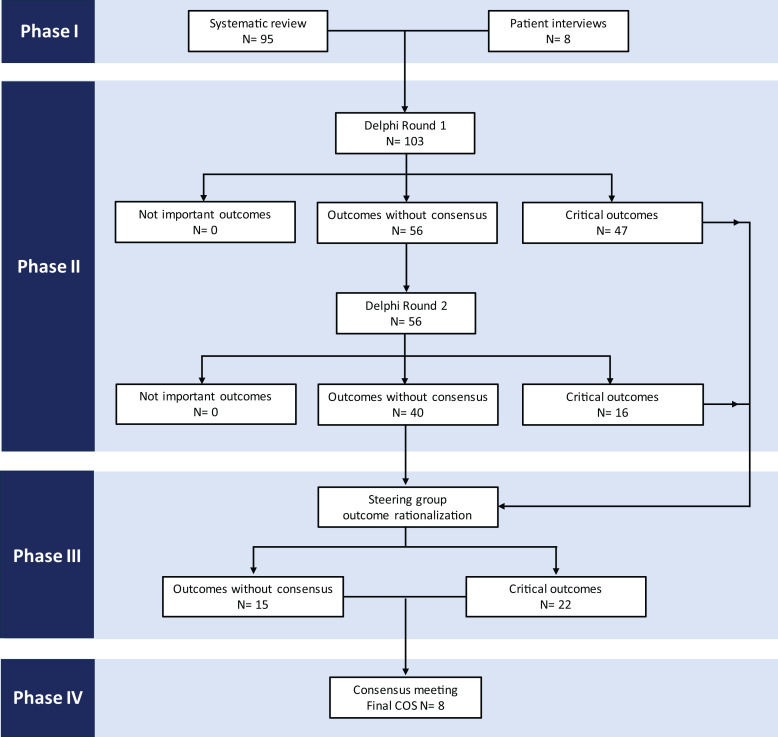
Research design and methods: The COS was developed using Core Outcome Measures in Effectiveness Trials (COMET) methodology. A systematic review and patient interviews generated a long list of outcomes that were rated by patients and experts using a nine-point Likert scale (from 1 [not important] to 9 [critical]) in the first round of the Delphi survey. Based on predefined criteria, outcomes without consensus were reprioritized in a second Delphi round. Critical outcomes and those without consensus after two Delphi rounds were discussed in the consensus meeting where the COS was ratified.
Results: The systematic review and patient interviews generated 103 candidate outcomes. The two consecutive Delphi rounds were completed by 336 and 176 respondents, resulting in an overall second round response rate of 52%. Of 37 outcomes discussed in the consensus meeting (22 critical and 15 without consensus after the second round), 8 formed the COS: wound healing, time to healing, new/recurrent ulceration, infection, major amputation, minor amputation, health-related quality of life, and mortality.
Conclusions: The proposed COS for studies assessing treatments for diabetes-related foot ulceration was developed using COMET methodology. Its adoption by the research community will facilitate assessment of comparative effectiveness of current and evolving interventions.
© 2024 by the American Diabetes Association.
Conflict of interest statement
Figures
References
-
- International Diabetes Association . IDF Diabetes Atlas. 10th ed. Accessed 11 April 2024. Available from https://www.diabetesatlas.org
-
- Ahmad N, Thomas GN, Gill P, Torella F. The prevalence of major lower limb amputation in the diabetic and non-diabetic population of England 2003–2013. Diab Vasc Dis Res 2016;13:348–353 - PubMed
-
- Armstrong DG, Boulton AJM, Bus SA. Diabetic foot ulcers and their recurrence. N Engl J Med 2017;376:2367–2375 - PubMed
-
- Kerr M, Barron E, Chadwick P, et al. The cost of diabetic foot ulcers and amputations to the National Health Service in England. Diabet Med 2019;36:995–1002 - PubMed
Publication types
MeSH terms
LinkOut - more resources
Full Text Sources
Medical
