


Unveiling the Exodus: A scoping review of attrition in allied health
- PMID: 39240875
- PMCID: PMC11379274
- DOI: 10.1371/journal.pone.0308302
Unveiling the Exodus: A scoping review of attrition in allied health
Abstract
Background: Efficient utilisation of allied health workforce may help address the predicted shortfall of 18 million health workers estimated by 2030. Knowledge about allied health professionals' attrition, or intention to leave, and factors influencing attrition can assist in developing evidence-informed strategies to mitigate this issue. The review aimed to map attrition and attrition intention rates, and its attributing factors for allied health professions worldwide.
Methods: Adhering to the PRISMA-ScR guidelines, a comprehensive search was conducted across academic databases (PsycINFO, MEDLINE, Embase, Emcare, CINAHL, Scopus, and the Cochrane Library database) and grey literature (Google, Google Scholar, organisational websites). Two reviewers independently undertook a two-stage screening process along with data extraction using customised data extraction forms. A narrative synthesis was used to synthesise the data.
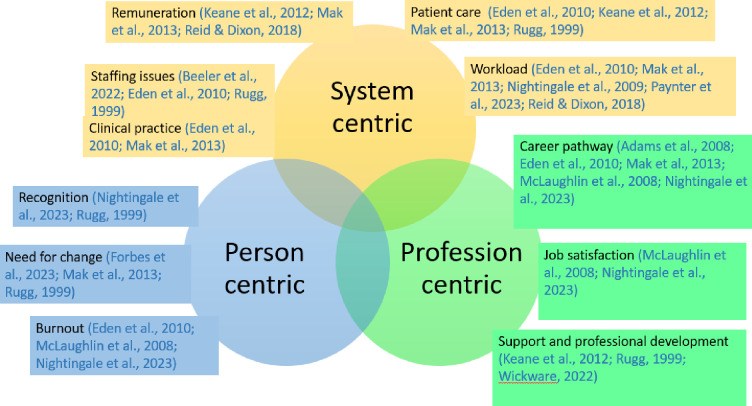
Results: Thirty-two studies published between 1990 and 2024 were included. Attrition rates ranged from 0.5% to 41% across allied health disciplines. Pharmacists demonstrated the lowest attrition rates, while audiologists reported the highest. Radiographers reported the lowest intent to leave at 7.6%, while occupational therapists showed highest intent to leave, ranging from 10.7% to 74.1%. The analysis revealed three recurring themes contributing to attrition: profession-centric factors (e.g., career progression, job satisfaction, support, and professional growth), systemic-centric factors (e.g., compensation, staffing challenges, clinical practices, patient care, workload), and individual-centric factors (e.g., recognition, the need for change, and burnout).
Conclusion: Attrition in allied health remains a significant challenge. Addressing this issue requires a systemic, nuanced, and evidence-based approach, given the complex, interlinked, and multifaceted factors contributing to attrition. The younger workforce, characterized by changing generational values, necessitates innovative thinking, intersectoral collaboration, and the potential for co-created solutions with, for, and by the allied health workforce.
Copyright: © 2024 Yeoh et al. This is an open access article distributed under the terms of the Creative Commons Attribution License, which permits unrestricted use, distribution, and reproduction in any medium, provided the original author and source are credited.
Conflict of interest statement
The authors have declared that no competing interests exist.
Figures
References
-
- Philip K. 2 Allied health: untapped potential in the Australian health system. Aust Health Rev. 2015;39(3):244–7. - PubMed
-
- Kumar S, Haji AMS, Abdullah SN, Han BL. Quality health care in Brunei Darussalam: The growing impact of allied health professions. Brunei International Medical Journal. 2015.
Publication types
MeSH terms
LinkOut - more resources
Full Text Sources
