


The replication crisis has led to positive structural, procedural, and community changes
- PMID: 39242883
- PMCID: PMC11290608
- DOI: 10.1038/s44271-023-00003-2
The replication crisis has led to positive structural, procedural, and community changes
Abstract
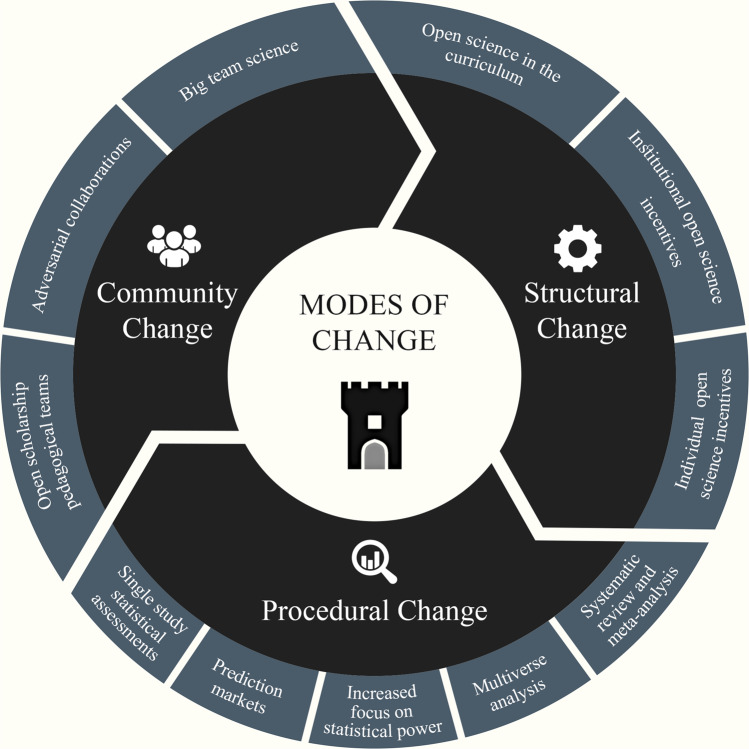
The emergence of large-scale replication projects yielding successful rates substantially lower than expected caused the behavioural, cognitive, and social sciences to experience a so-called 'replication crisis'. In this Perspective, we reframe this 'crisis' through the lens of a credibility revolution, focusing on positive structural, procedural and community-driven changes. Second, we outline a path to expand ongoing advances and improvements. The credibility revolution has been an impetus to several substantive changes which will have a positive, long-term impact on our research environment.
© 2023. The Author(s).
Conflict of interest statement
This work is as an initiative from The Framework for Open and Reproducible Research Training (FORRT;
Figures
References
-
- Wagenmakers, E.-J., Wetzels, R., Borsboom, D. & Van Der Maas, H. L. Why psychologists must change the way they analyze their data: the case of psi: comment on Bem (2011). JPSP. 100, 426–432 (2011). - PubMed
-
- Open Science Collaboration. Estimating the reproducibility of psychological science. Science349, aac4716 (2015). This study was one of the first large-scale replication projects showing lower replication rates and smaller effect sizes among “successful” replicated findings. 10.1126/science.aac4716 - DOI - PubMed
Publication types
LinkOut - more resources
Full Text Sources
Medical