


MRI radiomics and biological correlations for predicting axillary lymph node burden in early-stage breast cancer
- PMID: 39243024
- PMCID: PMC11378375
- DOI: 10.1186/s12967-024-05619-4
MRI radiomics and biological correlations for predicting axillary lymph node burden in early-stage breast cancer
Abstract
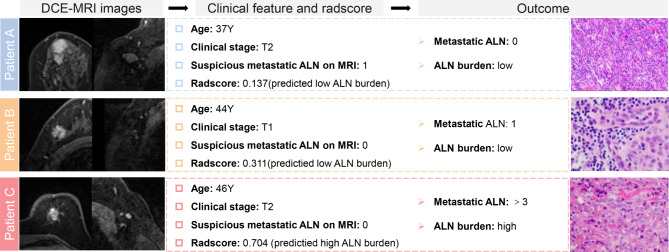
Background and aims: Preoperative prediction of axillary lymph node (ALN) burden in patients with early-stage breast cancer is pivotal for individualised treatment. This study aimed to develop a MRI radiomics model for evaluating the ALN burden in early-stage breast cancer and to provide biological interpretability to predictions by integrating radiogenomic data.
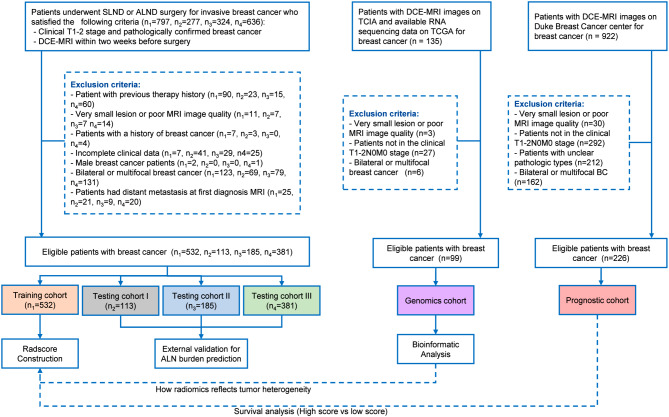
Methods: This study retrospectively analyzed 1211 patients with early-stage breast cancer from four centers, supplemented by data from The Cancer Imaging Archive (TCIA) and Duke University (DUKE). MRI radiomic features were extracted from dynamic contrast-enhanced MRI images and an ALN burden-related radscore was constructed by the backpropagation neural network algorithm. Clinical and combined models were developed, integrating ALN-related clinical variables and radscore. The Kaplan-Meier curve and log-rank test were used to assess the prognostic differences between the predicted high- and low-ALN burden groups in both Center I and DUKE cohorts. Gene set enrichment and immune infiltration analyses based on transcriptomic TCIA and TCIA Breast Cancer dataset were used to investigate the biological significance of the ALN-related radscore.
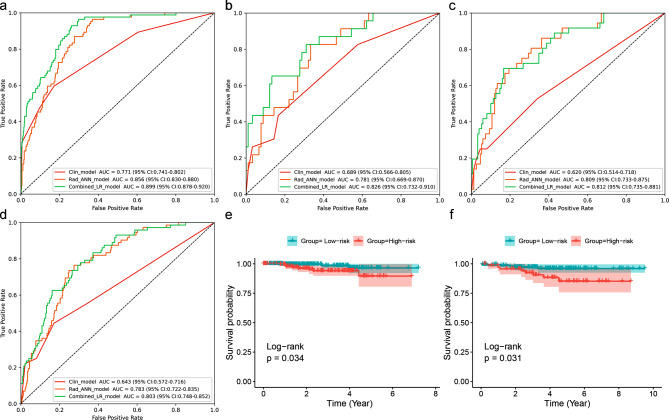
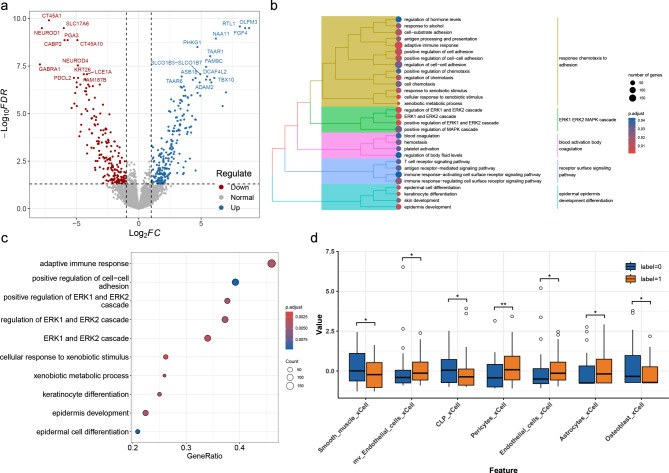
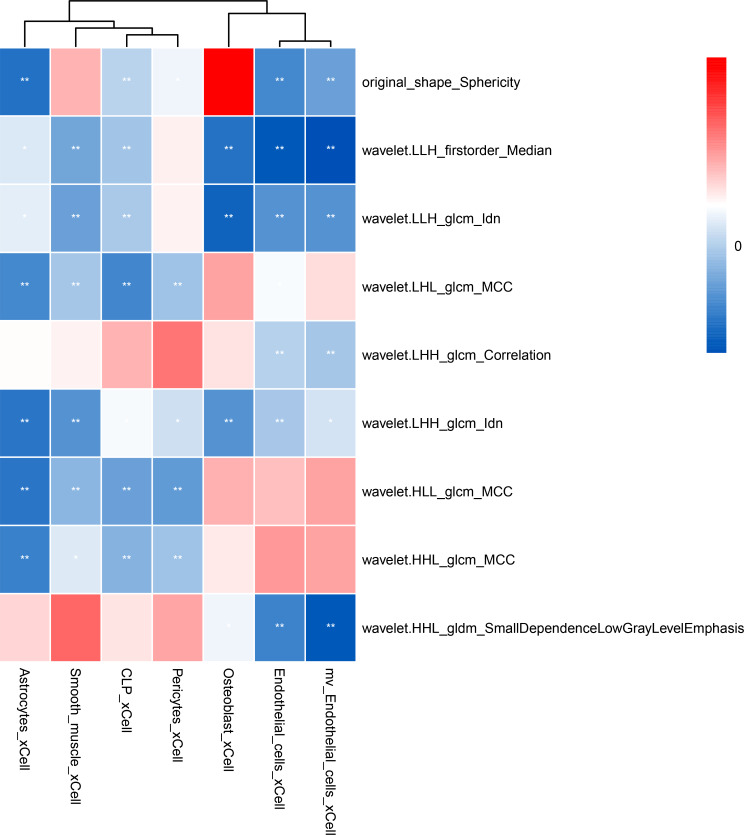
Results: The MRI radiomics model demonstrated an area under the curve of 0.781-0.809 in three validation cohorts. The predicted high-risk population demonstrated a poorer prognosis (log-rank P < .05 in both cohorts). Radiogenomic analysis revealed migration pathway upregulation and cell differentiation pathway downregulation in the high radscore groups. Immune infiltration analysis confirmed the ability of radiological features to reflect the heterogeneity of the tumor microenvironment.
Conclusions: The MRI radiomics model effectively predicted the ALN burden and prognosis of early-stage breast cancer. Moreover, radiogenomic analysis revealed key cellular and immune patterns associated with the radscore.
Keywords: Axillary lymph node; Breast cancer; Genomics; Magnetic resonance imaging; Radiomic.
© 2024. The Author(s).
Conflict of interest statement
The authors declare that they have no competing interests.
Figures
References
-
- Tinterri C, Gentile D, Gatzemeier W, et al. Preservation of Axillary Lymph Nodes Compared with complete dissection in T1-2 breast Cancer patients presenting one or two metastatic Sentinel Lymph nodes: the SINODAR-ONE Multicenter Randomized Clinical Trial. Ann Surg Oncol. 2022;29:5732–44. 10.1245/s10434-022-11866-w. 10.1245/s10434-022-11866-w - DOI - PubMed
MeSH terms
Grants and funding
- 2023KY338/Medical Science and Technology Project of Zhejiang Province
- 2024KY454/Medical Science and Technology Project of Zhejiang Province
- 2024KY1200/Medical Science and Technology Project of Zhejiang Province
- 2023AD31065/Science and Technology Bureau of Jiaxing City
- 2024AY100126/Science and Technology Bureau of Jiaxing City
LinkOut - more resources
Full Text Sources
Medical
