


Association between surgical admissions, cognition, and neurodegeneration in older people: a population-based study from the UK Biobank
- PMID: 39245058
- PMCID: PMC11460833
- DOI: 10.1016/j.lanhl.2024.07.006
Association between surgical admissions, cognition, and neurodegeneration in older people: a population-based study from the UK Biobank
Abstract
Background: Previous studies have shown that major surgical and medical hospital admissions are associated with cognitive decline in older people (aged 40-69 years at recruitment), which is concerning for patients and caregivers. We aimed to validate these findings in a large cohort and investigate associations with neurodegeneration using MRI.
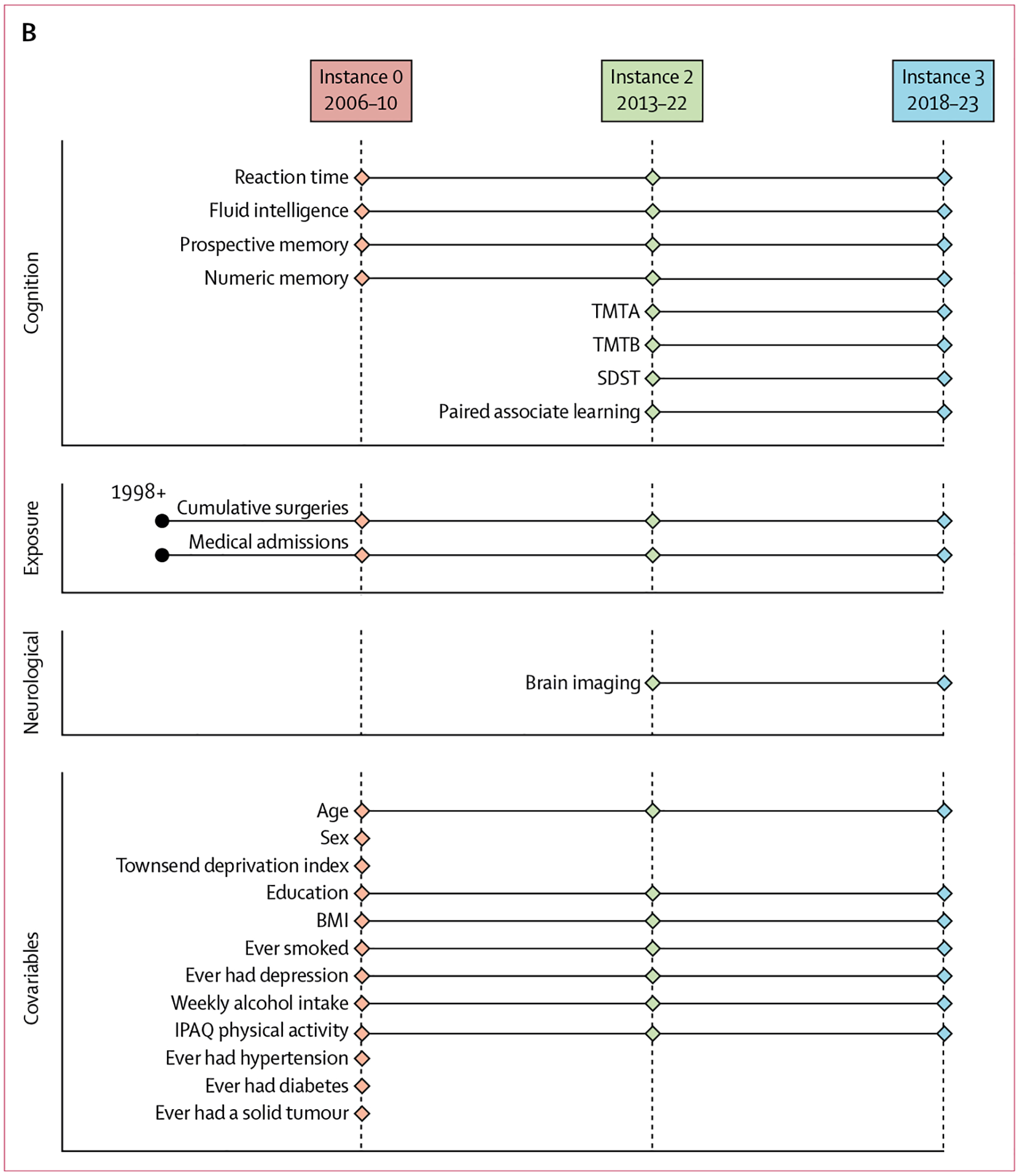
Methods: For this population-based study, we analysed data from the UK Biobank collected from March 13, 2006, to July 16, 2023, linked to the National Health Service Hospital Episode Statistics database, excluding participants with dementia diagnoses. We constructed fully adjusted models that included age, time, sex, Lancet Commission dementia risk factors, stroke, and hospital admissions with a participant random effect. Primary outcomes were hippocampal volume and white matter hyperintensities, both of which are established markers of neurodegeneration, and exploratory analyses investigated the cortical thickness of Desikan-Killiany-Tourville atlas regions. The main cognitive outcomes were reaction time, fluid intelligence, and prospective and numeric memory. Surgeries were calculated cumulatively starting from 8 years before the baseline evaluation.
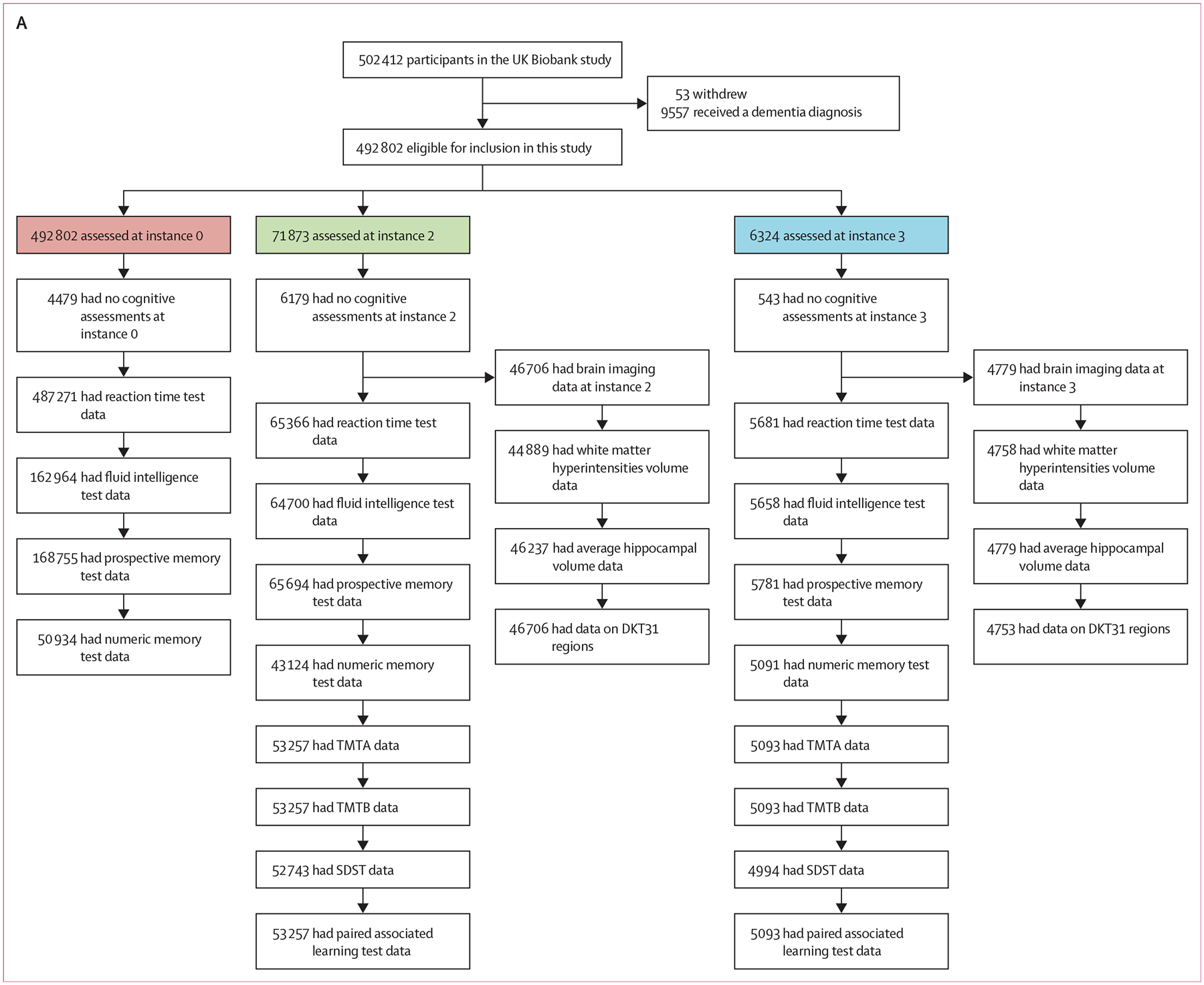
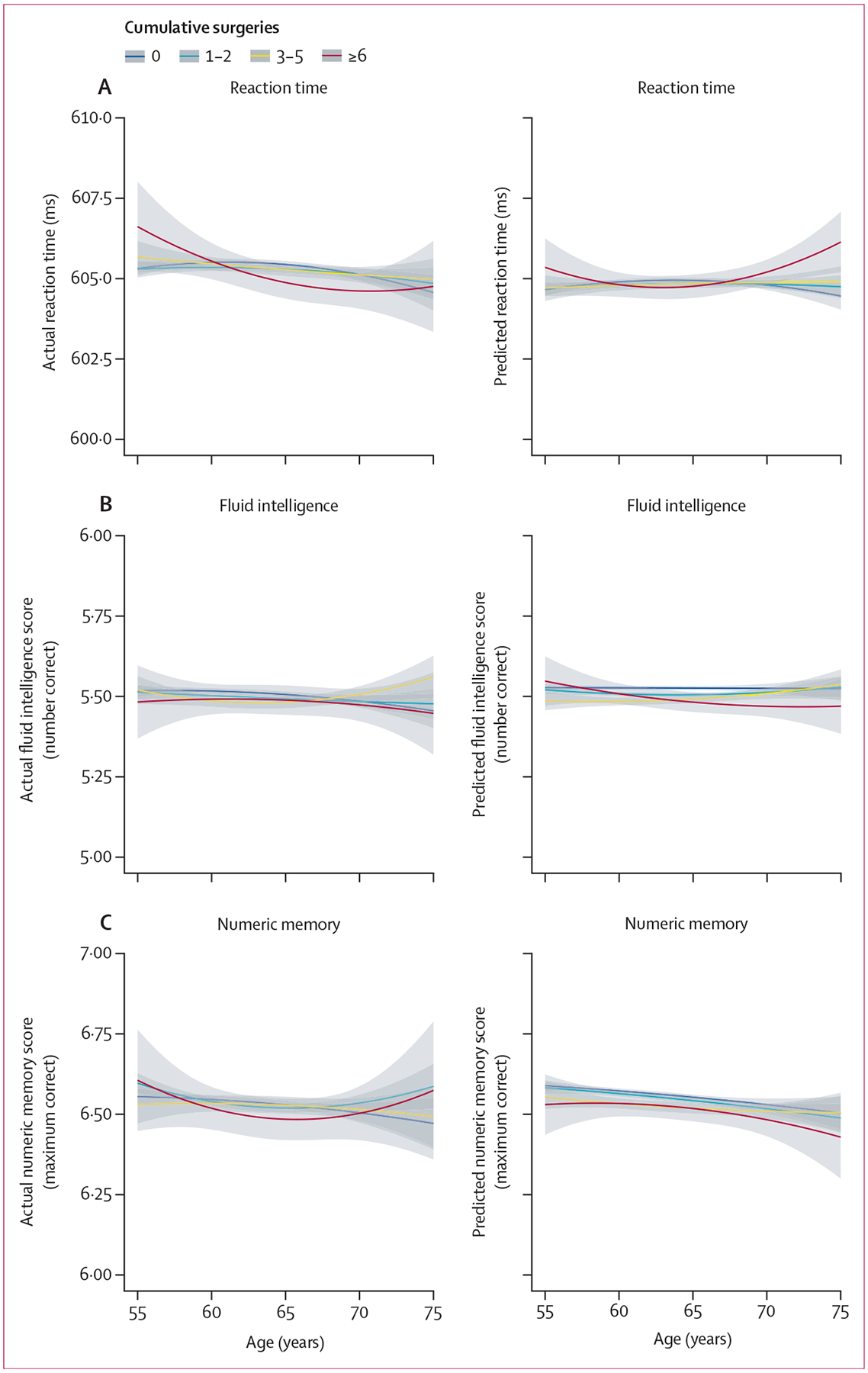
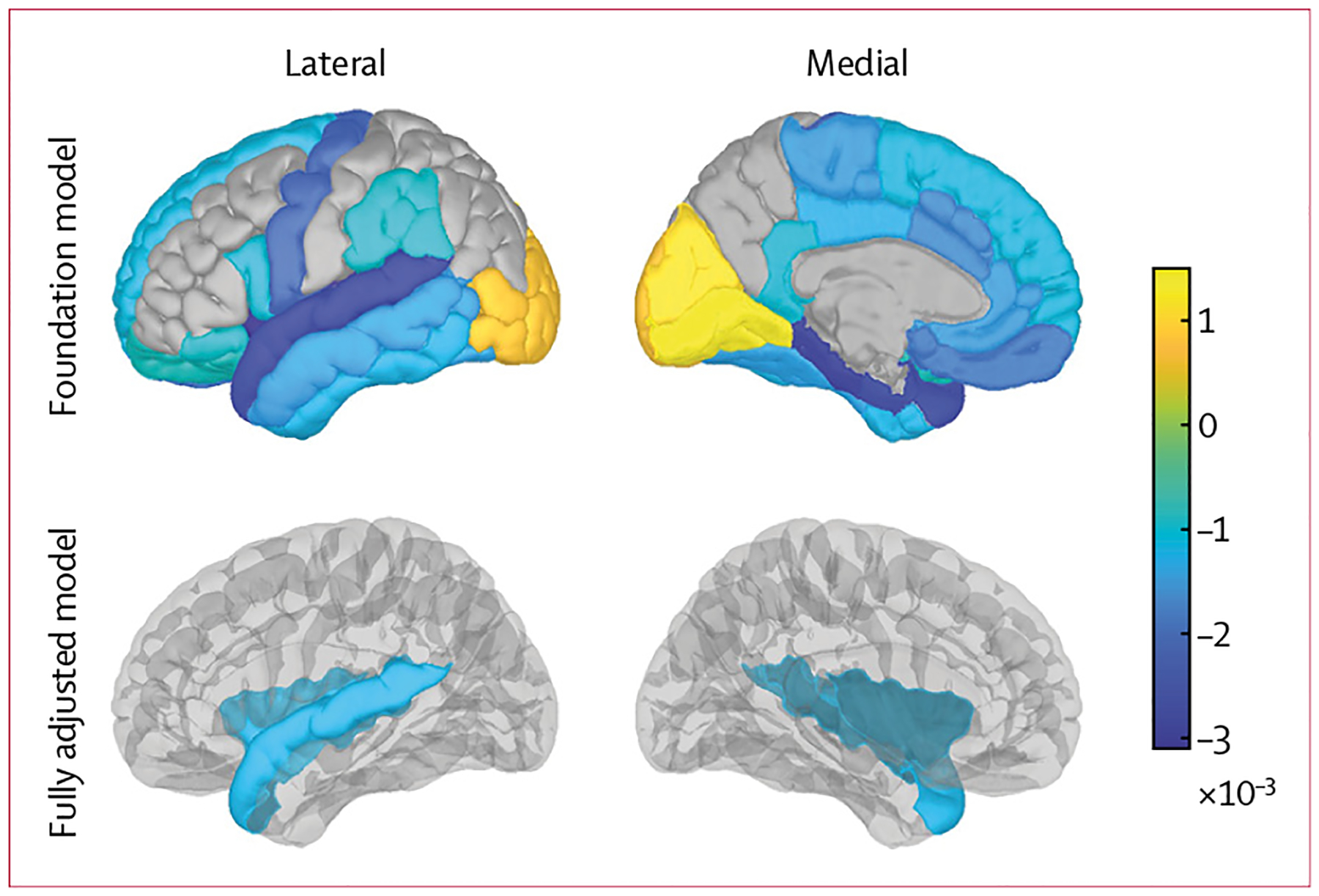
Findings: Of 502 412 participants in the UK Biobank study, 492 802 participants were eligible for inclusion in this study, of whom 46 706 underwent MRI. Small adverse associations with cognition were found per surgery: reaction time increased by 0·273 ms, fluid intelligence score decreased by 0·057 correct responses, prospective memory (scored as correct at first attempt) decreased (odds ratio 0·96 [95% CI 0·95 to 0·97]), and numeric memory maximum correct matches decreased by 0·025 in fully adjusted models. Surgeries were associated with smaller hippocampal volume (β=-5·76 mm³ [-7·89 to -3·64]) and greater white matter hyperintensities volume (β=100·02 mm³ [66·17 to 133·87]) in fully adjusted models. Surgeries were also associated with neurodegeneration of the insula and superior temporal cortex.
Interpretation: This population-based study corroborates that surgeries are generally safe but cumulatively are associated with cognitive decline and neurodegeneration. Perioperative brain health should be prioritised for older and vulnerable patients, particularly those who have multiple surgical procedures.
Funding: The Australian and New Zealand College of Anaesthetists (ANZCA) Foundation and the University of Sydney.
Copyright © 2024 The Author(s). Published by Elsevier Ltd.. All rights reserved.
Conflict of interest statement
Declaration of interests RDS and RL received support from US National Institutes of Health (NIH) grant R01 AG063849-01. CC received support from NIH R01 HD098202-02 and NIH R01 NS117901-01. SN declares consulting fees from Eisai, Roche, and Nutrica Pharmaceuticals. All other authors declare no competing interests.
Figures
References
-
- Fowler AJ, Abbott TEF, Prowle J, Pearse RM. Age of patients undergoing surgery. Br J Surg 2019; 106: 1012–18. - PubMed
-
- Rowley P, Boncyk C, Gaskell A, et al. What do people expect of general anaesthesia? Br J Anaesth 2017; 118: 486–88. - PubMed
-
- Guo LY, Kaustov L, Brenna CTA, et al. Cognitive deficits after general anaesthesia in animal models: a scoping review. Br J Anaesth 2023; 130: e351–60. - PubMed
MeSH terms
Grants and funding
LinkOut - more resources
Full Text Sources
Medical
