


Transcutaneous vagus nerve stimulation has no anti-inflammatory effect in diabetes
- PMID: 39251831
- PMCID: PMC11385211
- DOI: 10.1038/s41598-024-72139-y
Transcutaneous vagus nerve stimulation has no anti-inflammatory effect in diabetes
Abstract
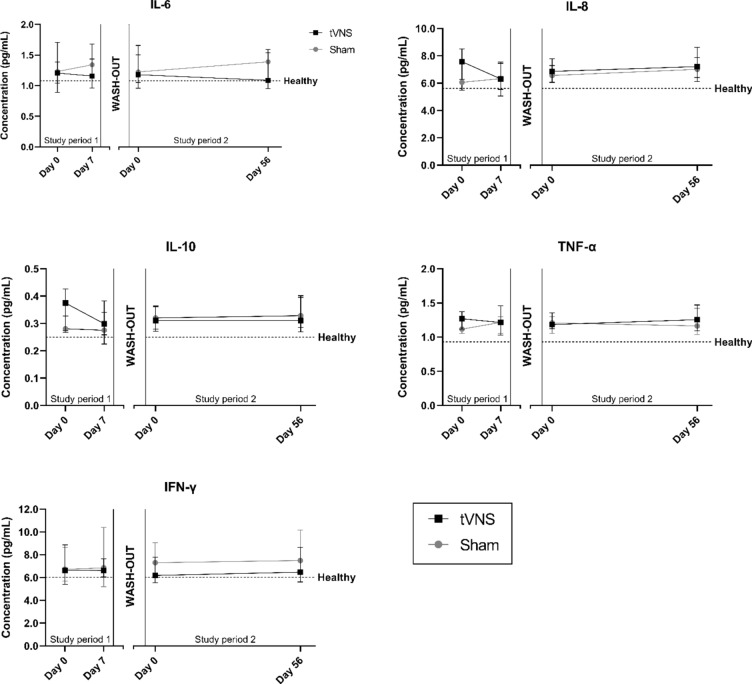
Chronic inflammation is associated with diabetes and contributes to the development and progression of micro- and macrovascular complications. Transcutaneous vagus nerve stimulation (tVNS) has been proposed to reduce levels of circulating inflammatory cytokines in non-diabetics by activating the cholinergic anti-inflammatory pathway. We investigated the anti-inflammatory potential of tVNS as a secondary endpoint of a randomized controlled trial in people with diabetes (NCT04143269). 131 people with diabetes (type 1: n = 63; type 2: n = 68), gastrointestinal symptoms and various degrees of autonomic neuropathy were included and randomly assigned to self-administer active (n = 63) or sham (n = 68) tVNS over two successive study periods: (1) Seven days with four daily administrations and, (2) 56 days with two daily administrations. Levels of systemic inflammatory cytokines (IL-6, IL-8, IL-10, TNF-α, IFN-γ) were quantified from blood samples by multiplex technology. Information regarding age, sex, diabetes type, and the presence of cardiac autonomic neuropathy (CAN) was included in the analysis as possible confounders. No differences in either cytokine were seen after study period 1 and 2 between active and sham tVNS (all p-values > 0.08). Age, sex, diabetes type, presence of CAN, and baseline levels of inflammatory cytokines were not associated with changes after treatment (all p-values > 0.07). A tendency towards slight reductions in TNF-α levels after active treatment was observed in those with no CAN compared to those with early or manifest CAN (p = 0.052). In conclusion, tVNS did not influence the level of systemic inflammation in people with diabetes.
Keywords: Autonomic neuropathy; Diabetes; Inflammation; Vagus nerve stimulation.
© 2024. The Author(s).
Conflict of interest statement
All other authors have no competing interests to declare.
Figures
References
Publication types
MeSH terms
Substances
Grants and funding
LinkOut - more resources
Full Text Sources
