


MicroRNA-650 promotes melanoma metastasis via targeting inhibitor of growth family member 4
- PMID: 39253208
- PMCID: PMC11382039
- DOI: 10.1016/j.heliyon.2024.e36199
MicroRNA-650 promotes melanoma metastasis via targeting inhibitor of growth family member 4
Abstract
Objective: This study aimed to evaluate the effects of microRNA-650 (miR-650) on melanoma metastasis and reveal the regulatory relationship between miR-650 and the inhibitor of growth family member 4 (ING4).
Methods: miR-650 expression was determined in human melanoma WM115 and A-375 cells. WM115 cells were transfected with miR-650 mimic or mimic control. The invasion and migration abilities of transfected WM115 cells were analyzed using Transwell and wound healing assays, respectively. Then, miR-650-overexpression lentivirus vector was constructed and transfected into WM115 cells. After injection into the mice, the number of micro-metastatic foci in the lung tissues was counted. A regulatory relationship between miR-650 and ING4 was identified in WM115 and A-375 cells.
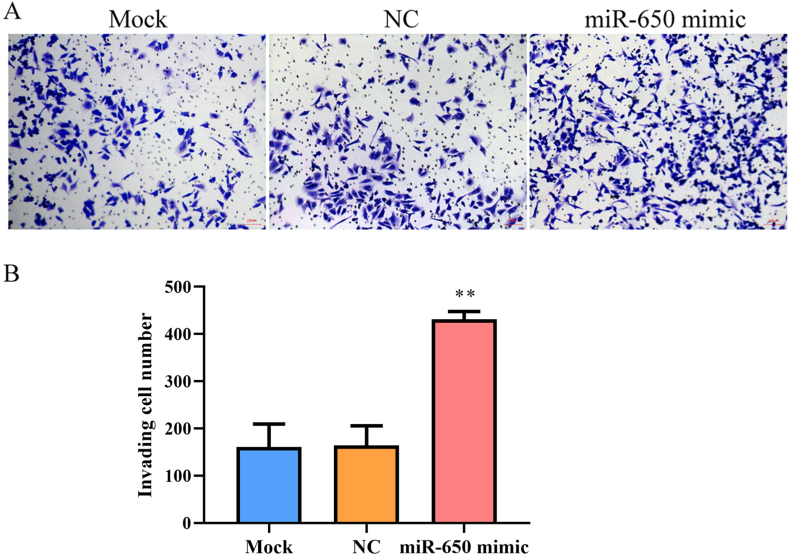
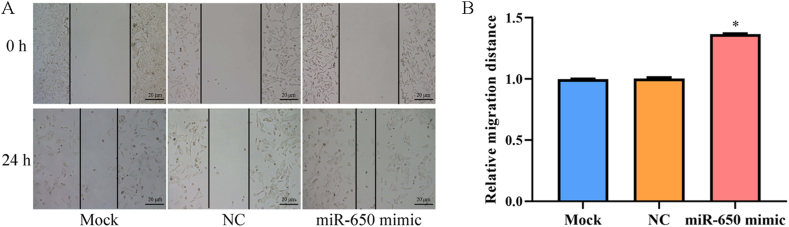
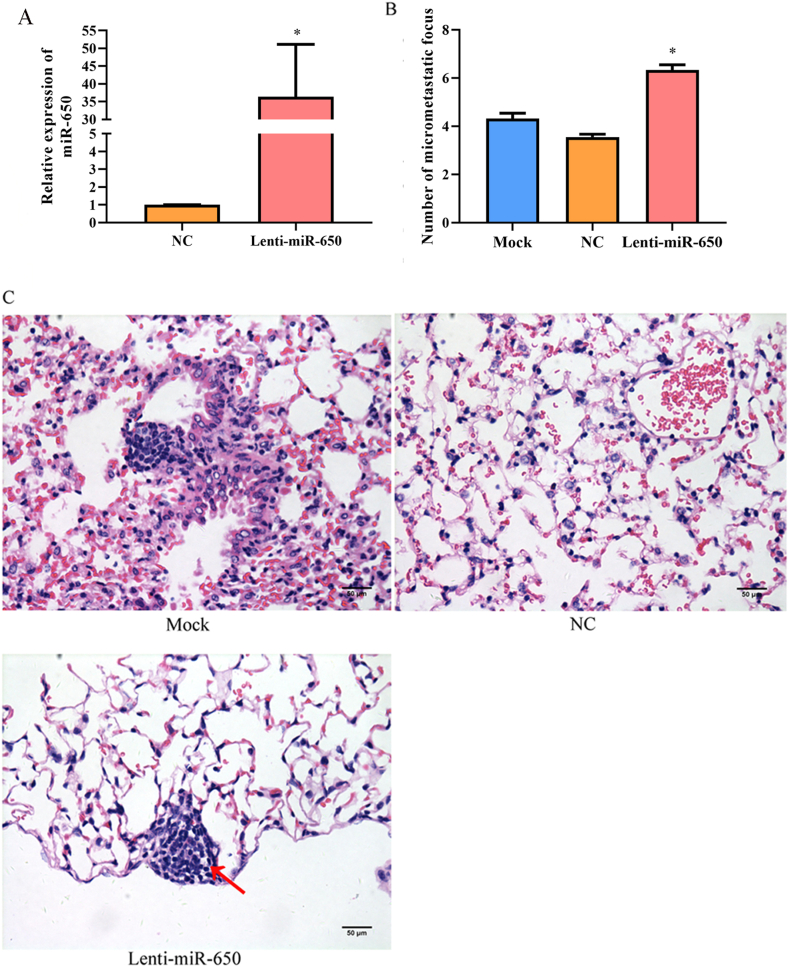
Results: The miR-650 expression was upregulated in WM115 and A-375 cells. WM115 cells transfected with the miR-650 mimic exhibited higher invasive and migratory abilities than mock cells or cells transfected with negative control (NC). The number of micro-metastatic foci was significantly higher in mice injected with Lenti-miR-650 than that in those injected with mock or NC controls. Transfection with miR-650 mimic observably inhibited the expression of ING4 in WM115 and A-375 cells, whereas transfection with miR-650 inhibitor had the opposite effect. Dual-luciferase reporter gene assay showed that the miR-650 mimic inhibited the luciferase activity of ING4.
Conclusion: miR-650 promotes melanoma metastasis by downregulating ING4 expression.
Keywords: ING4; Melanoma; Metastasis; miR-650.
© 2024 The Authors.
Conflict of interest statement
The authors declare that they have no known competing financial interests or personal relationships that could have appeared to influence the work reported in this paper.
Figures


References
-
- Leiter U., Buettner P.G., Eigentler T.K., Bröcker E.B., Voit C., Gollnick H., et al. Hazard rates for recurrent and secondary cutaneous melanoma: an analysis of 33,384 patients in the German Central Malignant Melanoma Registry. J. Am. Acad. Dermatol. 2012;66(1):37–45. - PubMed
LinkOut - more resources
Full Text Sources
