


Hepatic and immune modulatory effectiveness of lactoferrin loaded Selenium nanoparticles on bleomycin induced hepatic injury
- PMID: 39256408
- PMCID: PMC11387485
- DOI: 10.1038/s41598-024-70894-6
Hepatic and immune modulatory effectiveness of lactoferrin loaded Selenium nanoparticles on bleomycin induced hepatic injury
Abstract
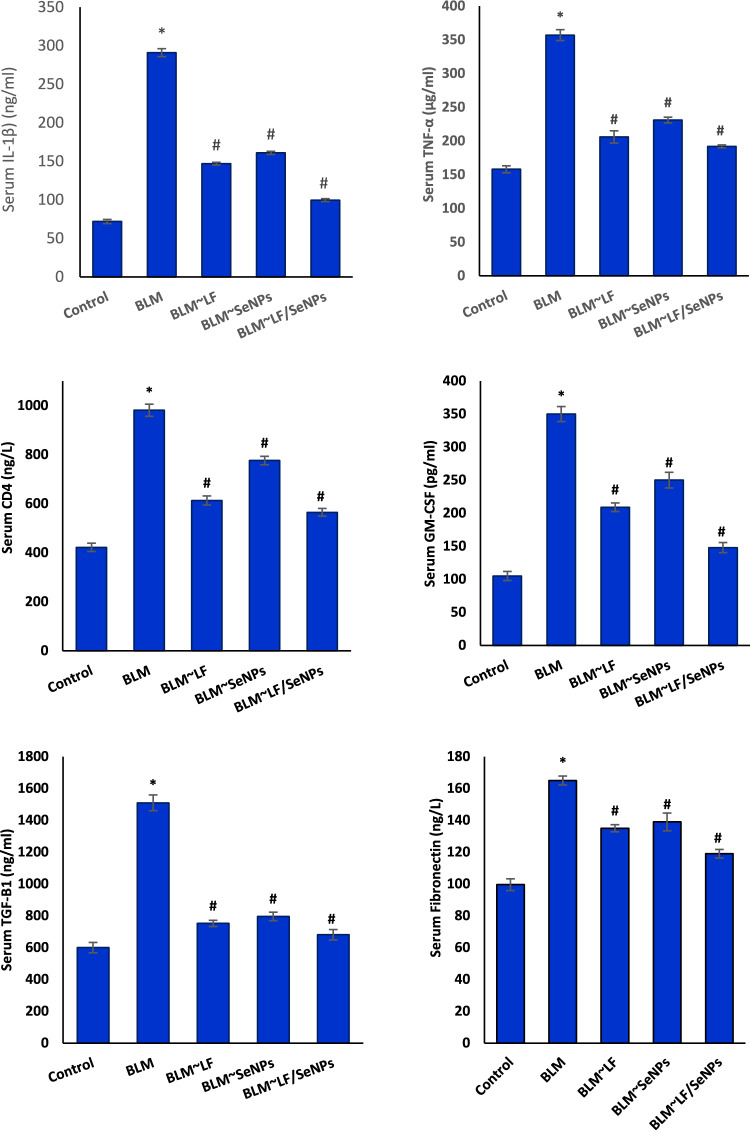
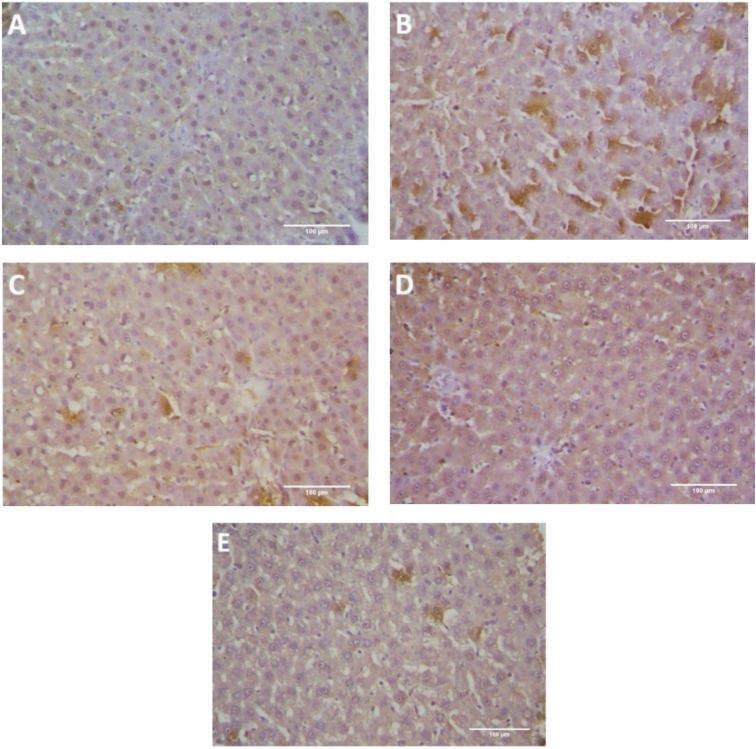
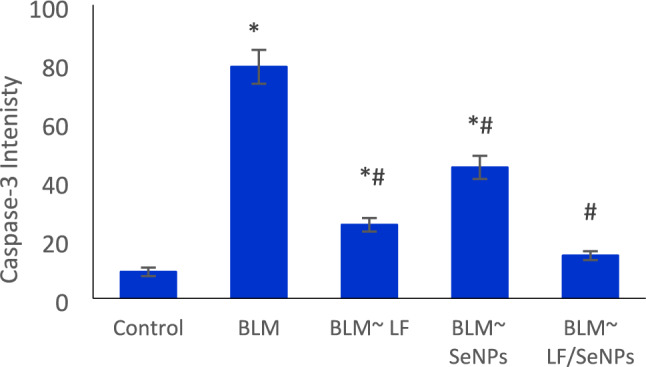
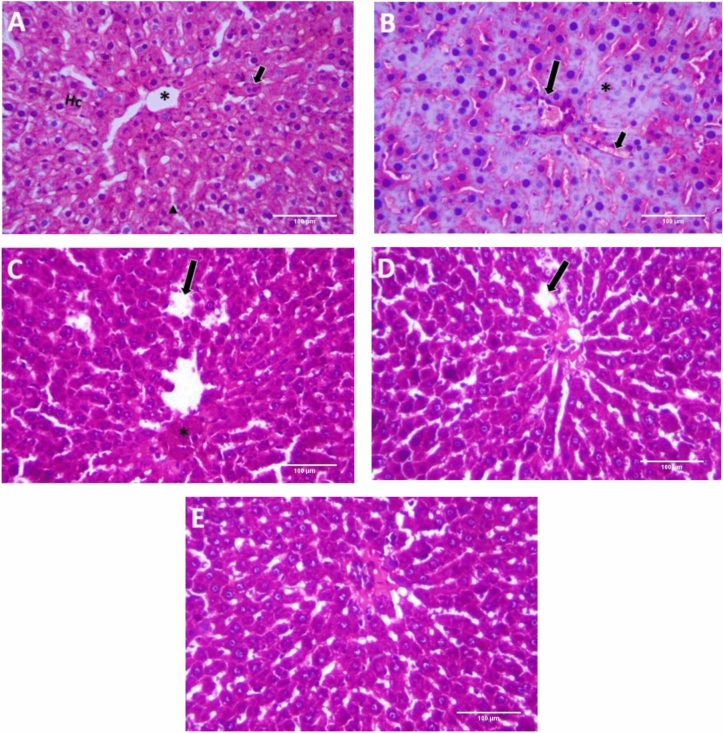
This study aimed to estimate the hepatic and immune ameliorating potential of extracted bovine lactoferrin (LF), Selenium nanoparticles (SeNPs) or their combination (LF/SeNPs) against bleomycin (BLM) induced hepatic injury. Fifty adult male rats (160-200 g) were equally divided into five groups: (1) the saline control group, (2) BLM-injected (15 mg/kg twice a week, ip), and (3-5) groups treated orally with LF (200 mg/kg/day), SeNPs (0.0486 mg/kg/day) or LF/SeNPs combination (200.0486 mg/kg/day) for 6 weeks post BLM-intoxication. Blood and liver samples were subjected to biochemical, histopathological, and immunohistochemical analyses. The results revealed that BLM caused a significant increase in hepatic lipid peroxidation and nitric oxide, as well as serum markers of liver functions (AST, ALT and GGT activities), and levels of GM-CSF, CD4, TNF-α, IL-1β, TGF-β1, fibronectin, triglycerides, cholesterol and LDL-C. Additionally, hepatic glutathione, Na+/K+-ATPase, and glutathione peroxidase, as well as serum HDL-C, total protein and albumin levels were significantly reduced. Moreover, BLM injection resulted in marked histopathological alterations and severe expression of caspase 3. Post-treatment of BLM-intoxicated rats with LF, SeNPs or LF/SeNPs combination obviously improved the BLM-induced hepatic damages; this was achieved from the marked modulations in the mentioned parameters, besides improving the histopathological hepatic architecture. It is worth mentioning that LF/SeNPs exerted the greatest potency. In conclusion, the obtained results demonstrated that LF, SeNPs and LF/SeNPs succeeded in attenuating the BLM-induced hepatic dysfunction. Therefore, these supplements might be used to protect against drug-associated side effects.
Keywords: Bleomycin; Fibrosis; Lactoferrin; Liver; Nano-Selenium; Rats.
© 2024. The Author(s).
Conflict of interest statement
The authors declare no competing interests.
Figures
References
-
- Vásquez-Garzón, V. R. et al. Liver damage in bleomycin-induced pulmonary fibrosis in mice. Naunyn-Schmiedeberg’s Arch. Pharmacol.392, 1503–1513 (2019). - PubMed
-
- Amin, K. A., Hashem, K. S., Alshehri, F. S., Awad, S. T. & Hassan, M. S. Antioxidant and hepatoprotective efficiency of selenium nanoparticles against acetaminophen-induced hepatic damage. Biol. Trace Elem. Res.175, 136–145 (2017). - PubMed
-
- Ren, Z., Zhao, Z., Wang, Y. & Huang, K. Preparation of selenium/ zinc-enriched probiotics and their effect on blood selenium and zinc concentrations, antioxidant capacities, and intestinal microflora in canine. Biol. Trace Elem. Res.141, 170–183 (2011). - PubMed
MeSH terms
Substances
LinkOut - more resources
Full Text Sources
Medical
Research Materials
Miscellaneous
